Love this? Save it for later!
Share the inspiration with your friends
“The kitchen was a whirlwind on that rainy Thursday afternoon,” I remember clearly. My neighbor Emma had just dropped by with her two energetic kids, both starving after a long school day. Instead of scrambling to make something complicated, she opened the fridge and whipped out a little basket filled with an assortment of snacks she’d prepped earlier. The kids dove right in without waiting for permission or help, munching happily while she caught up with me. That moment stuck with me—how simple it was to set up snacks that kids could grab themselves without any fuss or mess.
Honestly, I wasn’t sure if it’d work for my picky eater at first. But you know that feeling when you try something new, and it just clicks? That’s exactly how these easy after-school snacks became a staple in our house. They’re perfect for those chaotic moments when you’re juggling emails, homework, and dinner prep all at once. Maybe you’ve been there too—kids coming home ravenous, and you just want something quick, wholesome, and mess-free.
These snack ideas aren’t just about convenience. They’re about giving kids a little independence, letting them decide what they want while still keeping things healthy and homemade. I’ll share my favorite 10 snack picks that have saved the day more times than I can count. Plus, there’s something comforting about knowing what’s in the snacks your kids reach for—no mystery ingredients or extra sugar surprises.
So, whether you’re running a busy household or just looking for ways to simplify snack time, stick around. These easy after-school snacks kids can grab themselves will become your new go-to, just like they did for me and Emma’s little crew that rainy afternoon.
Why You’ll Love This Recipe
From my experience juggling busy afternoons, these easy after-school snacks really hit the sweet spot between quick prep and kid-approved yum. Here’s why this collection stands out:
- Quick & Easy: Each snack idea comes together in less than 10 minutes, perfect for those moments when you can’t stop the after-school hunger buzz.
- Simple Ingredients: No need for fancy store runs—most ingredients are pantry staples or everyday fresh items.
- Perfect for Independent Kids: Designed so kids can grab their snack without waiting or asking, fostering confidence and reducing nagging.
- Crowd-Pleaser: Tested on a mix of picky eaters and snack lovers alike, these ideas always get a thumbs up (and sometimes multiple requests!).
- Unbelievably Delicious: You might think “grab-and-go” means boring, but these snacks combine fun textures and flavors that keep kids coming back.
What sets these apart? I’ve fine-tuned the balance of flavors and textures—think crunchy meets creamy or sweet paired with a hint of saltiness. For example, blending cottage cheese with fresh fruit creates a smooth snack that’s both filling and fun. No one wants a dry, crumbly bite, right? Plus, I’ve included some clever assembly tips to keep mess to a minimum, which honestly makes all the difference when you’re racing the clock.
These snacks aren’t just for school days either—they work as quick mini-meals for playdates, weekend afternoons, or even a light dinner. Honestly, they’ve become my secret weapon in turning hectic afternoons into a little oasis of calm and nourishment.
What Ingredients You Will Need
This collection of snacks uses straightforward, wholesome ingredients to deliver tasty, nutritious bites without complexity. Most items are pantry staples or fresh basics you probably have on hand. Feel free to swap based on what your kids love or what’s in season!
- Fresh Fruits: Apples (sliced), bananas (mashed or sliced), grapes (halved), berries (fresh or frozen)
- Vegetables: Baby carrots, cucumber slices, cherry tomatoes, celery sticks
- Dairy & Alternatives: Cottage cheese (small-curd, like Breakstone’s for best texture), plain Greek yogurt (full-fat or low-fat), shredded cheese (cheddar, mozzarella), string cheese sticks
- Grains & Breads: Whole grain crackers, rice cakes, mini pita pockets, whole wheat bread slices
- Nut Butters: Peanut butter (smooth or crunchy), almond butter, sunflower seed butter (great allergy-friendly option)
- Extras & Mix-ins: Honey (a drizzle adds sweetness), cinnamon (for sprinkling on fruit), raisins or dried cranberries, mini chocolate chips (for a treat), chia seeds (optional for a nutritional boost)
- Protein Snacks: Hard-boiled eggs, turkey or chicken roll-ups, hummus (store-bought or homemade)
For example, one of my favorites is a simple mix of Greek yogurt topped with fresh berries and a sprinkle of chia seeds. The creamy texture with the slight crunch is always a hit. Another go-to involves slicing apples and serving them with a small cup of almond butter for dipping. Kids love the interactive aspect!
Substitutions are easy. Dairy-free yogurts work just fine if you’re avoiding milk, and gluten-free crackers keep things accessible for everyone. The key is to keep flavors balanced—sweet, salty, creamy, and crunchy—to keep kids interested and satisfied.
Equipment Needed
Luckily, these easy after-school snacks don’t require fancy tools. Here’s what you’ll want on hand:
- Mixing Bowls: For quick assembly of dips or yogurt mixes; a medium-sized bowl works well.
- Sharp Knife: For slicing fruits and veggies safely; consider a kid-friendly knife if older children want to help.
- Cutting Board: A sturdy board to keep prep safe and quick.
- Measuring Spoons: Handy for portioning nut butters, honey, or spices.
- Snack Containers or Small Cups: To pre-portion dips or spreads, making it easy for kids to grab and go.
- Storage Bags or Airtight Containers: For prepping snacks ahead of time and keeping them fresh in the fridge.
If you don’t have snack containers, small ramekins or even repurposed yogurt cups work wonders. I’ve found that involving kids in filling these containers can make snack time feel like a fun activity rather than a chore.
Preparation Method
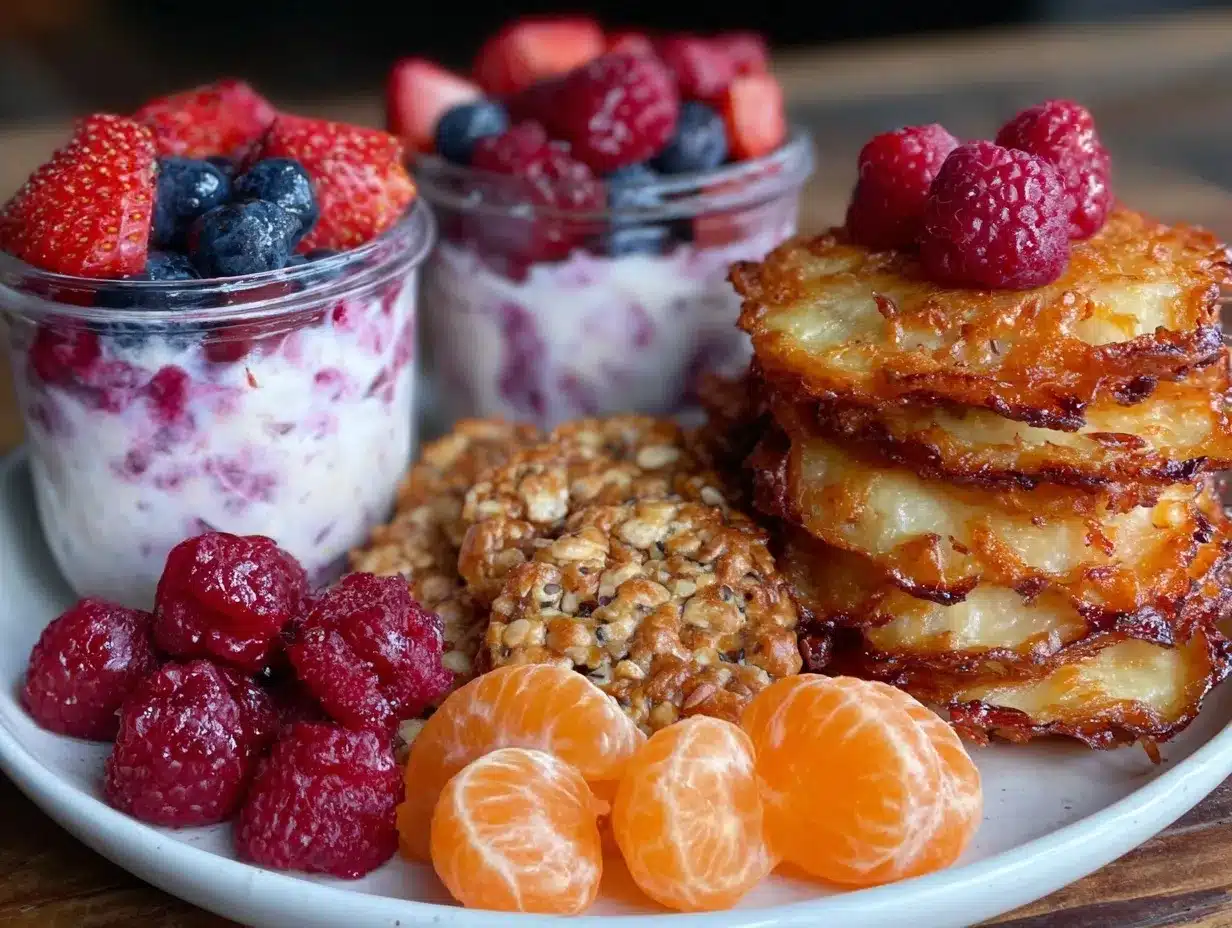
- Wash and Prep Fresh Produce (10 minutes): Rinse fruits and vegetables thoroughly. Slice apples, bananas, cucumbers, and cherry tomatoes into bite-sized pieces. Halve grapes to make them easier to eat. Tip: Leaving fruit ready in clear containers in the fridge helps kids see what’s available.
- Prepare Dairy and Protein Snacks (5-7 minutes): Portion out cottage cheese or Greek yogurt into small bowls or cups. Add desired toppings like berries, raisins, or a sprinkle of cinnamon. Hard-boil eggs in advance (takes about 10 minutes cooking) and peel them for easy grabbing. Keep string cheese sticks wrapped individually.
- Assemble Grain-Based Snacks (5 minutes): Arrange whole grain crackers or mini pita pockets on plates. Spread nut butters on rice cakes or bread slices. If you’re making roll-ups, spread hummus or cream cheese on turkey slices and roll tightly. Wrap in parchment paper if prepping ahead.
- Portion Extras and Mix-Ins (2 minutes): Place small servings of honey, nut butter, or dips in tiny containers for dipping. This keeps mess minimal and snack time smooth.
- Organize Snack Station (5 minutes): Put all prepped snack components in a low shelf of the fridge or a dedicated basket on the counter. Label if needed, so kids know what’s what. Make sure utensils like spoons or small spreaders are accessible.
Note: If you’re short on time, prep snacks the night before. Just cover and refrigerate to keep everything fresh. When I first tried this, I accidentally forgot to label a couple of containers and ended up with a berry explosion in the fridge—lesson learned!
Cooking Tips & Techniques
Here’s what I’ve learned from many snack prep sessions (and a few messes!):
- Keep It Simple: Don’t overcomplicate. Kids love familiar flavors and textures. Mixing too many ingredients can overwhelm their palate.
- Balance Flavors and Textures: Combine crunchy with creamy or sweet with salty to keep snacks interesting. For example, apple slices with peanut butter or crackers with cheese.
- Portion Control: Use small containers to avoid over-serving and reduce food waste. Kids feel proud when they can pick their snack and finish it themselves.
- Safe Slicing: Use kid-safe knives or supervise cutting. Sliced grapes and cherry tomatoes reduce choking hazards.
- Prep Ahead: Pre-portioning snacks the night before saves stress and time. Just keep things covered and refrigerated.
- Introduce New Flavors Gradually: If your child is hesitant, mix new ingredients with favorites. A little honey on plain yogurt can encourage trying it.
One time, I tried prepping a nut butter and banana rice cake snack, but forgot to slice the bananas thin enough—my kid found it hard to bite and lost interest. Lesson: thickness matters! Keep pieces manageable and appealing.
Variations & Adaptations
These snack ideas are flexible and can be adjusted based on dietary needs, seasons, or tastes:
- Dietary: Use sunflower seed butter for nut allergies. Swap Greek yogurt for coconut or almond-based yogurt for dairy-free options.
- Seasonal: In warmer months, swap apples for fresh peaches or plums. Winter calls for dried fruits like apricots or figs to mix in.
- Flavor Twists: Add a sprinkle of cinnamon or a drizzle of maple syrup to plain yogurt. Mix in mini chocolate chips for a treat.
- Cooking Methods: Toast bread or pita pockets lightly for extra crunch before spreading toppings.
- Personal Variation: I often prepare mini fruit and cheese kabobs using toothpicks for fun finger food. The kids love the hands-on element.
Feel free to experiment! Maybe your kids prefer hummus with veggie sticks over nut butters, or they’re into a fruit salad combo. The key is to keep options open and fun.
Serving & Storage Suggestions
Serve snacks fresh from the fridge or let them sit a few minutes to reach room temperature, depending on preference. Presentation matters—colorful plates or small bowls make snack time more inviting.
Pair these snacks with a small glass of water, milk, or 100% fruit juice for a balanced mini-meal. For instance, apple slices with almond butter go great with a chilled glass of milk.
Store prepared snacks in airtight containers in the refrigerator. Most last well for 2-3 days, but fruits like bananas are best prepared fresh to avoid browning. Hard-boiled eggs should be consumed within a day or two for safety.
When reheating is needed (like toasted pita), a quick 30-second zap in the microwave works. For yogurt or cottage cheese snacks, serve cold to keep texture intact.
Over time, flavors meld—like honey sweetening yogurt or cinnamon enhancing fruit—making snacks even tastier if eaten within a day. Just avoid soggy items by keeping wet and dry ingredients separate until serving.
Nutritional Information & Benefits
These snacks offer a good balance of macronutrients and vitamins:
- Protein: From cottage cheese, yogurt, hard-boiled eggs, and nut butters, supporting growth and energy.
- Fiber: Fruits, veggies, and whole grains help digestion and keep kids full longer.
- Healthy Fats: Nut butters and dairy provide essential fats for brain development.
- Vitamins & Minerals: Fresh fruits and veggies deliver vitamin C, potassium, and antioxidants.
Most snacks are naturally gluten-free or can be adapted easily. Be mindful of allergens like nuts or dairy based on your child’s needs. I find these snacks contribute to a well-rounded diet without excess sugar or additives, which is important for sustained energy through homework and play.
Conclusion
So there you have it—easy after-school snacks kids can grab themselves that are quick, tasty, and wholesome. These ideas have saved me countless afternoons by cutting down on snack-time chaos while keeping my kids happy and fueled. Whether it’s a busy weekday or weekend hangout, these snacks fit right in.
Feel free to tweak any of the ideas to suit your family’s tastes or dietary needs. Honestly, the best part is watching kids enjoy their independence and develop healthy habits early on. I’d love to hear if you try any of these or come up with your own spin—drop a comment below!
Thanks for stopping by, and here’s to less stress and more smiles at snack time!
FAQs About Easy After-School Snacks Kids Can Grab Themselves
What are some quick snack ideas kids can prepare on their own?
Simple options include fruit slices with nut butter, yogurt topped with berries, cheese and crackers, or hard-boiled eggs. These require minimal prep and supervision.
How can I make snacks healthier but still kid-friendly?
Balance sweet and savory flavors, include protein and fiber, and avoid processed sugars. Adding fresh fruit or veggies alongside a protein-rich dip works great.
What if my child has nut allergies?
Use seed butters like sunflower or pumpkin seed butter instead of nuts. Also, consider dairy or hummus-based snacks to provide protein safely.
Can these snacks be prepped in advance?
Absolutely! Many snacks can be portioned the night before and stored in the fridge for easy access after school.
How do I encourage my kids to try new snack foods?
Introduce new ingredients gradually alongside favorites, involve them in prep, and make snacks visually appealing with colorful plates or fun shapes.
For a tasty, simple homemade option that kids love, you might also enjoy my crispy garlic chicken recipe, which is a hit for quick family dinners.
And if you’re looking for more wholesome snack ideas, my healthy snack ideas for kids post has plenty of inspiration to keep snack time fresh and exciting.
Pin This Recipe!
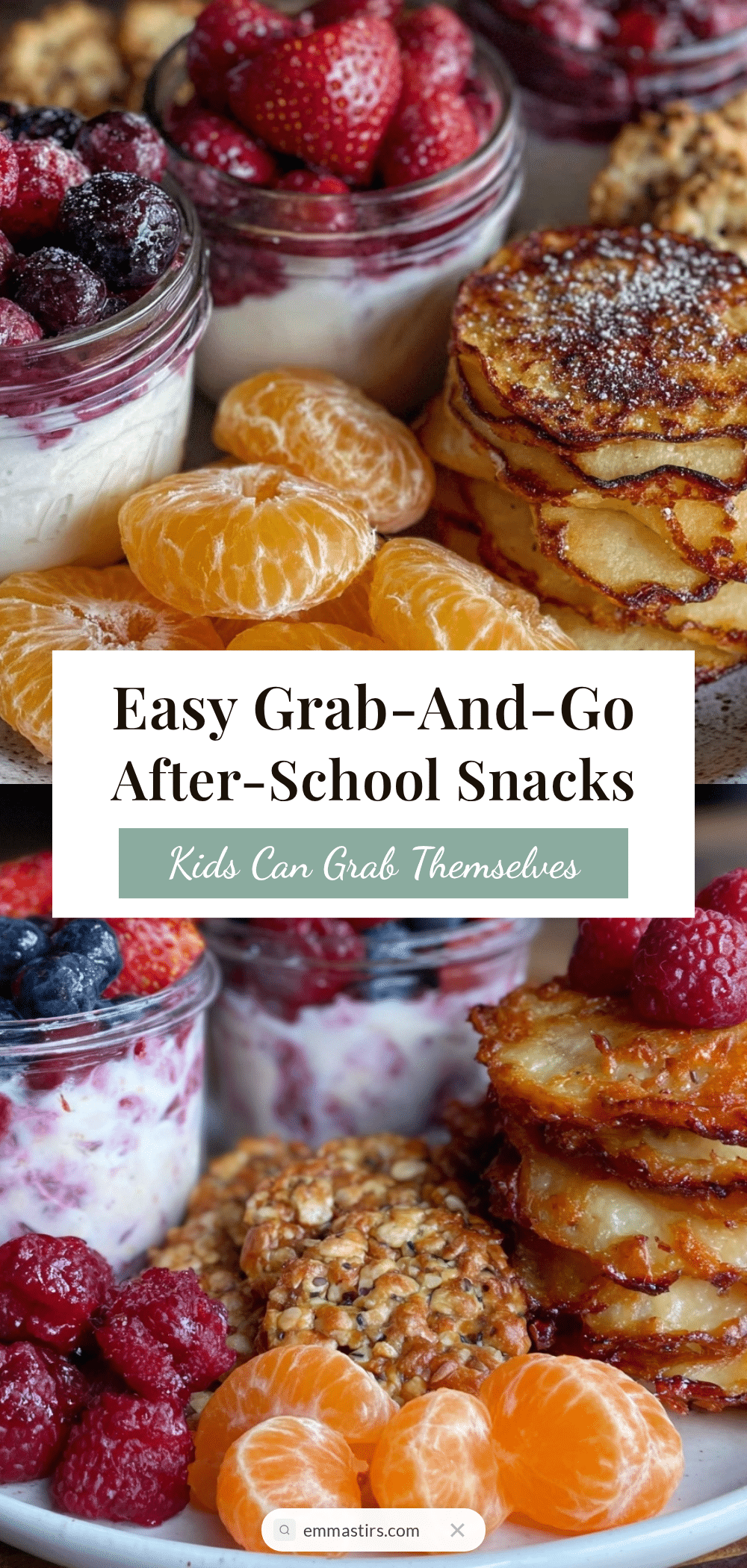
Easy After-School Snacks Kids Can Grab Themselves: 10 Quick Homemade Ideas
A collection of 10 quick, wholesome, and kid-friendly snack ideas that kids can easily grab themselves, perfect for busy afternoons and fostering independence.
- Prep Time: 10 minutes
- Cook Time: 10 minutes (for hard-boiled eggs)
- Total Time: 20 minutes
- Yield: Multiple servings (varies depending on snack choices and portions)
- Category: Snack
- Cuisine: American
Ingredients
- Fresh fruits: apples (sliced), bananas (mashed or sliced), grapes (halved), berries (fresh or frozen)
- Vegetables: baby carrots, cucumber slices, cherry tomatoes, celery sticks
- Dairy & alternatives: cottage cheese (small-curd), plain Greek yogurt (full-fat or low-fat), shredded cheese (cheddar, mozzarella), string cheese sticks
- Grains & breads: whole grain crackers, rice cakes, mini pita pockets, whole wheat bread slices
- Nut butters: peanut butter (smooth or crunchy), almond butter, sunflower seed butter
- Extras & mix-ins: honey, cinnamon, raisins or dried cranberries, mini chocolate chips, chia seeds (optional)
- Protein snacks: hard-boiled eggs, turkey or chicken roll-ups, hummus (store-bought or homemade)
Instructions
- Wash and prep fresh produce: rinse fruits and vegetables thoroughly; slice apples, bananas, cucumbers, and cherry tomatoes into bite-sized pieces; halve grapes.
- Prepare dairy and protein snacks: portion cottage cheese or Greek yogurt into small bowls or cups; add toppings like berries, raisins, or cinnamon; hard-boil eggs in advance and peel; keep string cheese sticks wrapped individually.
- Assemble grain-based snacks: arrange whole grain crackers or mini pita pockets on plates; spread nut butters on rice cakes or bread slices; make roll-ups by spreading hummus or cream cheese on turkey slices and rolling tightly; wrap in parchment paper if prepping ahead.
- Portion extras and mix-ins: place small servings of honey, nut butter, or dips in tiny containers for dipping to minimize mess.
- Organize snack station: place all prepped snack components in a low shelf of the fridge or a dedicated basket on the counter; label if needed; ensure utensils like spoons or small spreaders are accessible.
Notes
Prep snacks the night before and store in airtight containers to save time. Use kid-safe knives or supervise slicing. Keep wet and dry ingredients separate until serving to avoid sogginess. Adjust ingredients for allergies and preferences. Toast bread or pita lightly for extra crunch if desired.
Nutrition
- Serving Size: Varies by snack; typ
- Calories: 15025
- Sugar: 812
- Sodium: 150300
- Fat: 712
- Saturated Fat: 24
- Carbohydrates: 1525
- Fiber: 35
- Protein: 612
Keywords: after-school snacks, quick snacks, kid-friendly snacks, healthy snacks, homemade snacks, easy snacks, grab-and-go snacks