Love this? Save it for later!
Share the inspiration with your friends
This was supposed to be a simple stovetop tomato soup—the kind you throw together on a Wednesday when you need something warm and familiar. I had the canned tomatoes, the butter, the onion. Standard stuff. But my oven was already preheating for roasted chicken thighs, and somewhere between chopping an onion and answering my phone, I grabbed the sheet pan instead of the pot. I dumped the tomatoes, garlic, and onions onto the pan, drizzled them with olive oil because that’s what you do with a sheet pan, and slid them into the oven. Twenty minutes later, I pulled out these blistered, caramelized, almost jammy tomatoes, and I stood there thinking, well, now what?
I scraped everything into the blender—hot pan, hot tomatoes, no plan—and added a splash of broth. Then a handful of basil because it was wilting on the counter. Then a glug of cream because honestly, why not. I hit the button and watched it whirl into this velvety, sunset-orange soup that smelled like summer and tasted like I’d been making it for years. I stood at the counter eating it straight from the blender with a spoon. Not my proudest moment, but also kind of my proudest moment.
That happy accident became my go-to creamy roasted tomato basil soup. It’s richer than stovetop versions—roasting concentrates the tomato flavor in a way that simmering just can’t touch. The garlic gets sweet instead of sharp. The onions turn buttery. And that little bit of caramelization on the bottom of the pan? That’s flavor you’d never get from a pot. I’ve made this soup for sick friends, for rainy Sunday lunches, for nights when I need something that feels like a hug in a bowl. Maybe you’ve had one of those days where you just need soup to fix everything. This is that soup.
Why You’ll Love This Recipe
Let me tell you why this creamy roasted tomato basil soup has earned a permanent spot in my weekly rotation. It’s not just good—it’s the kind of soup that makes you close your eyes after the first spoonful and forget whatever else was going on.
- Quick & Easy: Active prep time is about 10 minutes. The oven does the heavy lifting while you fold laundry or answer emails. Total time is under an hour, and most of that is hands-off roasting.
- Simple Ingredients: You likely have everything in your kitchen right now. Canned tomatoes, onion, garlic, olive oil, broth, cream, and fresh basil. No fancy grocery trips required.
- Perfect for Meal Prep: This soup tastes even better the next day. Make a big batch on Sunday and have lunch ready for the week. It freezes beautifully too.
- Crowd-Pleaser: I’ve served this to picky kids, vegan friends (just swap the cream), and my dad who “doesn’t like tomato soup.” Every single person asked for the recipe.
- Unbelievably Creamy: The roasting step is the secret. It deepens the tomato flavor and adds a subtle smokiness that canned soup could never dream of. The cream rounds everything out into silky perfection.
What makes this recipe different from the dozens of tomato soup recipes out there? It’s the roasting. Most recipes dump everything into a pot and simmer, which gives you a perfectly fine soup. But roasting transforms the ingredients. The tomatoes concentrate and sweeten. The garlic mellows into something almost spreadable. The onions caramelize at the edges. You get layers of flavor without any extra work. It’s comfort food reimagined—faster, deeper, and with the same soul-soothing satisfaction that makes you want to curl up on the couch with a grilled cheese.
What Ingredients You Will Need
This recipe uses simple, wholesome ingredients to deliver bold flavor and satisfying texture without the fuss. Most of these are pantry staples, which makes this soup perfect for those weeks when you haven’t made it to the grocery store.
- Canned whole peeled tomatoes (28 ounces or 794 grams) – I prefer San Marzano tomatoes for their natural sweetness and low acidity. Look for “certified San Marzano” on the label if you can find them. Cento and Mutti are my go-to brands. Don’t use crushed or diced tomatoes here—whole peeled tomatoes have better texture and flavor after roasting.
- Yellow onion (1 large, roughly chopped into 1-inch pieces) – Yellow onions have the right balance of sweetness and sharpness for roasting. Red onions work too but will give a slightly different color. Sweet onions like Vidalia are lovely if you want an extra-mild soup.
- Garlic cloves (4 to 5 large cloves, peeled and left whole) – Whole cloves roast beautifully without burning. If you’re a garlic lover like me, add an extra clove or two. The roasting process turns them sweet and buttery.
- Extra-virgin olive oil (3 tablespoons or 45 ml) – Use a good-quality olive oil here since it coats everything before roasting. It adds richness and helps with caramelization.
- Vegetable broth (2 cups or 480 ml) – Low-sodium broth gives you control over the salt level. Chicken broth works too if you’re not keeping it vegetarian. I like Kitchen Basics or homemade if I have it on hand.
- Heavy cream (½ cup or 120 ml) – This adds the creamy factor. Full-fat cream gives the best texture, but half-and-half works in a pinch. For a dairy-free option, use full-fat coconut milk or cashew cream.
- Fresh basil leaves (½ cup packed, about 15 to 20 leaves) – Fresh basil is non-negotiable here. Dried basil won’t give you the same bright, peppery-sweet flavor. Save a few small leaves for garnish if you’re feeling fancy.
- Salt (1 teaspoon or 6 grams, plus more to taste) – I use fine sea salt. Start with less and adjust at the end.
- Black pepper (½ teaspoon or 2 grams, freshly ground) – Freshly ground pepper makes a difference. Pre-ground pepper is fine in a pinch but lacks that aromatic punch.
- Optional: Red pepper flakes (¼ teaspoon) – Adds a gentle warmth without making the soup spicy. I add this about half the time, depending on my mood.
- Optional: Balsamic vinegar (1 teaspoon or 5 ml) – A tiny splash at the end brightens everything up. It’s not traditional, but it’s my secret weapon for depth.
Equipment Needed
You don’t need a fancy kitchen to make this soup. Here’s what you’ll need and a few alternatives if you’re working with what you’ve got.
- Sheet pan (half-sheet size, about 18×13 inches) – A rimmed baking sheet is ideal so the tomato juices don’t spill everywhere. If you only have a smaller pan, use two pans or roast in batches. Don’t overcrowd the pan or the vegetables will steam instead of caramelize.
- High-speed blender – A Vitamix or Blendtec gives the silkiest texture, but any blender will work. If your blender isn’t super powerful, let the soup cool for 5 minutes before blending and work in batches. An immersion blender also works—just blend until smooth, which might take a little longer.
- Large pot or Dutch oven (4 to 5 quarts) – You’ll transfer the blended soup here to warm through and add the cream. A Dutch oven holds heat beautifully, but any heavy-bottomed pot works.
- Chef’s knife and cutting board – A sharp knife makes chopping the onion quick and painless. Dull knives are more dangerous than sharp ones—trust me on this.
- Wooden spoon or spatula – For stirring the soup as it warms. Silicone spatulas are great for scraping every last bit of roasted goodness off the sheet pan.
- Measuring cups and spoons – Standard set. Nothing fancy here.
- Optional: Garlic peeler – Not necessary, but it makes peeling whole cloves faster. I use the shake-in-a-bowl method: put the cloves in a small bowl, cover with another bowl, and shake vigorously. The skins practically fly off.
Preparation Method
Let me walk you through this step by step. I’ve made this soup more times than I can count, so I’ll point out where things can go wrong and how to avoid them.
- Preheat your oven to 400°F (200°C). Get this going first so the oven is hot by the time you’re done prepping. A hot oven is key for good caramelization.
- Prep your vegetables. Peel the onion and cut it into roughly 1-inch chunks. Don’t worry about perfect dice—it’s all going into the blender later. Peel the garlic cloves and leave them whole. If a clove is enormous, cut it in half so it roasts evenly.
- Arrange everything on the sheet pan. Dump the whole peeled tomatoes (including their juices), the chopped onion, and the whole garlic cloves onto the pan. Drizzle with 3 tablespoons of olive oil and sprinkle with ½ teaspoon of salt and ¼ teaspoon of black pepper. Use your hands to toss everything together until well coated. Spread everything in a single layer—crowding leads to steaming, not roasting.
- Roast for 30 to 35 minutes. The tomatoes should look blistered and caramelized at the edges. The onions should be tender and golden in spots. The garlic should be soft and fragrant. Halfway through, give the pan a quick shake to redistribute everything. If your oven runs hot, check at 25 minutes.
- Let it cool slightly. Pull the pan out of the oven and let it sit for 5 minutes. This isn’t just for safety—blending hot liquids can create steam pressure and blow the lid off your blender. Trust me, I learned this the messy way.
- Transfer to the blender. Carefully scrape every bit of the roasted vegetables into your blender. All those browned bits on the pan are pure flavor—don’t leave them behind. Add 2 cups of vegetable broth and the packed basil leaves.
- Blend until completely smooth. Start on low speed and gradually increase to high. Blend for 45 to 60 seconds until the soup is velvety and uniform in color. If your blender has a soup setting, use it. If not, just hold the lid firmly with a folded kitchen towel while blending hot liquids.
- Transfer to a pot and warm through. Pour the blended soup into your Dutch oven or pot over medium heat. Stir in ½ cup of heavy cream and the remaining ½ teaspoon of salt. Taste and adjust seasoning—you might want more salt or pepper. If the soup seems too thick, add a splash more broth or water.
- Heat gently for 5 to 7 minutes. Don’t let it boil, or the cream might separate. You want it hot enough to serve but not bubbling aggressively. Stir occasionally to prevent sticking on the bottom.
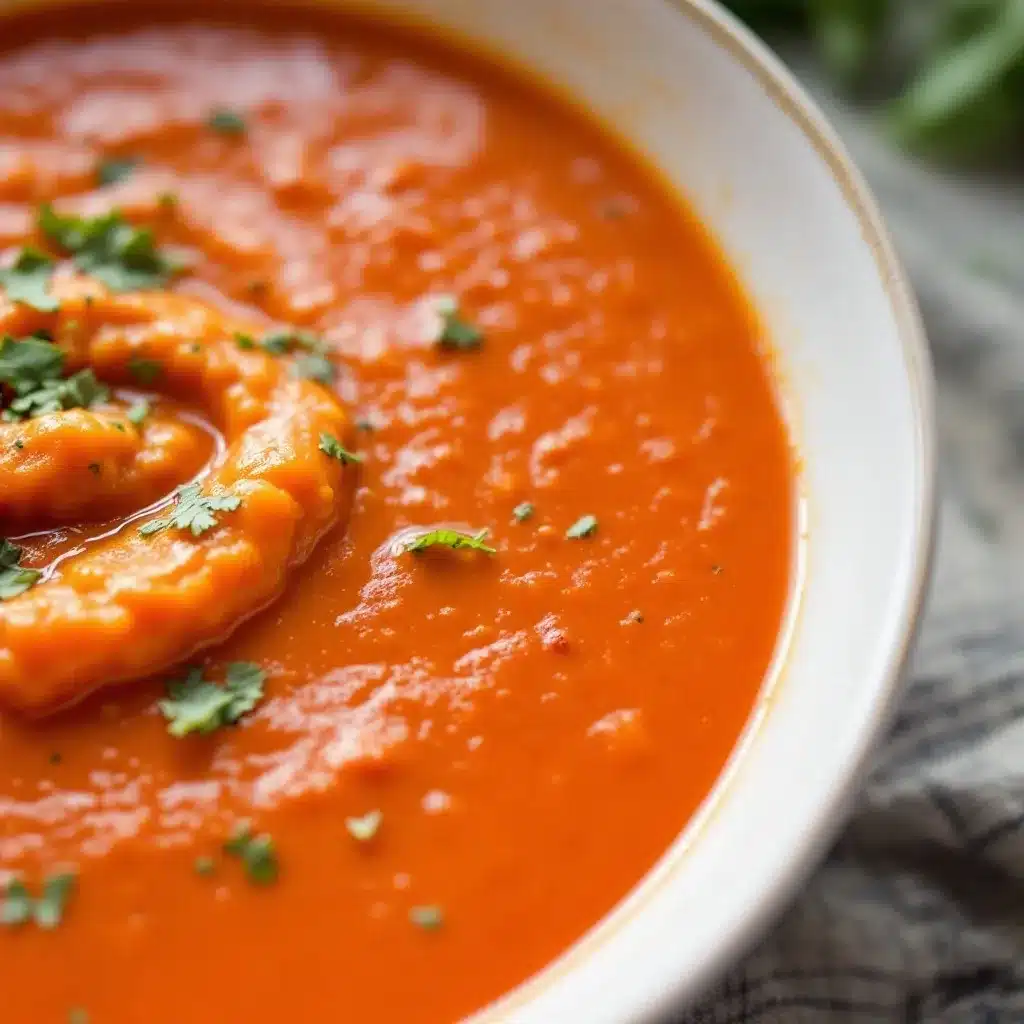
- Serve immediately. Ladle into bowls and garnish with a swirl of cream, a few torn basil leaves, and a crack of black pepper. A drizzle of good olive oil on top is never a bad idea.
Cooking Tips & Techniques
I’ve made every mistake you can make with this soup, so you don’t have to. Here’s what I’ve learned the hard way.
Don’t skip the roasting step. I know it’s tempting to dump everything in a pot and save 30 minutes, but roasting is what makes this soup special. The caramelization adds depth you can’t get any other way. One time I was in a hurry and tried to fake it by sautéing the tomatoes in a hot pan. It wasn’t the same. Don’t be me.
Watch your blender. Hot liquids expand when blended. Always start on low speed and work your way up. Never fill the blender more than halfway with hot liquid. If you’re making a double batch, blend in batches. I keep a folded kitchen towel on the counter specifically for holding blender lids.
Taste as you go. Tomato acidity varies by brand and season. Some cans are brighter, some are sweeter. Taste your soup after blending and adjust accordingly. A pinch of sugar can balance acidity if needed. A splash of balsamic vinegar adds complexity if the soup tastes flat.
Multitask smartly. While the vegetables roast, clean your cutting board and knife. Set out your bowls and garnishes. Make your perfect grilled cheese to go alongside. The roasting time is your friend—use it wisely.
Room temperature cream matters. Cold cream can cause the soup to seize or separate when you stir it in. Let the cream sit on the counter for 10 minutes before adding it. Or warm it slightly in the microwave—10 seconds is plenty.
Variations & Adaptations
This soup is endlessly adaptable. Here are some ways I’ve tweaked it depending on what I have on hand or who I’m feeding.
Dairy-Free Version: Swap the heavy cream for full-fat coconut milk. The coconut flavor is subtle and pairs surprisingly well with roasted tomatoes. Cashew cream works too—just soak ½ cup of raw cashews in hot water for 20 minutes, drain, and blend with ¼ cup of water until smooth. Add it in place of the cream.
Roasted Red Pepper Twist: Add one red bell pepper to the sheet pan with the tomatoes. Cut it into strips, remove the seeds, and roast alongside everything else. The pepper adds sweetness and a gorgeous color. This is my favorite variation for fall.
Spicy Version: Add ½ teaspoon of red pepper flakes to the sheet pan before roasting. Or stir in a minced chipotle pepper in adobo sauce after blending. The smoky heat is incredible with the roasted tomatoes.
Herb Variations: Not a basil fan? Swap in fresh thyme or oregano. Use about 1 tablespoon of fresh leaves. Rosemary works too but use it sparingly—it’s strong. I’ve made a version with fresh dill that was surprisingly good.
Protein Boost: Stir in 1 cup of cooked white beans (cannellini or great northern) after blending. They add creaminess and protein without changing the flavor much. Or top each bowl with crispy chickpeas for texture.
Slow Cooker Method: Toss the tomatoes, onion, garlic, and oil in the slow cooker. Cook on low for 4 to 5 hours or high for 2 to 3 hours. Transfer to a blender with broth and basil, blend, return to the slow cooker, and stir in cream. The flavor won’t be quite as deep as the roasted version, but it’s still delicious.
Serving & Storage Suggestions
This soup is wonderful on its own, but the right accompaniments turn it into a meal. Here’s how I like to serve it and how to keep leftovers tasting fresh.
Serving Temperature: Serve hot but not boiling. Let it sit for a minute after ladling so it’s comfortable to eat right away. A warm bowl helps—run your bowls under hot water and dry them before filling.
Classic Pairing: A crispy grilled cheese sandwich with melty cheddar is the obvious choice, and for good reason. The crunchy bread and gooey cheese are perfect for dipping. I like using sourdough or a good country bread.
Toppings: A swirl of cream, fresh basil, cracked black pepper, and a drizzle of good olive oil are my standard garnishes. Sometimes I add croutons for crunch or a sprinkle of Parmesan cheese. Toasted pine nuts are lovely if you’re feeling fancy.
Side Dishes: A simple green salad with a lemony vinaigrette cuts through the richness. Roasted broccoli or a side of sautéed spinach works too. Garlic bread is never a bad idea.
Storage: Let the soup cool completely before storing. Transfer to an airtight container and refrigerate for up to 5 days. The flavors actually deepen overnight, so this soup is perfect for meal prep.
Freezing: This soup freezes beautifully for up to 3 months. Let it cool completely, then portion into freezer-safe containers or zip-top bags. Leave a little room for expansion. Thaw overnight in the refrigerator before reheating.
Reheating: Warm gently on the stovetop over medium-low heat, stirring occasionally. Add a splash of broth or water if the soup has thickened. You can microwave individual portions in 30-second bursts, stirring between each. Don’t let it boil or the cream might separate.
Nutritional Information & Benefits
This soup isn’t just delicious—it’s packed with good-for-you ingredients. Here’s what you’re getting in each bowl.
Estimated nutrition per serving (based on 4 servings):
Calories: 280 | Fat: 18g | Carbohydrates: 22g | Fiber: 4g | Protein: 5g | Sodium: 580mg
Tomatoes are rich in lycopene, a powerful antioxidant that becomes more bioavailable when cooked. Roasting actually increases the lycopene content. They’re also a great source of vitamin C, potassium, and vitamin K.
Garlic has been used for centuries for its immune-supporting properties. Roasting mellow its pungency while preserving many of its beneficial compounds. It’s also anti-inflammatory and may help support heart health.
Olive oil provides healthy monounsaturated fats that help your body absorb the fat-soluble nutrients in the tomatoes. It’s also rich in antioxidants and anti-inflammatory compounds.
Basil isn’t just for flavor—it contains essential oils with antimicrobial properties and is a good source of vitamin K and iron. Fresh herbs add brightness and nutrition with virtually no calories.
Dietary Considerations: This recipe is naturally gluten-free and vegetarian. For a vegan version, use coconut milk or cashew cream instead of heavy cream. For a lower-fat version, use half-and-half or omit the cream entirely—the soup will still be delicious, just less creamy.
Conclusion
This creamy roasted tomato basil soup started as a happy accident, but it’s become one of those recipes I genuinely look forward to making. It’s simple enough for a Tuesday night when you’re tired and don’t want to think about dinner. It’s special enough for company when you want to impress without stress. And it’s forgiving enough that you can tweak it based on what’s in your fridge.
I love that this recipe proves you don’t need complicated techniques or fancy ingredients to make something truly satisfying. Just good tomatoes, a hot oven, and a little patience. The roasting does the work. The blender does the rest. And you get to stand there with a spoon, tasting the results, feeling like you accidentally discovered something wonderful.
I’d love to hear how this soup turns out for you. Did you add your own twist? Serve it with something unexpected? Leave a comment below and let me know—I read every single one. And if you loved it, share this recipe with someone who needs a good soup in their life. Happy cooking, friends.
Frequently Asked Questions
Can I use fresh tomatoes instead of canned?
Absolutely! Use about 2 pounds of ripe Roma or vine tomatoes. Cut them in half lengthwise and arrange cut-side down on the sheet pan. Roast for 35 to 40 minutes until the skins are blistered and the tomatoes are soft. The skins will slip right off after roasting. The flavor will be even brighter than canned.
Why did my soup turn out watery?
This usually happens if your tomatoes were particularly juicy or if you added too much broth. Fix it by simmering the blended soup uncovered for 10 to 15 minutes to let some liquid evaporate. Or add a tablespoon of tomato paste to thicken and deepen the flavor.
Can I make this soup ahead of time?
Yes, and I actually recommend it! The flavors meld and deepen overnight. Make the soup up to 3 days ahead, cool completely, and refrigerate. Reheat gently on the stovetop, adding a splash of broth if needed. It’s perfect for busy weeks.
How do I make this soup without a blender?
Use an immersion blender directly in the pot after transferring the roasted vegetables. If you don’t have either, mash the roasted vegetables with a potato masher or the back of a fork. The texture will be chunkier but still delicious. A food processor works too, though you might need to work in batches.
My soup tastes too acidic. How do I fix it?
A pinch of sugar or a teaspoon of honey will balance the acidity. A splash of heavy cream or coconut milk also helps mellow sharp flavors. If you have it, a teaspoon of balsamic vinegar adds complexity that masks acidity without adding sweetness. Taste and adjust gradually—you can always add more, but you can’t take it out.
Pin This Recipe!
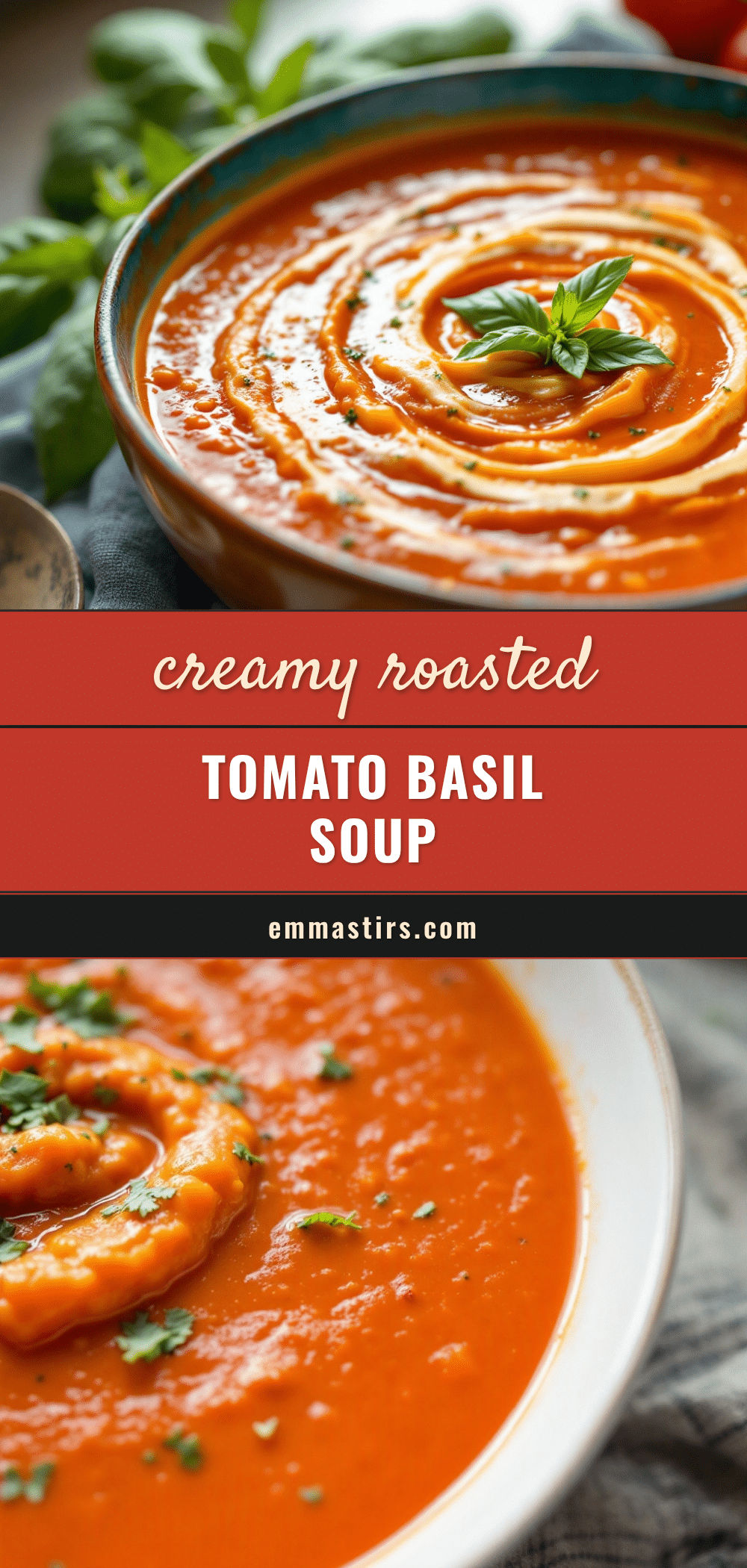
Creamy Roasted Tomato Basil Soup
This creamy roasted tomato basil soup is richer than stovetop versions—roasting concentrates the tomato flavor in a way that simmering just can’t touch. It’s the kind of soup that makes you close your eyes after the first spoonful and forget whatever else was going on.
- Prep Time: 10 minutes
- Cook Time: 35 minutes
- Total Time: 45 minutes
- Yield: 4 servings 1x
- Category: Soup
- Cuisine: American
Ingredients
- 28 ounces (794 grams) canned whole peeled tomatoes (preferably San Marzano)
- 1 large yellow onion, roughly chopped into 1-inch pieces
- 4 to 5 large garlic cloves, peeled and left whole
- 3 tablespoons (45 ml) extra-virgin olive oil
- 2 cups (480 ml) vegetable broth (low-sodium)
- ½ cup (120 ml) heavy cream
- ½ cup packed fresh basil leaves (about 15 to 20 leaves)
- 1 teaspoon (6 grams) fine sea salt, plus more to taste
- ½ teaspoon (2 grams) freshly ground black pepper
- ¼ teaspoon red pepper flakes (optional)
- 1 teaspoon (5 ml) balsamic vinegar (optional)
Instructions
- Preheat your oven to 400°F (200°C).
- Prep your vegetables: Peel the onion and cut it into roughly 1-inch chunks. Peel the garlic cloves and leave them whole. If a clove is enormous, cut it in half so it roasts evenly.
- Arrange everything on the sheet pan: Dump the whole peeled tomatoes (including their juices), the chopped onion, and the whole garlic cloves onto the pan. Drizzle with 3 tablespoons of olive oil and sprinkle with ½ teaspoon of salt and ¼ teaspoon of black pepper. Use your hands to toss everything together until well coated. Spread everything in a single layer.
- Roast for 30 to 35 minutes until the tomatoes look blistered and caramelized at the edges, the onions are tender and golden in spots, and the garlic is soft and fragrant. Halfway through, give the pan a quick shake to redistribute everything.
- Let it cool slightly: Pull the pan out of the oven and let it sit for 5 minutes.
- Transfer to the blender: Carefully scrape every bit of the roasted vegetables into your blender. Add 2 cups of vegetable broth and the packed basil leaves.
- Blend until completely smooth: Start on low speed and gradually increase to high. Blend for 45 to 60 seconds until the soup is velvety and uniform in color. If your blender has a soup setting, use it. If not, just hold the lid firmly with a folded kitchen towel while blending hot liquids.
- Transfer to a pot and warm through: Pour the blended soup into your Dutch oven or pot over medium heat. Stir in ½ cup of heavy cream and the remaining ½ teaspoon of salt. Taste and adjust seasoning. If the soup seems too thick, add a splash more broth or water.
- Heat gently for 5 to 7 minutes: Don’t let it boil, or the cream might separate. Stir occasionally to prevent sticking on the bottom.
- Serve immediately: Ladle into bowls and garnish with a swirl of cream, a few torn basil leaves, and a crack of black pepper. A drizzle of good olive oil on top is never a bad idea.
Notes
Don’t skip the roasting step—it’s what makes this soup special. Always start blending hot liquids on low speed and work your way up. Never fill the blender more than halfway with hot liquid. Let the cream sit at room temperature for 10 minutes before adding to prevent separation. Taste as you go and adjust seasoning accordingly. A pinch of sugar can balance acidity if needed. A splash of balsamic vinegar adds complexity if the soup tastes flat.
Nutrition
- Serving Size: 1 bowl (about 1.5 cu
- Calories: 280
- Sugar: 10
- Sodium: 580
- Fat: 18
- Saturated Fat: 8
- Carbohydrates: 22
- Fiber: 4
- Protein: 5
Keywords: tomato soup, roasted tomato soup, creamy tomato soup, basil soup, easy soup, homemade soup, comfort food, vegetarian soup, gluten-free soup