Love this? Save it for later!
Share the inspiration with your friends
It was 11:47 PM on a drizzly Wednesday, and I was staring into the fridge with that sort of hollow, desperate focus you get when you’re hungry but too tired to actually cook. I had a gorgeous fillet of salmon sitting there, a few sad lemons, and a stick of butter. The original plan—something fancy with a beurre blanc and capers—felt like a cruel joke at that hour. I didn’t have the energy for a million steps, but I had a sheet pan and a wild idea that maybe, just maybe, the oven could do all the work.
I mean, honestly, the best recipes are born from sheer laziness, aren’t they? I tossed the salmon on the pan, threw some garlic cloves and lemon slices around it, and melted the butter in a mug in the microwave (classy, I know). I poured it over everything, slid the pan into the oven, and sat on the kitchen floor scrolling my phone for 15 minutes. The smell that came out of that oven was so good, my neighbor actually texted me asking what I was baking. That’s when I knew I had stumbled onto something.
This Easy Sheet-Pan Salmon with Lemon Garlic Butter isn’t just a recipe—it’s a lifeline for those nights when you want something that feels like a real meal but requires zero babysitting. The fish comes out perfectly flaky, the butter sauce gets all bubbly and golden, and the lemon roasts right alongside it, mellowing out into something sweet and jammy. Maybe you’ve been there—standing in your kitchen, exhausted, wanting something good but not complicated. This is for those nights. It’s the recipe I keep coming back to, and honestly, it might just become your favorite weeknight secret, too.
Why You’ll Love This Recipe
Let me tell you why this sheet-pan salmon is a total game-changer. I’ve tested this recipe about a dozen times (okay, maybe more), tweaking the butter-to-garlic ratio and the oven temperature until it was absolutely perfect. It’s not just another salmon recipe—it’s the one that makes you feel like a kitchen hero with almost zero effort.
- Quick & Easy: From prep to plate in under 30 minutes. Seriously, it’s faster than waiting for takeout, and way better for you.
- Simple Ingredients: You probably have butter, garlic, and lemons in your kitchen right now. No fancy grocery runs required.
- Perfect for Busy Weeknights: Whether it’s a Tuesday after work or a lazy Sunday, this recipe fits right into your schedule without any stress.
- Crowd-Pleaser: My picky-eating cousin devoured two servings. Even the kids at our last family dinner cleaned their plates.
- Unbelievably Delicious: The lemon garlic butter creates this incredible sauce that coats every bite. It’s rich, bright, and completely addictive.
What makes this different from every other salmon recipe out there? It’s the technique. By roasting everything together on one pan, the salmon stays incredibly moist while the lemon slices caramelize and the garlic infuses the butter. No flipping, no basting, no mess. It’s comfort food reimagined—healthier, faster, but with the same soul-soothing satisfaction that makes you close your eyes after the first bite. Perfect for impressing guests without stress, or turning a simple Wednesday night into something memorable.
What Ingredients You Will Need
This recipe uses simple, wholesome ingredients to deliver bold flavor and satisfying texture without the fuss. Most of these are pantry staples, but I’ll share a few tips I’ve learned along the way to make sure your salmon turns out perfect every time.
- Salmon Fillets (4 fillets, about 6 oz each): I prefer wild-caught salmon for its firmer texture and cleaner flavor, but farm-raised works great too. Look for fillets that are roughly the same thickness so they cook evenly. (Pro tip: Pat them dry with paper towels before seasoning—it helps the butter sauce stick better.)
- Unsalted Butter (4 tablespoons, melted): I use unsalted so I can control the salt level. Kerrygold is my go-to for its rich, creamy taste, but any good quality butter works. If you’re dairy-free, you can substitute with a plant-based butter or even olive oil.
- Fresh Garlic (4 cloves, minced): Please don’t use the jarred stuff here. Fresh garlic makes a huge difference in flavor—it gets sweet and nutty as it roasts. I recommend pressing it with a garlic press for the best texture.
- Fresh Lemons (2 lemons): You’ll need juice for the butter sauce and slices to roast alongside the salmon. Meyer lemons are lovely if you can find them—they’re sweeter and less acidic.
- Olive Oil (1 tablespoon): Just a little to grease the pan and help the salmon get that beautiful golden color on the outside.
- Fresh Dill (2 tablespoons, chopped): Dill and salmon are a classic pair. If you don’t have fresh, use 1 teaspoon of dried dill, or swap in fresh parsley or chives.
- Salt and Black Pepper (to taste): I use flaky sea salt for finishing and fine salt for seasoning. Freshly cracked black pepper is non-negotiable—it adds a subtle warmth that complements the lemon.
- Optional Garnishes: A few capers for brininess, or red pepper flakes for a little heat. I sometimes add a sprinkle of toasted sesame seeds for crunch.
For the best results, I recommend using salmon with the skin on—it helps keep the fish moist and adds a nice crispy texture underneath. If your fillets are skinless, just reduce the cooking time by a minute or two. And don’t skip the lemon slices on the pan; they become soft and caramelized, almost like a sweet-savory jam that’s incredible with the salmon.
Equipment Needed
You don’t need a fancy kitchen to make this recipe work. Here’s what you’ll need, along with a few tips from my own experience.
- Sheet Pan (rimmed, 13×18 inches): A rimmed sheet pan is essential to catch all that delicious lemon garlic butter. My favorite is a heavy-duty aluminum one—it distributes heat evenly and doesn’t warp in the oven. If you only have a smaller pan, just arrange the salmon in a single layer and roast in batches.
- Parchment Paper or Aluminum Foil: Lining the pan makes cleanup a breeze. I prefer parchment paper because nothing sticks to it, and it’s non-toxic. If using foil, give it a light spray of cooking oil.
- Mixing Bowl (small): For whisking together the melted butter, garlic, lemon juice, and dill. Any small bowl works—I’ve used a cereal bowl in a pinch.
- Garlic Press or Microplane: A garlic press saves time and keeps your fingers from smelling like garlic for days. If you don’t have one, just mince the garlic finely with a knife.
- Measuring Spoons: Accurate measurements matter for the butter and lemon juice. Eyeballing it can lead to a sauce that’s too greasy or too tart.
- Tongs: For flipping the salmon halfway through (if you want to), or for removing the hot pan from the oven safely.
Budget-friendly tip: You don’t need a fancy sheet pan. A basic one from the grocery store works just fine—just make sure it’s rimmed to avoid drips. And if you don’t have parchment paper, you can grease the pan directly with a little butter or oil.
Preparation Method
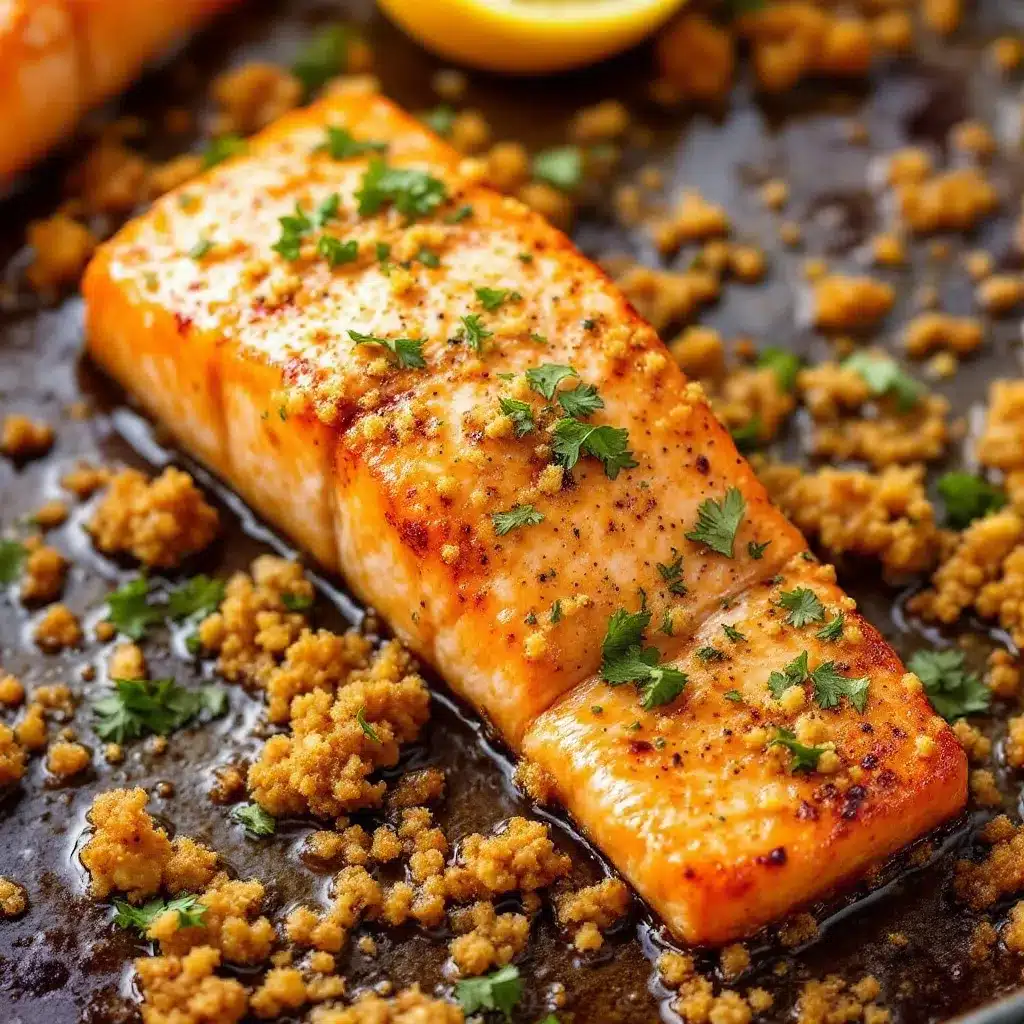
Let’s get cooking! I’ve broken this down into simple steps with all the little details I’ve learned from making this dish over and over again.
- Preheat your oven to 400°F (200°C). Place a rack in the middle position. While the oven heats, line your sheet pan with parchment paper or foil. This step is crucial—don’t skip it unless you want a sticky pan to scrub later.
- Prepare the salmon. Take your 4 salmon fillets (about 6 oz each) and pat them dry with paper towels. This helps the seasoning stick and ensures a nice sear. Place them skin-side down on the prepared sheet pan, spacing them about 2 inches apart so they roast evenly, not steam.
- Season the salmon. Drizzle 1 tablespoon of olive oil over the fillets, then sprinkle with ½ teaspoon of salt and ¼ teaspoon of black pepper. Use your hands to rub it in gently. Don’t overseason—the butter sauce adds plenty of flavor.
- Make the lemon garlic butter. In a small mixing bowl, combine 4 tablespoons of melted unsalted butter, 4 minced garlic cloves, 2 tablespoons of fresh lemon juice (from about 1 lemon), and 2 tablespoons of chopped fresh dill. Whisk it together until well combined. Taste it—it should be bright and garlicky. If it tastes flat, add a pinch more salt.
- Assemble on the pan. Pour the butter mixture evenly over the salmon fillets. Use a spoon to make sure each fillet gets some of that garlic and dill. Then, slice the remaining lemon into thin rounds and arrange them around the salmon on the pan. Don’t put the lemon slices on top of the fish—they’ll steam the surface instead of letting it brown.
- Roast the salmon. Place the sheet pan in the preheated oven and roast for 12-15 minutes, depending on the thickness of your fillets. For 1-inch thick fillets, 13 minutes is usually perfect. The salmon is done when it flakes easily with a fork and the internal temperature reaches 145°F (63°C) at the thickest part. The lemon slices should look soft and slightly caramelized.
- Optional broil for extra color. If you want a slightly golden top, switch your oven to broil for the last 1-2 minutes. Watch it carefully—broilers are unpredictable and can burn things fast. I learned this the hard way when I walked away for “just a second” and ended up with charcoal salmon.
- Rest and serve. Remove the pan from the oven and let the salmon rest for 2-3 minutes. This allows the juices to redistribute, making the fish even more tender. Spoon some of the pan juices over the fillets before serving. Garnish with extra fresh dill and a squeeze of lemon if you like.
One more thing: if your fillets are different thicknesses (which happens often), check the thinner ones a minute or two early. You can always return them to the oven if needed, but you can’t un-cook overcooked salmon! The fish should look opaque and feel firm but springy when pressed gently.
Cooking Tips & Techniques
Over the years, I’ve made every mistake in the book with sheet-pan salmon. Here are the lessons I learned so you don’t have to repeat them.
Don’t overcrowd the pan. This is the number one mistake I see. If the fillets are too close together, they’ll steam instead of roast, and you’ll lose that beautiful caramelized exterior. Give them space—about 2 inches apart is perfect. If you’re cooking for a crowd, use two pans.
Pat your salmon dry. I know it’s an extra step, but it makes a huge difference. Wet salmon releases steam in the oven, which prevents browning. Dry salmon gets that lovely golden crust. Trust me on this one—I skipped it once and ended up with pale, sad-looking fish.
Watch the garlic. Garlic burns easily at high temperatures. That’s why I mix it into the butter rather than sprinkling it directly on the pan. The butter buffers the heat and allows the garlic to cook gently, becoming sweet and mellow instead of bitter. If you see the garlic turning dark brown during roasting, your oven might be running hot—check the temperature with an oven thermometer.
Use room temperature butter. If your butter is cold when you mix the sauce, it will seize up and not coat the salmon evenly. Melt it first, then let it cool slightly before adding the garlic and lemon juice. Hot butter can cook the garlic too quickly, making it harsh.
Multitask like a pro. While the salmon roasts, use that time to prep a quick side dish. I like to toss some asparagus or green beans with olive oil and salt, then add them to the pan for the last 8 minutes of cooking. One pan, two sides, zero extra cleanup.
Check for doneness early. Salmon continues to cook after you take it out of the oven (carryover cooking). I pull mine out when it’s still slightly translucent in the center—by the time it rests, it’s perfectly cooked. If you wait until it’s fully opaque in the oven, it’ll be overdone by the time you eat it.
Variations & Adaptations
One of the best things about this recipe is how flexible it is. Here are a few ways I’ve adapted it over the years to keep things interesting.
Spicy Cajun Version: Replace the dill with 1 tablespoon of Cajun seasoning and add a pinch of cayenne to the butter. The smoky, spicy flavors pair beautifully with the rich salmon. I made this for a Mardi Gras party and it was gone in minutes.
Herb Garden Twist: Swap the dill for a mix of fresh thyme, rosemary, and parsley. This version feels more rustic and earthy—perfect for fall or winter dinners. I add a few sprigs of rosemary to the pan for extra aroma while it roasts.
Maple-Mustard Glaze: Add 1 tablespoon of Dijon mustard and 1 tablespoon of maple syrup to the butter mixture. The sweetness balances the lemon and creates a sticky, caramelized glaze. This is my go-to when I want something a little more special without extra effort.
Dairy-Free Adaptation: Replace the butter with 4 tablespoons of olive oil or avocado oil. The texture will be slightly different (less creamy, more bright), but it’s still incredibly delicious. Add a splash of coconut milk for richness if you want.
Sheet Pan Veggie Add-Ons: Toss chopped broccoli, cherry tomatoes, or zucchini with olive oil and salt, then arrange them around the salmon before roasting. The veggies soak up the lemon garlic butter as they cook—it’s like a built-in side dish. Just make sure the veggie pieces are roughly the same size for even cooking.
I once tried a miso-ginger version with a friend who was visiting from Japan. We swapped the lemon for rice vinegar and added a tablespoon of white miso paste to the butter. It was a total experiment, and honestly? It was incredible. Don’t be afraid to play around—this recipe is forgiving enough to handle your creativity.
Serving & Storage Suggestions
This salmon is best served fresh out of the oven, but I’ve got tips for every situation.
Serving Temperature and Presentation: Serve the salmon warm, right from the pan. Spoon the pan juices over each fillet for extra moisture and flavor. I like to arrange the caramelized lemon slices on top for a pop of color. A sprinkle of fresh dill or parsley makes it look restaurant-worthy.
Complementary Sides: This salmon pairs beautifully with simple sides. Try it over a bed of fluffy rice, quinoa, or couscous to soak up the butter sauce. A crisp green salad with a light vinaigrette balances the richness. For a low-carb option, serve it with roasted asparagus or steamed green beans. If you’re feeling indulgent, creamy mashed potatoes are a dream with this dish.
Beverage Pairings: A crisp white wine like Sauvignon Blanc or Pinot Grigio complements the lemon and garlic beautifully. For a non-alcoholic option, sparkling water with a slice of lemon is refreshing and keeps the meal light.
Storage Instructions: Store leftover salmon in an airtight container in the refrigerator for up to 3 days. The lemon garlic butter will solidify, but that’s okay—it will melt again when reheated. I don’t recommend freezing cooked salmon, as the texture can become dry and mealy upon thawing.
Reheating Methods: The best way to reheat salmon is in a low oven (300°F or 150°C) for about 10 minutes, covered loosely with foil. This prevents it from drying out. You can also reheat it in a skillet over medium-low heat with a splash of water or broth, covered, for 3-4 minutes. Avoid the microwave if possible—it tends to overcook the fish and make it rubbery.
How Flavors Develop: Interestingly, the lemon garlic butter flavors meld together even more after a day in the fridge. The salmon might not be as flaky as fresh, but the taste is still fantastic. I’ve been known to flake cold leftover salmon over a salad for lunch the next day—it’s a whole new meal!
Nutritional Information & Benefits
Here’s an estimated nutritional breakdown per serving (1 fillet with sauce, without sides):
| Nutrient | Amount per Serving |
|---|---|
| Calories | 380 |
| Protein | 34g |
| Fat | 24g |
| Saturated Fat | 10g |
| Carbohydrates | 3g |
| Fiber | 0g |
| Sugar | 1g |
| Sodium | 480mg |
Salmon is packed with omega-3 fatty acids, which are fantastic for heart health and brain function. It’s also an excellent source of high-quality protein, B vitamins, and selenium. The lemon adds a dose of vitamin C, and garlic is known for its immune-boosting properties. This meal is naturally gluten-free and low-carb, making it suitable for a variety of dietary preferences. If you’re watching your sodium, reduce the added salt to ¼ teaspoon—the lemon and garlic provide plenty of flavor on their own.
I personally love that this recipe fits into a balanced lifestyle without feeling like “diet food.” It’s nourishing and satisfying, and it leaves me feeling energized, not sluggish. That’s the kind of meal I want to eat regularly.
Conclusion
Look, I know there are a million salmon recipes out there, but this Easy Sheet-Pan Salmon with Lemon Garlic Butter is the one I keep coming back to. It’s simple enough for a Tuesday night but impressive enough for company. The butter sauce is pure magic—golden, garlicky, and bright—and the fact that it all comes together on one pan with minimal cleanup? That’s the kind of win we all need in our lives.
I hope you give this recipe a try and make it your own. Add your favorite herbs, throw in some veggies, or spice it up with chili flakes—there’s no wrong way to do it. Honestly, the best recipes are the ones that adapt to you, not the other way around.
If you make this, I’d love to hear how it turned out! Drop a comment below and let me know what variations you tried. Did you add asparagus? Swap the dill for basil? I’m genuinely curious. And if you loved it, share this post with a friend who needs a quick, delicious dinner idea. Happy cooking, friend—you’ve got this!
Frequently Asked Questions
Can I use frozen salmon for this recipe?
Yes, you can! Just make sure to thaw it completely in the refrigerator overnight and pat it very dry before seasoning. Frozen salmon tends to release more water as it cooks, so you might need to add an extra minute or two to the roasting time.
What if I don’t have fresh dill?
No problem at all. You can substitute with 1 teaspoon of dried dill, or use fresh parsley, chives, or even basil. Each herb gives the dish a slightly different personality, but they all work beautifully with the lemon and garlic.
How do I know when the salmon is fully cooked?
The easiest way is to check with a fork—if the fish flakes easily and looks opaque all the way through, it’s done. For precision, use an instant-read thermometer; the FDA recommends 145°F (63°C) at the thickest part. I personally prefer pulling it at 140°F (60°C) because carryover cooking takes it the rest of the way.
Can I make this recipe with other types of fish?
Absolutely. This lemon garlic butter works wonderfully with trout, cod, halibut, or even firm white fish like tilapia. Just adjust the cooking time based on the thickness of the fillet—thinner fish will cook faster, so start checking at 8-10 minutes.
What’s the best way to prevent the salmon from sticking to the pan?
Lining your sheet pan with parchment paper is the foolproof method. If you use foil, make sure to grease it lightly with oil or butter. Also, letting the salmon rest for a minute or two before trying to lift it off the pan helps—it naturally releases as it cools slightly.
Pin This Recipe!
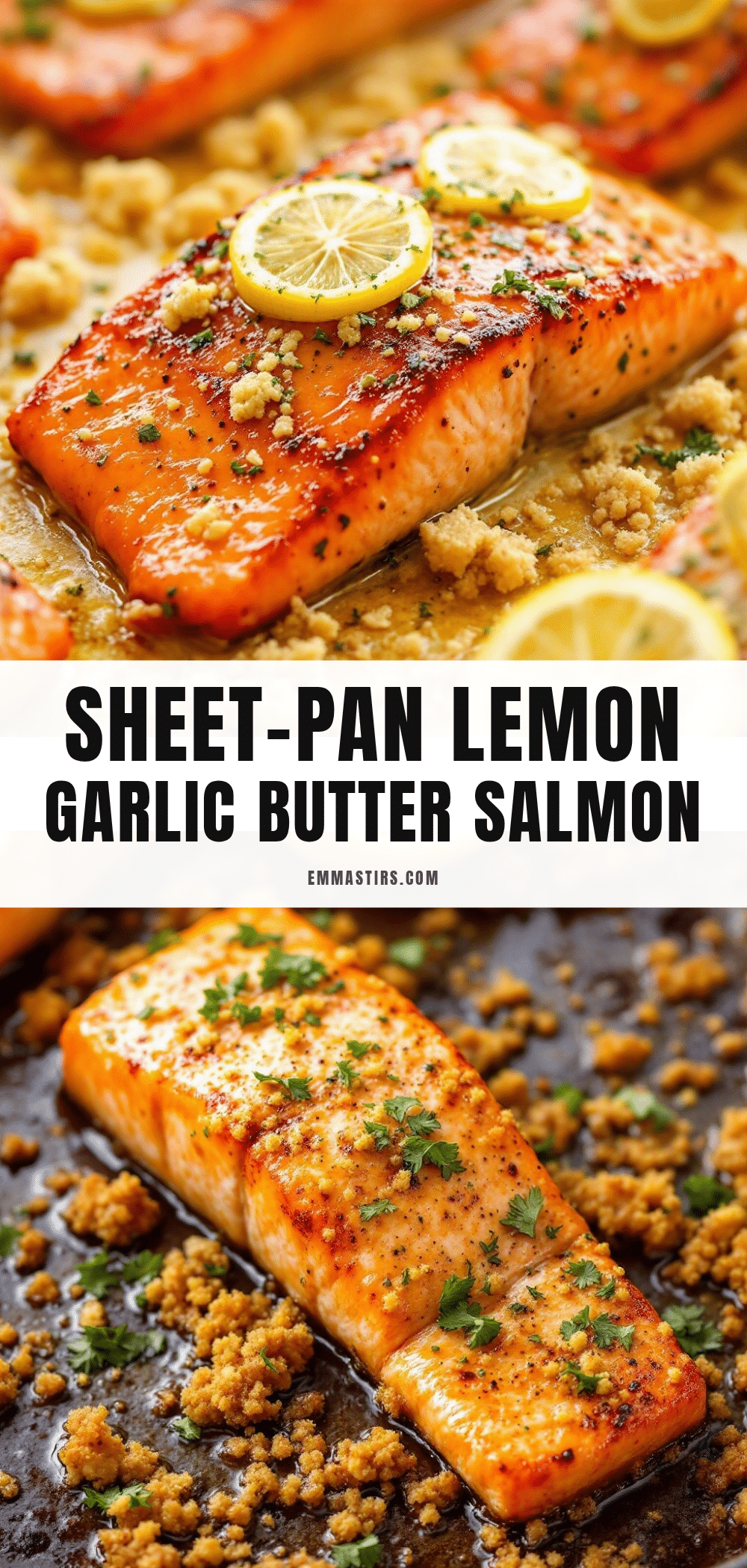
Easy Sheet-Pan Salmon with Lemon Garlic Butter: Best 30-Min Meal
This Easy Sheet-Pan Salmon with Lemon Garlic Butter is a lifeline for busy weeknights—perfectly flaky salmon with a bubbly, golden butter sauce, all roasted on one pan in under 30 minutes. It’s simple, delicious, and requires zero babysitting.
- Prep Time: 10 minutes
- Cook Time: 15 minutes
- Total Time: 25 minutes
- Yield: 4 servings 1x
- Category: Main Course
- Cuisine: American
Ingredients
- 4 salmon fillets (about 6 oz each)
- 4 tablespoons unsalted butter, melted
- 4 cloves garlic, minced
- 2 lemons (juice of 1, the other sliced into rounds)
- 1 tablespoon olive oil
- 2 tablespoons fresh dill, chopped
- Salt and black pepper to taste
- Optional: capers, red pepper flakes, toasted sesame seeds for garnish
Instructions
- Preheat your oven to 400°F (200°C). Line a rimmed sheet pan with parchment paper or foil.
- Pat the salmon fillets dry with paper towels. Place them skin-side down on the prepared pan, spacing about 2 inches apart.
- Drizzle 1 tablespoon olive oil over the fillets, then season with ½ teaspoon salt and ¼ teaspoon black pepper. Rub gently.
- In a small bowl, whisk together melted butter, minced garlic, 2 tablespoons lemon juice, and 2 tablespoons chopped dill.
- Pour the butter mixture evenly over the salmon. Arrange lemon slices around the salmon on the pan (not on top).
- Roast for 12-15 minutes, until the salmon flakes easily with a fork and reaches 145°F (63°C) internally.
- Optional: Broil for 1-2 minutes for a golden top, watching carefully.
- Let the salmon rest for 2-3 minutes. Spoon pan juices over fillets before serving. Garnish with extra dill and lemon if desired.
Notes
Pat salmon dry for best browning. Don’t overcrowd the pan—space fillets 2 inches apart. For different thicknesses, check thinner fillets early. Use room temperature butter for even coating. Salmon continues cooking after removal (carryover cooking).
Nutrition
- Serving Size: 1 fillet with sauce
- Calories: 380
- Sugar: 1
- Sodium: 480
- Fat: 24
- Saturated Fat: 10
- Carbohydrates: 3
- Protein: 34
Keywords: sheet-pan salmon, lemon garlic butter salmon, easy salmon recipe, 30-minute meal, weeknight dinner, healthy salmon, one-pan salmon