Love this? Save it for later!
Share the inspiration with your friends
That first crackle of salt crust hitting a hot pan — the kind that makes you stop mid-conversation and just breathe in — still takes me straight back to my grandmother’s tiny kitchen on Christmas Eve. I was maybe twelve, sitting cross-legged on the cold linoleum floor, watching her work. She never used a recipe. She just knew when the meat felt right under her palm. The garlic, rosemary, and thyme would fill every corner of that house until the windows fogged up. I remember thinking, “This is what celebration smells like.”
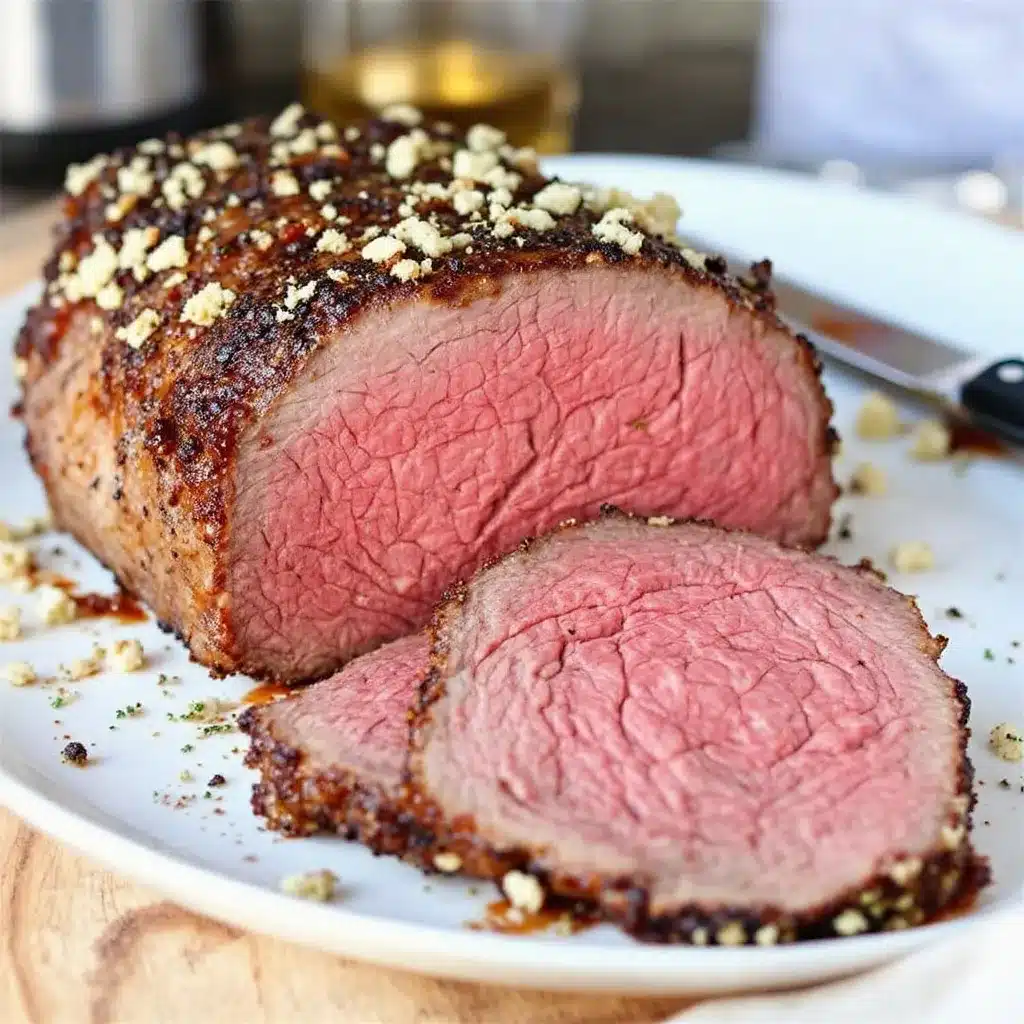
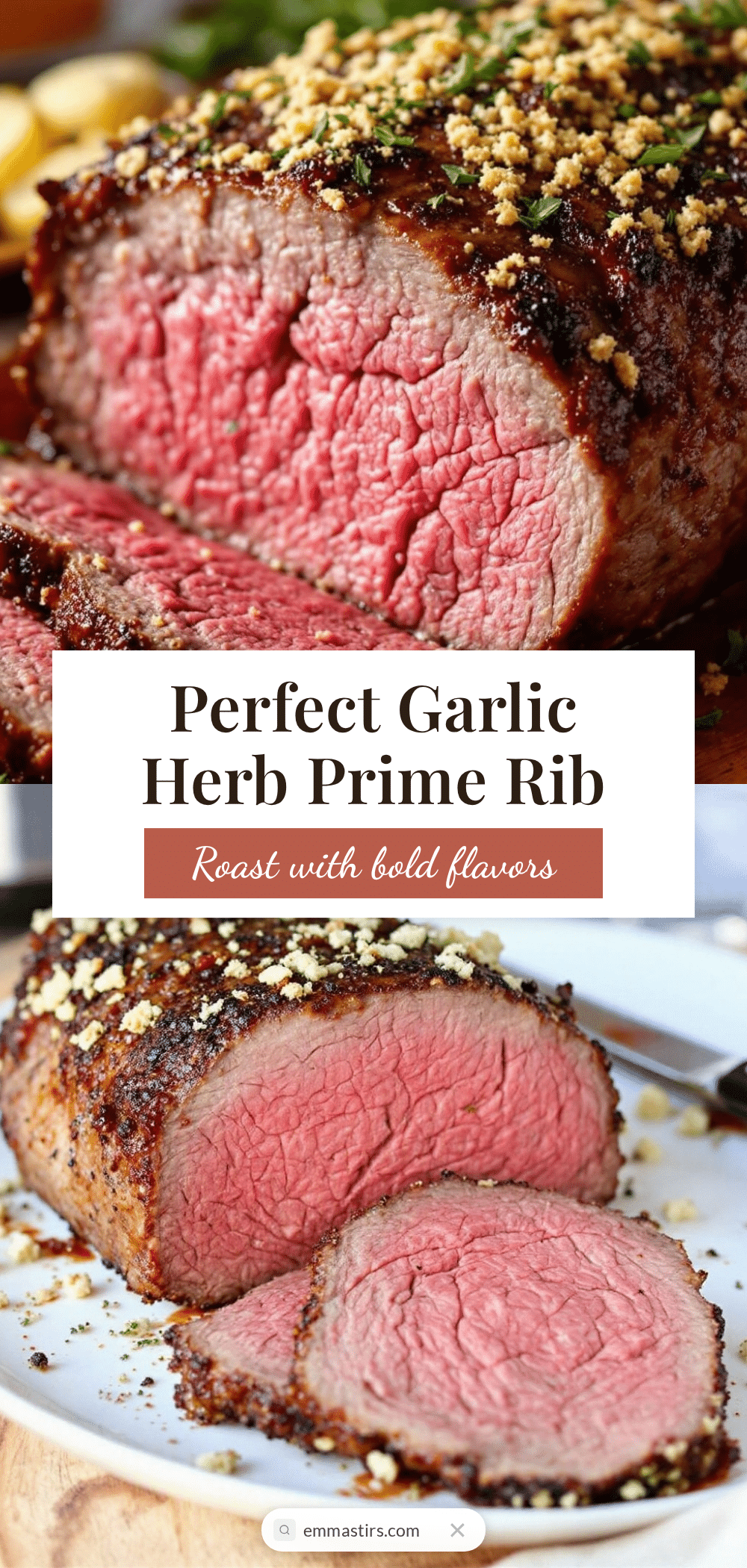
Years later, I’ve made this Perfect Garlic Herb Prime Rib Roast for birthdays, anniversaries, and quiet Sunday dinners that felt like holidays. It’s the one dish people ask for by name. And honestly? It’s not as complicated as you’d think. A little patience, a good cut of beef, and a handful of herbs — that’s really all it takes. The magic is in the timing, and maybe a little bit of love.
I’ve burned a few roasts in my day (one Thanksgiving was particularly tragic). But every mistake taught me something. Now, I can promise you this: when you pull that golden, herb-crusted beauty out of the oven and slice into the most tender, juicy center, you’ll understand why this recipe has become my signature. It’s not just dinner. It’s a memory in the making.
Why You’ll Love This Recipe
- Show-Stopping Centerpiece: This prime rib roast is the star of any table. The garlic herb crust creates a gorgeous, golden-brown exterior that looks like it came from a steakhouse — but you made it at home.
- Foolproof Method: Even if you’ve never cooked a large roast before, this step-by-step guide walks you through it. No guesswork, no dry meat, no stress. Just perfect results every time.
- Incredible Flavor: The combination of fresh garlic, rosemary, thyme, and a touch of black pepper creates a savory crust that locks in all the natural juices. Every bite is tender, beefy, and absolutely delicious.
- Make-Ahead Friendly: You can prep the herb crust the night before and let the roast rest in the fridge. It actually makes the flavor even better. Perfect for holiday hosting when you’re already juggling a million things.
- Crowd-Pleaser: I’ve served this to everyone from picky eaters to serious foodies. It gets rave reviews every single time. The leftovers (if there are any) make the best sandwiches you’ve ever had.
What makes this recipe different from all the others? It’s the resting technique and the high-heat sear that creates that perfect crust without overcooking the center. I’ve tested this method at least a dozen times — through trial, error, and a few overdone roasts — until I got it exactly right. This isn’t just another prime rib recipe. It’s the one you’ll come back to year after year.
What Ingredients You Will Need
This recipe uses simple, high-quality ingredients to create something truly special. Most of these are probably already in your pantry, except for the star of the show — the prime rib itself. Here’s everything you’ll need:
- Prime Rib Roast (bone-in, 4-5 pounds): Bone-in adds flavor and helps the meat cook more evenly. Look for good marbling — those little streaks of fat are what make it tender and juicy. I prefer buying from a trusted butcher when possible.
- Fresh Garlic (6-8 cloves, minced): Don’t even think about using the jarred stuff. Fresh garlic is non-negotiable here. It creates that aromatic punch that makes this roast unforgettable.
- Fresh Rosemary (2 tablespoons, finely chopped): Woody, fragrant, and slightly piney. Rosemary is a classic pairing with beef. Use the leaves only — the stems are too tough.
- Fresh Thyme (1 tablespoon, leaves stripped): Earthy and slightly floral. Thyme adds depth without overpowering the meat. Rub the leaves between your fingers to release the oils before mixing.
- Kosher Salt (2 tablespoons): I use Diamond Crystal brand — it’s less salty by volume than Morton’s, so adjust if you’re using a different kind. Salt is crucial for that crispy crust.
- Freshly Ground Black Pepper (1 tablespoon): Use a pepper grinder if you can. Pre-ground pepper just doesn’t have the same punch. Be generous — it balances the richness of the beef.
- Olive Oil (3 tablespoons): Extra virgin is fine, but a lighter olive oil works too. It helps the herb mixture stick to the meat and promotes browning.
- Unsalted Butter (4 tablespoons, softened): Butter adds richness and helps the herbs form a paste. Make sure it’s softened to room temperature so it spreads easily.
- Dijon Mustard (1 tablespoon): This is my secret ingredient. It adds a subtle tang and helps the crust adhere. Don’t worry — you won’t taste mustard in the final dish.
- Beef Broth (1 cup, for the pan): This creates the base for a simple au jus. Low-sodium is best so you can control the salt level.
- Red Wine (optional, ½ cup): Adds depth to the au jus. Use something you’d actually drink — nothing fancy, just a decent Cabernet or Merlot.
Equipment Needed
You don’t need a professional kitchen to pull this off. Here’s what you’ll need:
- Roasting Pan with a Rack: The rack lifts the roast so heat circulates evenly. No rack? No problem — roll up a few strips of aluminum foil into coils and place them under the meat.
- Meat Thermometer: This is absolutely essential. Don’t guess — use a probe thermometer. I’ve ruined roasts by trusting my instincts. Trust the thermometer instead. An instant-read works, but a leave-in probe is even better.
- Chef’s Knife: A sharp, heavy knife makes slicing the roast much easier. Dull knives crush the meat and ruin the presentation.
- Cutting Board: A large wooden or plastic board with a groove to catch juices. You’ll need space to rest and slice the roast.
- Mixing Bowl: For combining the herb paste.
- Aluminum Foil: For tenting the roast while it rests.
- Small Saucepan: For making the au jus on the stovetop.
I’ve made this roast in a cheap pan from the grocery store and it turned out great. Don’t overthink the equipment — just make sure you have a thermometer. That’s the one tool you can’t substitute.
Preparation Method
This method is broken into clear steps so you can follow along without stress. Take your time — good things happen slowly.
Step 1: Take the Chill Off (1 hour before cooking)
Remove the prime rib from the refrigerator about 1 hour before cooking. Let it sit at room temperature on a plate. This step is crucial — a cold roast will cook unevenly. Pat it dry with paper towels. Moisture is the enemy of a good crust.
Step 2: Make the Garlic Herb Paste (10 minutes)
In a small bowl, combine the minced garlic, chopped rosemary, thyme leaves, kosher salt, black pepper, olive oil, softened butter, and Dijon mustard. Mash everything together with a fork until it forms a thick, fragrant paste. Taste a tiny bit — it should be salty and herby. If it tastes flat, add a pinch more salt.
Step 3: Season the Roast (5 minutes)
Place the roast on a cutting board with the fat cap facing up. Rub the garlic herb paste all over the meat — every surface, including the sides and between the bones if you can. Don’t be shy. This paste is what creates that incredible crust. Cover the roast loosely with plastic wrap and let it sit at room temperature while the oven preheats.
Step 4: Preheat the Oven (15 minutes)
Preheat your oven to 450°F (232°C). Place the oven rack in the lower third position. You want the roast to sit in the middle of the oven, not too close to the top heating element.
Step 5: Sear the Roast (15-20 minutes)
Place the seasoned roast bone-side down on the rack in your roasting pan. Pour the beef broth (and wine, if using) into the bottom of the pan — not over the meat. Roast at 450°F for 15-20 minutes. This high-heat blast creates that beautiful browned crust. Your kitchen will smell incredible at this point.
Step 6: Lower the Heat and Roast (1.5 to 2 hours)
Without opening the oven, reduce the temperature to 325°F (163°C). Continue roasting until the internal temperature reaches your desired doneness. Insert the thermometer into the thickest part of the meat, avoiding the bone. Here are the target temperatures:
- Rare: 120-125°F (49-52°C)
- Medium-Rare: 130-135°F (54-57°C) — this is my sweet spot
- Medium: 140-145°F (60-63°C)
- Medium-Well: 150-155°F (66-68°C) — I wouldn’t go higher than this
Start checking the temperature about 30 minutes before you think it’s done. Every oven runs differently. For a 4-5 pound roast, expect about 15-20 minutes per pound at 325°F.
Step 7: Rest the Roast (20-30 minutes)
This is the most important step — don’t skip it! Remove the roast from the oven and transfer it to a cutting board. Tent it loosely with aluminum foil. Let it rest for at least 20 minutes, ideally 30. The internal temperature will rise another 5-10°F during resting (this is called carryover cooking). Resting allows the juices to redistribute throughout the meat. Cut into it too soon, and all those beautiful juices will run out onto the board instead of staying in the meat.
Step 8: Make the Au Jus (10 minutes)
While the roast rests, pour the pan drippings through a fine-mesh strainer into a small saucepan. Skim off any excess fat. Place the pan over medium heat and add an extra ½ cup of beef broth if needed. Bring to a simmer, scraping up any browned bits from the bottom. Season with salt and pepper to taste. That’s it — simple, rich, and perfect.
Step 9: Slice and Serve (5 minutes)
Using a sharp chef’s knife, slice the roast against the grain into ½-inch thick slices. The bone-in roast will have a natural grain direction — look for the lines running through the meat and cut perpendicular to them. Arrange the slices on a warm platter and spoon a little au jus over the top. Serve the remaining au jus on the side.
Cooking Tips & Techniques
I’ve learned a few things the hard way so you don’t have to. Here are my best tips:
Don’t Skip the Resting Time. I cannot stress this enough. One Christmas, I was so excited to serve the roast that I only let it rest for 10 minutes. It was still delicious, but the juices pooled on the cutting board instead of staying in the meat. That’s flavor you can’t get back. Set a timer and walk away.
Use a Probe Thermometer. An instant-read thermometer works, but a leave-in probe with an alarm is a game-changer. You can close the oven door and monitor the temperature without losing heat. I use a simple digital one and it’s never let me down.
Let the Meat Come to Room Temperature. This is non-negotiable. A cold roast will cook unevenly — the outside will be overdone while the center is still raw. Give it at least an hour on the counter. Two is even better for a larger roast.
Don’t Overcrowd the Pan. The roast needs space for hot air to circulate. If your pan is too small, the meat will steam instead of roast. Use a rack to lift it up — this makes a huge difference in the crust.
Season Generously. Prime rib is a big cut of meat. Don’t be afraid to use a heavy hand with the salt and herbs. The crust is where most of the flavor lives. I’ve learned that under-seasoning is the most common mistake home cooks make with large roasts.
One Mistake I Made: The first time I made this, I didn’t pat the meat dry before applying the herb paste. The moisture created steam instead of a crust, and the roast came out pale and sad. Pat it dry. It makes all the difference.
Variations & Adaptations
This recipe is flexible — here are some ways to make it your own:
Herb Swap: Don’t have rosemary and thyme? Try oregano, sage, or even a little dried marjoram. Fresh herbs are best, but dried work in a pinch — use half the amount since dried herbs are more concentrated.
Spicy Crust: Add 1 teaspoon of red pepper flakes or a pinch of cayenne pepper to the herb paste. It adds a subtle warmth that pairs beautifully with the beef. I tried this for a Super Bowl party and it was a hit.
Garlic Lovers Version: Double the garlic. Seriously. Roast a whole head of garlic alongside the beef (wrap it in foil with a drizzle of olive oil) and squeeze the soft cloves into the au jus. It’s incredible.
Dairy-Free Option: Skip the butter and use all olive oil in the herb paste. The crust won’t be quite as rich, but it will still be delicious. Use a dairy-free butter substitute if you prefer.
Different Cooking Method: If you’re short on oven space (hello, Thanksgiving), you can reverse-sear this roast. Roast at 250°F (121°C) until the internal temperature reaches 10°F below your target, then sear in a hot skillet or under the broiler for 3-4 minutes per side. It takes longer but gives you an even more perfect edge-to-edge doneness.
Serving & Storage Suggestions
This roast is a showstopper, so present it with pride. Here’s how to serve and store it:
Serving Temperature: Serve the roast warm, not piping hot. After resting, it should be around 120-130°F — perfect for slicing. Arrange the slices on a warm platter and spoon a little au jus over the top. Garnish with fresh rosemary sprigs for a beautiful presentation.
What to Serve With It: This roast pairs beautifully with roasted potatoes, creamed spinach, roasted asparagus, or a simple grilled vegetable platter. For a lighter side, try a watermelon cucumber feta salad — the freshness cuts through the richness of the beef. A bold red wine like Cabernet Sauvignon or Malbec is the perfect drink pairing.
Storage: Leftover prime rib will keep in the refrigerator for 3-4 days. Wrap it tightly in plastic wrap or store in an airtight container. The au jus can be stored separately in a jar for up to a week.
Reheating: The best way to reheat prime rib is low and slow. Place slices in a baking dish with a little beef broth, cover with foil, and warm in a 300°F (149°C) oven for 10-15 minutes. Avoid the microwave — it will toughen the meat. Leftover slices also make incredible sandwiches on crusty bread with horseradish cream.
Freezing: You can freeze cooked prime rib for up to 3 months. Wrap slices tightly in plastic wrap, then in foil, and place in a freezer bag. Thaw overnight in the refrigerator before reheating. The texture won’t be quite as perfect as fresh, but it’s still delicious.
Flavor Development: Honestly, the leftovers are sometimes even better than the first serving. The flavors meld together overnight, and the meat becomes even more tender. I’ve been known to make this roast just for the leftovers.
Nutritional Information & Benefits
Prime rib is a rich, indulgent dish, but it does offer some nutritional benefits when enjoyed in moderation:
- Calories: Approximately 450-550 per 6-ounce serving (varies based on fat content and preparation)
- Protein: 45-50 grams — excellent for muscle repair and satiety
- Fat: 30-35 grams (mostly from the marbling and butter)
- Iron: High — beef is one of the best sources of heme iron, which is easily absorbed by the body
- B Vitamins: Rich in B12, B6, and niacin, which support energy metabolism and brain function
- Zinc: Important for immune health and wound healing
Dietary Considerations: This recipe is naturally gluten-free and low-carb. It’s not suitable for vegetarian or vegan diets. For a lower-fat option, trim some of the visible fat before cooking, though this will affect tenderness.
My Perspective: I believe in balance. This roast is a celebration dish — it’s not meant for everyday eating. When you do indulge, choose high-quality ingredients and savor every bite. A 6-ounce serving with a generous portion of roasted vegetables makes a satisfying, nutrient-dense meal.
Conclusion
This Perfect Garlic Herb Prime Rib Roast is more than just a recipe — it’s the centerpiece of memories waiting to be made. Whether you’re hosting Christmas dinner, celebrating a milestone birthday, or simply treating your family to something extraordinary, this roast delivers every single time. The garlic herb crust, the tender, juicy interior, the rich au jus — it all comes together in a way that feels special without being stressful.
I’ve made this roast for friends who claimed they didn’t like beef, for picky eaters, and for serious food snobs. It wins everyone over. The secret isn’t fancy techniques or hard-to-find ingredients. It’s patience, a good thermometer, and a little bit of love. You can absolutely do this.
Customize the herb blend to your taste, experiment with the spice level, and make it your own. That’s what cooking is all about. When you slice into that perfect pink center and hear the “oohs” and “ahhs” from your table, you’ll know it was worth every minute.
I’d love to hear how yours turns out! Drop a comment below and let me know what you served with it, or share your own twist on the recipe. And if you’re looking for another show-stopping main dish, try this creamy Tuscan chicken for a quicker but equally impressive meal. Happy cooking!
Frequently Asked Questions
How long should I cook a prime rib roast per pound?
At 325°F (163°C), plan for about 15-20 minutes per pound for medium-rare. A 4-5 pound roast typically takes 1.5 to 2 hours after the initial high-heat sear. Always use a meat thermometer for accuracy rather than relying solely on time.
Should I cook prime rib covered or uncovered?
Cook it uncovered the entire time. Covering the roast traps steam, which prevents the crust from forming. You want dry heat for that beautiful browned exterior. The only exception is if the top is browning too quickly — then tent loosely with foil for the last 30 minutes.
Can I use dried herbs instead of fresh?
Yes, but use half the amount since dried herbs are more concentrated. Fresh herbs really do make a difference in flavor and texture, but dried will work in a pinch. If using dried, crush them between your fingers before mixing to release their oils.
What if I don’t have a roasting rack?
No problem! Create a makeshift rack by rolling a few strips of aluminum foil into thick coils and placing them in the bottom of the pan. Set the roast on top. You can also use chopped vegetables like carrots, onions, and celery as a natural rack — they add flavor to the drippings too.
Can I prepare the herb paste the night before?
Absolutely! In fact, I recommend it. Making the herb paste a day ahead and rubbing it on the roast (then refrigerating uncovered) allows the flavors to penetrate deeper into the meat. Just remember to take the roast out of the fridge an hour before cooking to come to room temperature.
Pin This Recipe!
Perfect Garlic Herb Prime Rib Roast
A foolproof prime rib roast with a garlic herb crust that creates a gorgeous, golden-brown exterior and a tender, juicy center. Perfect for holidays and special occasions.
- Prep Time: 1 hour 15 minutes
- Cook Time: 1 hour 45 minutes
- Total Time: 3 hours
- Yield: 8 servings
- Category: Main Course
- Cuisine: American
Ingredients
- Prime Rib Roast (bone-in, 4-5 pounds)
- Fresh Garlic (6-8 cloves, minced)
- Fresh Rosemary (2 tablespoons, finely chopped)
- Fresh Thyme (1 tablespoon, leaves stripped)
- Kosher Salt (2 tablespoons)
- Freshly Ground Black Pepper (1 tablespoon)
- Olive Oil (3 tablespoons)
- Unsalted Butter (4 tablespoons, softened)
- Dijon Mustard (1 tablespoon)
- Beef Broth (1 cup, for the pan)
- Red Wine (optional, ½ cup)
Instructions
- Remove the prime rib from the refrigerator about 1 hour before cooking. Let it sit at room temperature on a plate. Pat it dry with paper towels.
- In a small bowl, combine the minced garlic, chopped rosemary, thyme leaves, kosher salt, black pepper, olive oil, softened butter, and Dijon mustard. Mash together with a fork until it forms a thick paste.
- Place the roast on a cutting board with the fat cap facing up. Rub the garlic herb paste all over the meat, including the sides and between the bones. Cover loosely with plastic wrap and let sit at room temperature while the oven preheats.
- Preheat your oven to 450°F (232°C). Place the oven rack in the lower third position.
- Place the seasoned roast bone-side down on the rack in your roasting pan. Pour the beef broth (and wine, if using) into the bottom of the pan. Roast at 450°F for 15-20 minutes.
- Without opening the oven, reduce the temperature to 325°F (163°C). Continue roasting until the internal temperature reaches your desired doneness: Rare 120-125°F, Medium-Rare 130-135°F, Medium 140-145°F, Medium-Well 150-155°F.
- Remove the roast from the oven and transfer it to a cutting board. Tent it loosely with aluminum foil. Let it rest for at least 20-30 minutes.
- While the roast rests, pour the pan drippings through a fine-mesh strainer into a small saucepan. Skim off excess fat. Place over medium heat and add extra beef broth if needed. Bring to a simmer, scraping up browned bits. Season with salt and pepper.
- Using a sharp chef’s knife, slice the roast against the grain into ½-inch thick slices. Arrange on a warm platter and spoon a little au jus over the top. Serve remaining au jus on the side.
Notes
Don’t skip the resting time. Use a probe thermometer for best results. Let the meat come to room temperature before cooking. Pat the meat dry before applying the herb paste. Season generously.
Nutrition
- Serving Size: 6 ounces
- Calories: 500
- Sodium: 800
- Fat: 32
- Saturated Fat: 14
- Carbohydrates: 2
- Protein: 48
Keywords: prime rib, garlic herb prime rib, roast beef, holiday roast, Christmas dinner, prime rib recipe