Love this? Save it for later!
Share the inspiration with your friends
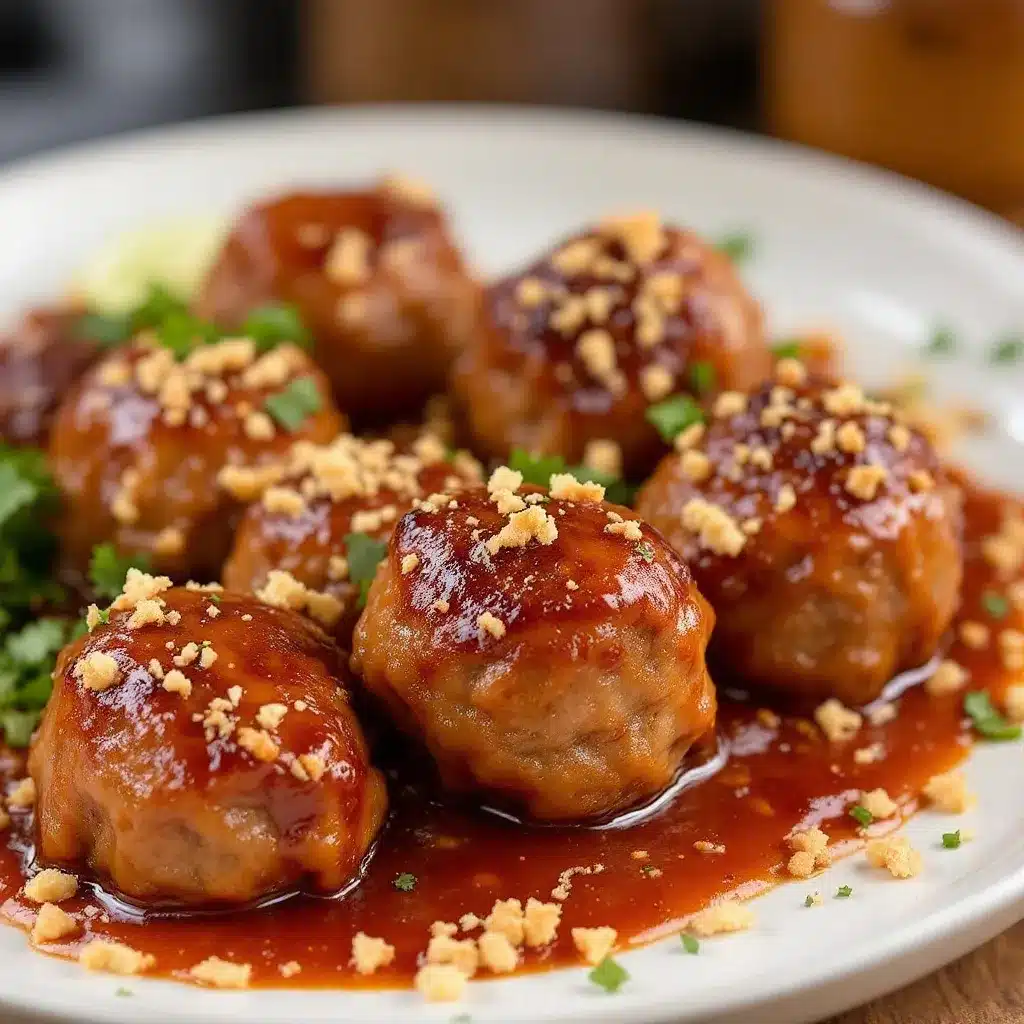
The glossy, caramelized edges catching the light—that sticky, lacquered finish is what I made these for. Everything else is secondary. I mean, sure, the heat from the gochujang and the sweetness from the brown sugar matter, but honestly? That first visual hit of a perfectly glazed meatball is what gets me every time. It’s the kind of thing that makes you stop mid-conversation and just stare at your plate for a second before you even pick up your fork.
I remember the first time I tried to replicate that glossy look at home. It was a disaster. The sauce was thin and watery, the meatballs were dry, and the whole thing looked like a sad, brown pile of regret. I wanted that specific, almost jewel-like sheen you get at Korean BBQ spots—the kind that clings to every ridge and promises a punch of flavor. It took a few more tries (and a lot of taste-testing) to figure out the balance. The secret, I realized, wasn’t just in the sauce ingredients, but in how you layer them and how you treat the meat itself.
These Sweet and Spicy Korean BBQ Meatballs are my answer to that craving. They’re deeply savory, with a kick that builds slowly, and that signature sticky finish that makes them completely irresistible. It’s the kind of recipe that feels special enough for a party but simple enough for a Tuesday night when you need something deeply satisfying. And honestly, once you see that glaze come together in the pan, you’ll understand why I couldn’t stop staring.
Why You’ll Love This Recipe
I’ve tested this recipe more times than I care to admit, tweaking the ratio of gochujang to brown sugar, the type of breadcrumbs, even the pan I sear them in. What I landed on is a version that delivers every single time, and here’s why I think you’ll feel the same way.
- Incredible Flavor in Under an Hour: From start to finish, you’re looking at about 45 minutes. The sauce comes together in one bowl, the meatballs roll up in minutes, and the whole thing is on your table faster than you could order takeout.
- Simple Pantry Ingredients: You don’t need a specialty grocery run. Ground beef, garlic, ginger, soy sauce, and a few other basics are all it takes. The star, gochujang, is worth seeking out—it lasts forever in your fridge and adds a depth you can’t get from anything else.
- Perfect for Any Occasion: These meatballs are incredibly versatile. Serve them over rice for a hearty dinner, stick them with toothpicks for a game-day appetizer, or tuck them into lettuce wraps for a lighter, fun meal. They’re a crowd-pleaser in every sense.
- That Unforgettable Glaze: This isn’t just a sauce poured over meatballs. It’s a glaze that reduces and clings, creating that sticky, caramelized exterior I mentioned. It’s the difference between a good meatball and a great one.
- Better Than Takeout: Let’s be real. Homemade always wins. You control the quality of the meat, the amount of sugar, and the level of spice. Plus, making them yourself means you get to eat them straight from the pan, which is a privilege you should absolutely exercise.
What Ingredients You Will Need
This recipe uses a short list of ingredients that work together to build layers of flavor. Most are pantry staples, and the few that aren’t are well worth the small investment. Here’s what you’ll need and why each one matters.
For the Meatballs
- Ground Beef (1 lb / 450g): I prefer 80/20 ground chuck. The fat content is crucial here—it keeps the meatballs moist and juicy during cooking. Leaner blends (like 93/7) will result in a drier meatball, so stick with something that has a bit of fat.
- Panko Breadcrumbs (1/2 cup / 30g): Panko gives the meatballs a lighter, more tender texture than standard breadcrumbs. They absorb moisture without turning the meat into a dense paste. If you’re gluten-free, use gluten-free panko or almond flour.
- Large Egg (1): The egg acts as a binder, holding the meatball together so it doesn’t fall apart in the pan. Make sure it’s at room temperature so it incorporates evenly.
- Green Onions (3, finely chopped): These add a mild oniony freshness that balances the richness of the beef and the bold sauce. I use both the white and light green parts in the meatball itself.
- Fresh Garlic (3 cloves, minced): Garlic is non-negotiable. It provides a pungent, aromatic base that’s essential to Korean-inspired flavors. Don’t use the jarred stuff—fresh makes a real difference here.
- Fresh Ginger (1 tsp, grated): Ginger brings warmth and a subtle zing that cuts through the meat’s richness. I use a microplane to grate it, which releases all its juices and ensures no stringy bits end up in the meatball.
- Low-Sodium Soy Sauce (1 tbsp): This adds the first layer of savory umami to the meat itself. Low-sodium is key so you can control the overall saltiness of the dish.
- Sesame Oil (1 tsp): A little goes a long way. Toasted sesame oil adds a nutty, toasty flavor that’s unmistakably Korean. It’s a small amount, but you’ll miss it if you skip it.
- Salt and Black Pepper (to taste): A pinch of salt and a few cracks of pepper season the meat from the inside out.
For the Sweet and Spicy Glaze
- Gochujang (3 tbsp / 45g): This is the heart of the recipe. Gochujang is a Korean fermented chili paste that’s sweet, savory, and spicy all at once. It has a deep, complex flavor that you can’t replicate with just sriracha or red pepper flakes. I like the brand O’Food—it’s widely available and has a great balance of heat and sweetness.
- Brown Sugar (3 tbsp / 40g, packed): Brown sugar provides the sweetness that balances the gochujang’s heat and helps create that signature sticky glaze. Dark brown sugar will give a deeper, molasses-like flavor, while light brown sugar is a bit milder.
- Low-Sodium Soy Sauce (1/4 cup / 60ml): This is the savory backbone of the sauce. It teams up with the gochujang for a double dose of umami.
- Rice Vinegar (1 tbsp): A splash of acidity brightens the sauce and keeps it from being one-dimensionally sweet or spicy. Rice vinegar is mild and slightly sweet, which is perfect here.
- Sesame Oil (1 tsp): A finishing touch of sesame oil in the glaze adds that final layer of nutty aroma.
- Water (1/4 cup / 60ml): This thins the sauce out just enough so it coats the meatballs evenly and reduces to the perfect consistency without burning.
- Cornstarch Slurry (1 tbsp cornstarch + 2 tbsp water): This is the secret to the glossy, clingy finish. The slurry thickens the sauce as it simmers, creating that beautiful lacquered look.
For Garnish
- Sesame Seeds (1 tbsp, toasted): Toasted sesame seeds add a nutty crunch and make the dish look finished and professional.
- Extra Green Onions (sliced): A fresh sprinkle of green onion on top adds color and a final pop of freshness.
Equipment Needed
You don’t need a lot of fancy tools to make these meatballs, which is part of their charm. Here’s what you’ll need to get the job done.
- Large Mixing Bowl: For combining the meatball ingredients. A glass or stainless steel bowl works great.
- Large Skillet or Cast Iron Pan: You need a pan that can hold all the meatballs in a single layer without crowding. A 12-inch skillet is perfect. Cast iron is ideal for even browning, but a good non-stick or stainless steel pan works too.
- Microplane or Fine Grater: For grating the ginger. It makes a huge difference in texture and flavor release compared to chopping it.
- Small Mixing Bowl: For whisking together the glaze ingredients.
- Measuring Cups and Spoons: For accurate measurements. Baking is a science, but this recipe is forgiving—still, it’s good to be precise with the gochujang and soy sauce.
- Tongs or a Slotted Spoon: For turning the meatballs as they brown and for removing them from the pan.
- Whisk or Fork: For mixing the cornstarch slurry until smooth.
Budget-Friendly Tip: If you don’t own a cast iron skillet, a non-stick pan works just fine. Just be careful not to use high heat, as non-stick coatings can degrade over time. A good-quality stainless steel pan is also a solid investment and will last you for years.
Preparation Method
Let’s get cooking. This process is straightforward, but I’ve included some notes from my own trial and error to help you nail it on the first try.
- Preheat your oven to 400°F (200°C). While the oven heats, line a baking sheet with parchment paper or foil for easy cleanup. You’ll finish the meatballs in the oven to ensure they’re cooked through without burning the glaze on the stovetop.
- Make the meatball mixture. In a large mixing bowl, combine the ground beef, panko breadcrumbs, egg, chopped green onions, minced garlic, grated ginger, soy sauce, sesame oil, salt, and pepper. Use your hands to gently mix everything together. Here’s the key: don’t overmix. Overworking the meat will make the meatballs tough. Mix just until everything is evenly distributed—about 30 seconds of gentle folding and squeezing.
- Roll the meatballs. Scoop out about 1.5 tablespoons of the mixture (a small cookie scoop is perfect for this) and roll it between your palms to form a smooth ball. You should get about 20-22 meatballs. Place them on the prepared baking sheet as you go.
- Sear the meatballs. Heat 1 tablespoon of vegetable or canola oil in your large skillet over medium-high heat. Once the oil is shimmering, carefully add the meatballs in a single layer (you may need to do this in two batches if your pan isn’t big enough). Sear them for 2-3 minutes per side, turning gently with tongs, until they’re nicely browned on all sides. Don’t worry about cooking them through at this stage—they’ll finish in the oven. The browning is all about flavor and texture.
- Make the glaze while the meatballs sear. In a small bowl, whisk together the gochujang, brown sugar, soy sauce, rice vinegar, sesame oil, and water. In a separate tiny bowl, stir together the cornstarch and 2 tablespoons of water to make the slurry. Set both aside.
- Combine and coat. Once all the meatballs are seared, return them all to the skillet (or use a clean oven-safe pan if you prefer). Pour the glaze mixture over the meatballs. Gently toss the meatballs in the sauce using tongs until they’re all evenly coated. The sauce will look thin at first—that’s okay.
- Thicken the glaze on the stovetop. Place the skillet over medium heat. Let the sauce come to a gentle simmer. Once it’s bubbling, pour in the cornstarch slurry while stirring constantly. The sauce will thicken almost immediately, turning glossy and clinging to the meatballs. Let it simmer for about 1 minute, stirring gently.
- Finish in the oven. Transfer the entire skillet (if it’s oven-safe) to the preheated oven. If your skillet isn’t oven-safe, transfer the meatballs and sauce to a baking dish. Bake for 10-12 minutes, until the meatballs are cooked through (internal temperature of 165°F / 74°C) and the glaze is bubbly and caramelized on the edges.
- Rest and garnish. Remove the skillet from the oven and let the meatballs rest for 5 minutes. This allows the glaze to set slightly. Sprinkle generously with toasted sesame seeds and sliced green onions before serving.
Cooking Tips & Techniques
Over the years, I’ve made plenty of mistakes with meatballs. Here are the lessons I learned so you can skip the hard parts.
- The Wet Hand Trick: If the meatball mixture is sticking to your hands, lightly wet your palms with cold water before rolling. It makes the process so much smoother and keeps the meat from getting over-handled.
- Don’t Skip the Sear: That golden-brown crust isn’t just for looks. It adds a deep, savory flavor that the glaze builds on. Skipping the sear and just baking the raw meatballs in the sauce will give you a pale, soft result. Trust me, I’ve tried it.
- Use a Meat Thermometer: This is the most reliable way to know your meatballs are done without cutting one open and losing all those juices. The USDA recommends 160°F (71°C) for ground beef, but I find 165°F (74°C) gives a perfect margin of safety without drying them out.
- Toast Your Sesame Seeds: It takes two minutes in a dry pan over medium heat, shaking occasionally, until they’re fragrant and light golden. Untoasted sesame seeds are bland and chewy. Toasted seeds are a flavor bomb.
- Make the Glaze Ahead: You can whisk the glaze ingredients together (minus the cornstarch slurry) up to 3 days in advance and store it in the fridge. Just stir it well before using. The slurry should be made fresh, as the cornstarch will settle.
Variations & Adaptations
This recipe is a fantastic base, and it’s easy to adapt to different tastes and dietary needs. Here are a few ways I’ve played with it.
- Make it Gluten-Free: Swap the panko breadcrumbs for gluten-free panko or almond flour. Use tamari or coconut aminos instead of soy sauce. The rest of the ingredients are naturally gluten-free.
- Use Ground Turkey or Chicken: For a leaner option, substitute ground turkey or chicken. Keep in mind that these meats are drier than beef, so add 1 tablespoon of olive oil or a splash of milk to the mixture to keep them moist. Cook them to an internal temperature of 165°F (74°C).
- Spice Level Adjustment: Love heat? Add an extra tablespoon of gochujang or a teaspoon of gochugaru (Korean red pepper flakes) to the glaze. Want it milder? Reduce the gochujang to 2 tablespoons and add a teaspoon of honey for extra sweetness.
- Add a Crunchy Coating: For a fun twist, roll the raw meatballs in a mixture of crushed pork rinds or crushed cornflakes before searing. It adds an incredible crunchy exterior that contrasts with the sticky glaze.
- Low-Carb / Keto Friendly: Replace the panko with almond flour or crushed pork rinds. Use a sugar substitute like monk fruit or allulose in the glaze instead of brown sugar. The gochujang does have a small amount of sugar, but it’s minimal for a single serving.
Serving & Storage Suggestions
These meatballs are incredibly versatile when it comes to serving. Here’s how I like to enjoy them and how to keep them for later.
- Serving Temperature: Serve these meatballs hot, straight from the oven. The glaze is at its stickiest and most flavorful when it’s warm. Let them rest for 5 minutes so the glaze sets slightly, but don’t let them cool completely.
- Presentation Ideas: For a main course, serve over a bed of steamed jasmine rice or cauliflower rice for a low-carb option. For an appetizer, stick a toothpick in each and arrange them on a platter with a sprinkle of sesame seeds and green onions. They also work beautifully in lettuce wraps—use butter lettuce or romaine hearts for a refreshing, crunchy bite.
- What to Serve With It: A simple side of steamed or roasted vegetables like broccoli or bok choy balances the richness. A crisp Asian cucumber salad with rice vinegar and chili flakes is a fantastic, refreshing contrast. For a heartier meal, pair them with grilled vegetable skewers for a full BBQ-inspired spread.
- Storage Instructions: Store leftover meatballs in an airtight container in the refrigerator for up to 4 days. The flavors actually meld and deepen overnight, making them even better the next day.
- Reheating Tips: The best way to reheat is in a skillet over medium-low heat with a splash of water or additional soy sauce to loosen the glaze. Cover the pan and heat for 5-7 minutes, stirring occasionally. You can also reheat them in the microwave in 30-second bursts, but the glaze will lose its sticky texture.
- Freezing Instructions: These meatballs freeze beautifully. Let them cool completely, then arrange them in a single layer on a baking sheet and freeze for 1-2 hours until solid. Transfer the frozen meatballs to a freezer-safe bag or container. They’ll keep for up to 3 months. To reheat, thaw in the refrigerator overnight and then warm in a skillet as directed above.
Nutritional Information & Benefits
While these meatballs are a treat, they also offer some surprising nutritional benefits, especially if you make a few smart swaps.
Estimated Nutrition per Serving (4-5 meatballs):
- Calories: 380-420
- Protein: 28-32g
- Fat: 22-26g
- Carbohydrates: 18-22g
- Fiber: 1-2g
- Sugar: 12-15g
Key Benefits:
- High-Quality Protein: Ground beef is an excellent source of complete protein, which is essential for muscle repair and satiety. This recipe packs a solid protein punch that will keep you full and satisfied.
- Iron and B Vitamins: Beef is rich in heme iron, which is easily absorbed by the body, and B vitamins like B12, which support energy production and brain function.
- Ginger’s Anti-Inflammatory Properties: Ginger is known for its anti-inflammatory and digestive benefits. A small amount in each meatball adds a subtle health boost.
- Fermented Goodness from Gochujang: As a fermented food, gochujang contains probiotics that can support gut health. While the cooking process reduces some of these benefits, you still get the complex flavor and some of the nutritional advantages.
Dietary Note: This recipe is naturally dairy-free and can be made gluten-free and low-carb with simple substitutions. It contains eggs and soy (from the soy sauce), so adjust accordingly for allergies.
Conclusion
These Sweet and Spicy Korean BBQ Meatballs have become a staple in my kitchen for a reason. They’re the kind of recipe that feels both impressive and achievable—a balance I’m always chasing. That sticky, caramelized glaze, the tender, juicy interior, the little kick of heat that makes you reach for another one—it’s a combination that works on every level.
I hope you give them a try and make them your own. Maybe you’ll add a little extra ginger, or serve them over a bed of fluffy rice with a side of cottage cheese for a protein-packed twist. That’s the beauty of a good recipe—it’s a starting point, not a rulebook.
I’d love to hear how yours turn out. Did you try a fun variation? Serve them at a party? Drop a comment below and let me know—your feedback and ideas are what keep this community cooking and experimenting. And if you loved this recipe, don’t forget to share it with a friend who needs a little sweet and spicy in their life.
Happy cooking!
Frequently Asked Questions
Can I make these meatballs in an air fryer?
Absolutely! Cook the meatballs at 375°F (190°C) for 10-12 minutes, shaking the basket halfway through. Then toss them in the glaze and return to the air fryer for another 2-3 minutes until the glaze is bubbly and caramelized.
What can I use instead of gochujang?
If you can’t find gochujang, you can mix 2 tablespoons of sriracha with 1 tablespoon of miso paste and 1 teaspoon of sugar. It won’t be exactly the same, but it will give you a similar sweet, spicy, and savory profile.
Can I use frozen meatballs?
You can, but fresh is always better. If using frozen, thaw them completely and pat them dry before searing. The texture won’t be as tender, and they may release more water into the pan, which can prevent a good sear.
How do I prevent the meatballs from falling apart?
Don’t overmix the meat, and make sure you have enough binder (the egg and panko). Also, searing them creates a crust that helps hold them together. If your mixture feels too wet, add an extra tablespoon of panko.
Can I double this recipe?
Yes, this recipe doubles beautifully. Just be sure to sear the meatballs in batches so you don’t overcrowd the pan. If you’re baking them, you may need to use two baking sheets or a larger roasting pan to ensure even cooking and glazing.
Pin This Recipe!
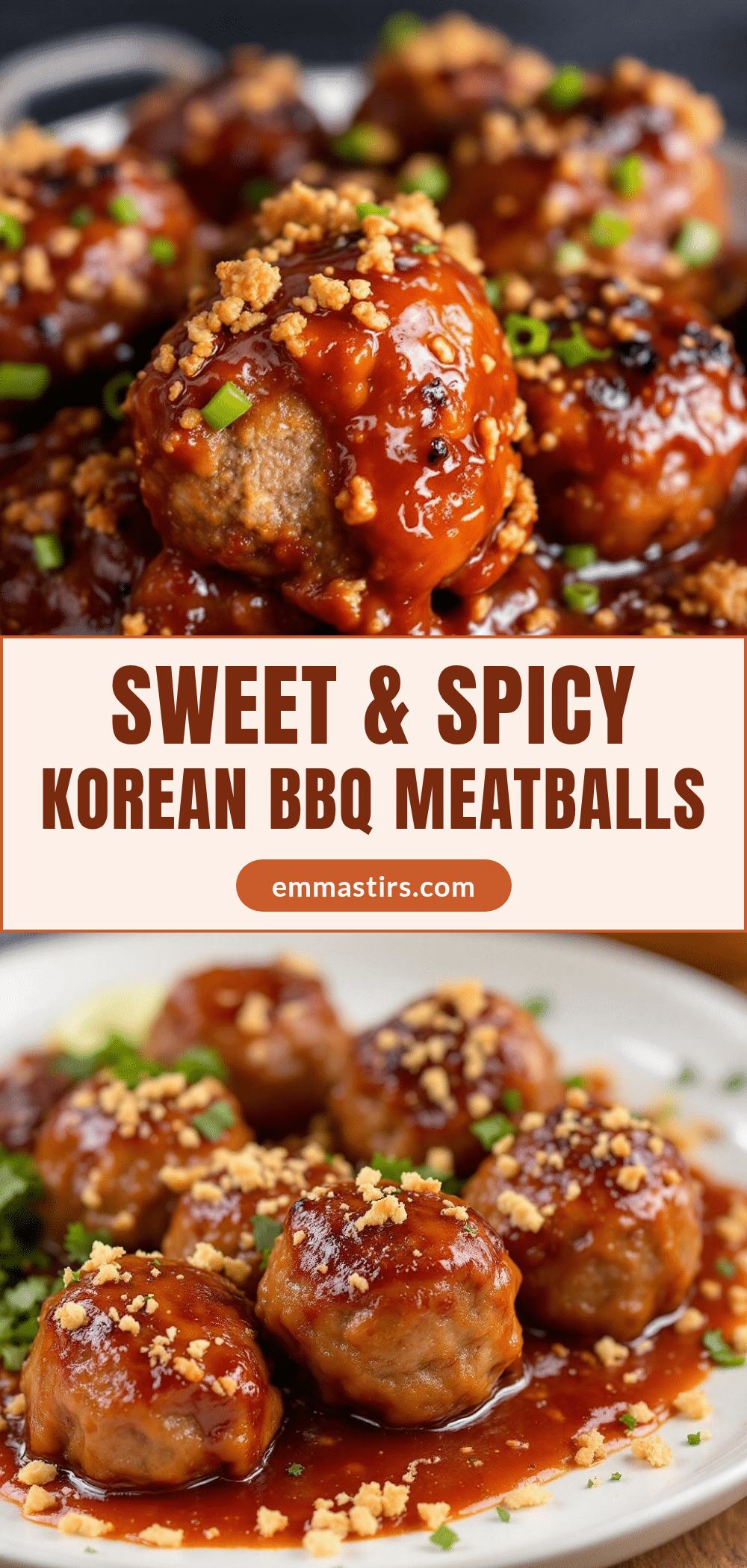
Sweet and Spicy Korean BBQ Meatballs: Best Easy Recipe

These Sweet and Spicy Korean BBQ Meatballs are deeply savory with a kick that builds slowly, featuring a signature sticky, caramelized glaze that makes them completely irresistible. Perfect for a party or a simple Tuesday night dinner.
- Prep Time: 15 minutes
- Cook Time: 30 minutes
- Total Time: 45 minutes
- Yield: 4 servings 1x
- Category: Main Course
- Cuisine: Korean
Ingredients
- 1 lb (450g) ground beef (80/20 ground chuck)
- 1/2 cup (30g) panko breadcrumbs
- 1 large egg, at room temperature
- 3 green onions, finely chopped
- 3 cloves garlic, minced
- 1 tsp fresh ginger, grated
- 1 tbsp low-sodium soy sauce
- 1 tsp sesame oil
- Salt and black pepper to taste
- 3 tbsp (45g) gochujang
- 3 tbsp (40g) brown sugar, packed
- 1/4 cup (60ml) low-sodium soy sauce
- 1 tbsp rice vinegar
- 1 tsp sesame oil
- 1/4 cup (60ml) water
- 1 tbsp cornstarch
- 2 tbsp water (for slurry)
- 1 tbsp sesame seeds, toasted
- Extra green onions, sliced for garnish
- 1 tbsp vegetable or canola oil (for searing)
Instructions
- Preheat your oven to 400°F (200°C). Line a baking sheet with parchment paper or foil.
- In a large mixing bowl, combine ground beef, panko breadcrumbs, egg, chopped green onions, minced garlic, grated ginger, soy sauce, sesame oil, salt, and pepper. Mix gently with your hands until just combined, about 30 seconds.
- Scoop out about 1.5 tablespoons of the mixture and roll into smooth balls. You should get about 20-22 meatballs. Place them on the prepared baking sheet.
- Heat 1 tablespoon of vegetable or canola oil in a large skillet over medium-high heat. Once shimmering, add meatballs in a single layer (work in batches if needed). Sear for 2-3 minutes per side until nicely browned on all sides.
- While meatballs sear, make the glaze: In a small bowl, whisk together gochujang, brown sugar, soy sauce, rice vinegar, sesame oil, and water. In a separate tiny bowl, stir together cornstarch and 2 tablespoons of water to make the slurry.
- Return all seared meatballs to the skillet. Pour the glaze mixture over them and gently toss to coat evenly.
- Place the skillet over medium heat and bring the sauce to a gentle simmer. Pour in the cornstarch slurry while stirring constantly. Let simmer for about 1 minute until the sauce thickens and becomes glossy.
- Transfer the skillet (if oven-safe) to the preheated oven. If not oven-safe, transfer meatballs and sauce to a baking dish. Bake for 10-12 minutes until meatballs are cooked through (internal temperature of 165°F / 74°C).
- Remove from oven and let rest for 5 minutes. Sprinkle generously with toasted sesame seeds and sliced green onions before serving.
Notes
Don’t overmix the meatball mixture to keep them tender. Use a meat thermometer to ensure doneness without drying out. Toast sesame seeds for maximum flavor. The glaze can be made ahead (minus slurry) up to 3 days in advance.
Nutrition
- Serving Size: 4-5 meatballs
- Calories: 400
- Sugar: 13.5
- Sodium: 800
- Fat: 24
- Saturated Fat: 8
- Carbohydrates: 20
- Fiber: 1.5
- Protein: 30
Keywords: Korean BBQ meatballs, sweet and spicy meatballs, gochujang meatballs, easy meatball recipe, appetizer, dinner