Love this? Save it for later!
Share the inspiration with your friends
I figured a glazed ham was one of those things you just followed the recipe card for, step by step, no questions asked. It took about one Christmas of watching my mother-in-law’s ham turn into a sticky, burnt mess for that assumption to fall apart completely. She’d followed every instruction perfectly, but the sugar in the glaze had caramelized into something closer to hard candy than a glossy, savory-sweet coating.
That first bite was a disaster. The second one made me realize the flavor underneath was actually really good — the ham itself was juicy and tender. It was the glaze technique that needed a total rethink. So I started playing around, testing different ratios of brown sugar to bourbon, different cooking temperatures, and the timing of when to apply that beautiful, sticky layer.
This Perfect Brown Sugar Bourbon Glazed Ham is the result of those experiments — and a few happy accidents along the way (like the time I forgot to tent the ham with foil and ended up with a deeply caramelized, almost candied crust that was the best thing I’d ever tasted). It’s not just another holiday ham recipe. It’s the one that finally made my mother-in-law ask for my recipe card.
Honestly, the secret is in the patience and the layering. You don’t just dump the glaze on at the end. You build it, let it set, then build it again. The bourbon isn’t just for show either — it cuts through the sweetness of the brown sugar and adds this warm, slightly smoky depth that makes the whole thing feel special. It’s the kind of ham that makes everyone at the table go quiet for a second after that first bite, and honestly, that’s the best compliment a cook can get.
Why You’ll Love This Recipe
This isn’t just another holiday ham recipe. It’s the one that’s been tested on picky eaters, holiday perfectionists, and even a few folks who swore they didn’t like ham. Here’s why it works:
- Foolproof Glaze Technique : No more burnt, crystallized sugar disasters. The method here ensures a glossy, caramelized crust that stays sticky and delicious, not hard and brittle.
- Bold, Balanced Flavor : The brown sugar brings deep, molasses-like sweetness, while the bourbon adds warmth and a subtle smoky kick. It’s not boozy — it’s just right.
- Perfect for Holidays : Whether it’s Christmas, Easter, or a special Sunday dinner, this ham is the centerpiece that steals the show without stealing your sanity.
- Simple Ingredients : You probably already have brown sugar, butter, and Dijon mustard in your pantry. The bourbon is the only “special” ingredient, and it’s worth it.
- Crowd-Pleaser : Kids love the sweet glaze, adults appreciate the complexity, and everyone goes back for seconds. It’s the kind of dish that makes you look like a hero with minimal effort.
- Leftovers for Days : A good ham means incredible sandwiches, soups, and breakfast hashes for the rest of the week. This recipe delivers on that promise.
What makes this recipe different is the layering technique. Most recipes tell you to glaze once and call it done. I’ve found that applying the glaze in three stages — starting halfway through cooking, then again near the end, and finally a last brush right before serving — creates that thick, sticky, caramelized crust that everyone fights over. It’s a small extra step that makes a massive difference.
This isn’t just good ham. It’s the kind of ham that makes you close your eyes after the first bite, the kind that turns a regular meal into a memory. It’s comfort food reimagined — richer, more flavorful, but with the same soul-soothing satisfaction that only a perfectly cooked ham can bring. Perfect for impressing guests without the stress, or turning a simple holiday dinner into something truly special.
What Ingredients You Will Need
This recipe uses simple, wholesome ingredients to deliver bold flavor and a stunning presentation without any fuss. Most of these are pantry staples, and the bourbon is the one ingredient that makes it feel extra special.
- Bone-in, spiral-cut ham (8-10 pounds) — I prefer a bone-in ham for the best flavor and moisture. Spiral-cut makes serving a breeze. Look for one that’s fully cooked, so you’re really just reheating and glazing it.
- Brown sugar (1 cup, packed) — Light or dark brown sugar works, but dark brown sugar gives a deeper, more molasses-like flavor that pairs beautifully with the bourbon. I use dark brown sugar for the richest result.
- Bourbon (1/4 cup) — Use a bourbon you’d actually drink, not the cheapest bottle on the shelf. The flavor concentrates as it cooks, so quality matters. I like Bulleit or Maker’s Mark for their smooth, slightly sweet profiles.
- Unsalted butter (1/4 cup, melted) — Butter adds richness and helps the glaze caramelize without burning. Use unsalted so you can control the salt level.
- Dijon mustard (2 tablespoons) — This is the secret ingredient that cuts through the sweetness and adds a subtle tang. It helps balance the entire glaze. I recommend Grey Poupon for its smooth texture.
- Apple cider vinegar (1 tablespoon) — A splash of acidity brightens the glaze and prevents it from becoming cloyingly sweet. It also helps the glaze stick to the ham.
- Whole cloves (optional, about 20-30) — Studding the ham with cloves adds a classic, aromatic touch. It’s traditional for a reason, but feel free to skip it if you’re not a fan.
- Honey (2 tablespoons) — Adds a floral sweetness and helps the glaze achieve that beautiful, glossy shine. You can substitute maple syrup if you prefer.
Ingredient Selection Tips : When choosing your ham, look for one that’s labeled “fully cooked” or “ready to eat.” This just means you’re reheating it to serving temperature, which is much simpler than cooking a raw ham. For the bourbon, avoid anything too high-proof or heavily peated — you want warmth, not a campfire. If you’re avoiding alcohol, you can substitute the bourbon with apple cider or a non-alcoholic bourbon alternative, but the flavor will be different.
Substitution Guidance : For a gluten-free option, ensure your Dijon mustard is certified gluten-free (most are). For a dairy-free version, use vegan butter or coconut oil instead of unsalted butter. If you don’t have apple cider vinegar, white wine vinegar or even lemon juice will work in a pinch.
Equipment Needed
You don’t need a ton of fancy equipment for this recipe, which is part of its beauty. Here’s what you’ll need:
- Large roasting pan with a rack — The rack keeps the ham elevated so the glaze can drip down and caramelize without the bottom burning. If you don’t have a rack, you can use crumpled aluminum foil to lift the ham slightly.
- Aluminum foil — For tenting the ham during the first part of cooking to keep it moist. Heavy-duty foil works best.
- Small saucepan — For making the glaze. A 1-quart saucepan is perfect.
- Basting brush — A silicone basting brush is ideal for spreading the glaze evenly. Natural bristle brushes can work, but they’re harder to clean with the sticky glaze.
- Meat thermometer — Essential for ensuring the ham reaches a safe internal temperature of 140°F. I use an instant-read digital thermometer for accuracy.
- Sharp knife — For scoring the ham if it isn’t already spiral-cut. A good chef’s knife or carving knife works fine.
- Cutting board — A large, sturdy cutting board for carving the ham. One with a groove to catch juices is helpful.
Personal Experience : I’ve used both a traditional metal roasting pan and a disposable aluminum one — the disposable one works fine in a pinch, but it’s flimsy and harder to handle with a heavy ham. Invest in a good roasting pan if you make ham regularly. It’s worth it.
Maintenance Tip : After making this ham, your roasting pan will have a sticky, caramelized residue. Fill it with hot water and a drop of dish soap immediately after transferring the ham, and let it soak for 30 minutes. It comes right off.
Preparation Method
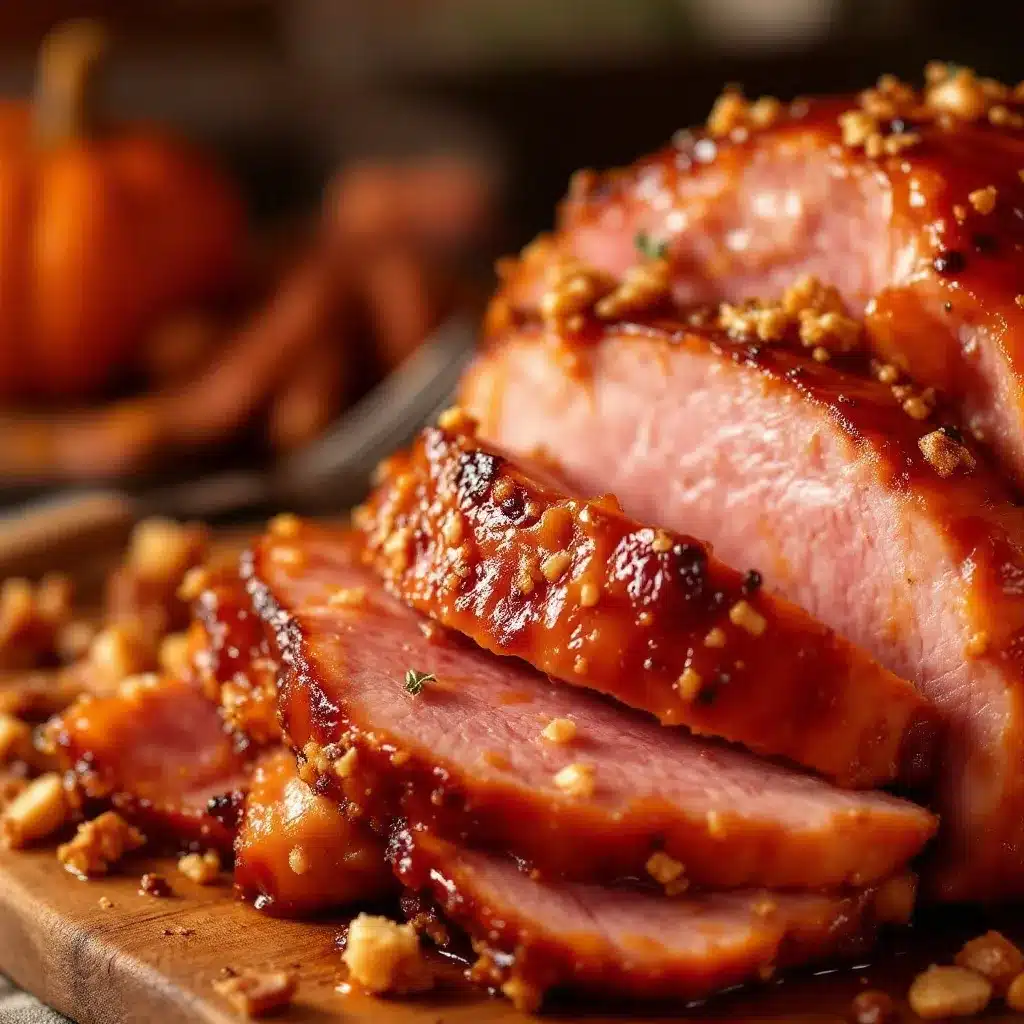
This method is broken down into clear, manageable steps. Take your time, and you’ll be rewarded with the most incredible ham you’ve ever made.
- Prepare the ham (15 minutes) : Remove the ham from the refrigerator about 2 hours before cooking to let it come to room temperature. This ensures even heating. If your ham has a plastic covering or a small bone cap, remove those. Place the ham flat-side down on the rack in the roasting pan. If it isn’t spiral-cut, use a sharp knife to score the surface in a diamond pattern, cutting about 1/4 inch deep. Stud each diamond with a whole clove if you’re using them.
- Make the glaze (10 minutes) : In a small saucepan over medium heat, combine the brown sugar, bourbon, melted butter, Dijon mustard, apple cider vinegar, and honey. Whisk continuously until the sugar is completely dissolved and the mixture is smooth and slightly thickened — about 3-4 minutes. Do not let it boil vigorously or the sugar can crystallize. Remove from heat and set aside. The glaze will thicken slightly as it cools.
- First roast (1 hour 30 minutes) : Preheat your oven to 325°F (163°C). Tent the ham loosely with aluminum foil — this traps steam and keeps the ham moist during the initial roasting. Place the ham in the oven and roast for about 13-15 minutes per pound. For an 8-pound ham, that’s roughly 1 hour 45 minutes to 2 hours. The goal here is to heat the ham through without drying it out.
- Apply the first glaze layer (15 minutes) : After the initial roasting time, remove the foil carefully (watch out for steam!). Brush a generous layer of the glaze all over the surface of the ham, getting into the cuts and crevices. Return the ham to the oven, uncovered, for 15 minutes. This allows the glaze to start caramelizing.
- Apply the second glaze layer (15 minutes) : Remove the ham from the oven again and brush on another generous layer of glaze. Return it to the oven, uncovered, for another 15 minutes. You’ll start to see the glaze bubbling and turning a deep, golden brown.
- Final glaze and rest (20 minutes) : Remove the ham one last time and brush on the remaining glaze. Return to the oven for 10-15 minutes, or until the internal temperature reaches 140°F (60°C) when measured in the thickest part of the ham, away from the bone. Remove from the oven and let it rest for 15-20 minutes before carving. This resting period is crucial — it allows the juices to redistribute and the glaze to set into a beautiful, sticky crust.
- Carve and serve : Transfer the ham to a cutting board. If it’s spiral-cut, simply follow the pre-cut slices. If not, carve against the grain into thin slices. Spoon any pan juices over the slices before serving for extra flavor.
Sensory Cues : When the glaze is ready, it should smell deeply caramelized, like a cross between butterscotch and toasted marshmallows. The ham should look glossy and dark amber, with the glaze bubbling gently around the edges. When you insert a thermometer, it should slide in easily — that’s a sign of a tender, perfectly cooked ham.
Troubleshooting Tip : If the glaze starts to darken too quickly or looks like it’s burning, tent the ham loosely with foil. Every oven runs slightly differently, so keep an eye on it during the final glazing stages.
Cooking Tips & Techniques
Over the years, I’ve learned a few things the hard way so you don’t have to. Here are the tips that make this ham truly perfect.
Low and Slow Wins the Race : I know it’s tempting to crank up the heat to speed things up, but resist. A 325°F oven is the sweet spot. Higher temperatures will cause the sugar in the glaze to burn before the ham is heated through. Lower temperatures won’t caramelize the glaze properly. Trust me on this one.
The Three-Glaze Rule : This is the single most important technique in this recipe. Applying the glaze in three layers — rather than one thick coat at the end — creates a thick, caramelized crust that’s sticky, glossy, and deeply flavorful. Each layer bakes on and sets before the next one goes on, building that beautiful texture. I learned this after a disastrous Christmas where my single-coat glaze just slid right off the ham.
Don’t Skip the Rest : I know you’re hungry, and the ham smells incredible, but that 15-20 minute rest is non-negotiable. If you carve too soon, all those beautiful juices will run out onto the cutting board, leaving you with a dry ham. Patience pays off here.
Use the Pan Juices : After the ham is done, you’ll have a pan full of caramelized glaze and ham drippings. Don’t throw that away! Spoon it over the sliced ham, or use it as a base for a quick pan sauce. Just add a splash of water or chicken broth, bring it to a simmer, and whisk in a pat of butter. It’s liquid gold.
My Biggest Failure : One year, I got distracted by a phone call and left the ham uncovered for the entire cooking time. The glaze turned into a hard, blackened shell, and the ham was dry as a bone. It was a $50 mistake. Now I always set a timer for every single step. Learn from my pain.
Variations & Adaptations
This recipe is incredibly versatile. Here are a few ways to make it your own.
- Spicy Bourbon Glaze : Add 1/2 teaspoon of cayenne pepper or a minced chipotle pepper in adobo sauce to the glaze. The heat cuts through the sweetness beautifully and adds a smoky kick. I tried this for a New Year’s Eve party, and it was a huge hit with the spice lovers.
- Maple-Bourbon Glaze : Substitute the honey with 2 tablespoons of pure maple syrup. The maple flavor pairs wonderfully with the bourbon and adds a slightly earthier sweetness. This is my go-to for fall gatherings.
- Honey-Orange Glaze : Replace the bourbon with fresh orange juice and add 1 tablespoon of orange zest. The citrus brightens the whole dish and makes it feel lighter — perfect for Easter or spring celebrations.
- Dietary Adaptations : For a gluten-free version, ensure your Dijon mustard is certified gluten-free. For a dairy-free option, use vegan butter or coconut oil. If you’re avoiding alcohol, use apple cider or a non-alcoholic bourbon alternative — the flavor will be different but still delicious.
- Different Hams : This glaze works beautifully on a boneless ham, a smoked ham, or even a fresh (uncured) ham. For a fresh ham, you’ll need to cook it to a higher internal temperature of 160°F (71°C), and the cooking time will be longer — about 20-25 minutes per pound.
Serving & Storage Suggestions
This ham is a showstopper, so present it with pride. Transfer the whole ham to a large platter, surrounded by fresh herbs like rosemary and thyme, and maybe some orange slices for color. Carve at the table for maximum effect.
What to Serve With It : This ham pairs beautifully with classic sides. Try it with a fresh savory cottage cheese bowl for a lighter option, or a fluffy cottage cheese pancake for a brunch-style spread. For a complete holiday meal, add roasted vegetables, mashed potatoes, and a tangy cranberry sauce. The sweetness of the ham also works wonderfully with a fresh watermelon cucumber feta salad for a surprising but delicious contrast.
Storage Instructions : Store leftover ham in an airtight container in the refrigerator for up to 5 days. The glaze will soften slightly, but the flavor will deepen — honestly, leftovers are sometimes even better. For longer storage, wrap the ham tightly in plastic wrap, then in aluminum foil, and freeze for up to 3 months.
Reheating Methods : To reheat, place slices on a baking sheet, cover with foil, and warm in a 300°F oven for 10-15 minutes. You can also reheat in a skillet over medium heat with a splash of water or apple juice to keep it moist. Avoid the microwave if you can — it tends to dry out the ham and make the glaze rubbery.
Flavor Development : The flavors of this ham actually improve after a day or two in the fridge. The bourbon and brown sugar continue to meld, and the ham becomes even more tender. It’s why leftover ham sandwiches are so legendary.
Nutritional Information & Benefits
Here’s an approximate nutritional breakdown per 4-ounce serving (about 2-3 slices, depending on thickness):
- Calories: 280
- Protein: 22g
- Fat: 12g
- Carbohydrates: 18g
- Sugar: 16g
- Sodium: 1200mg
Health Benefits : Ham is a good source of high-quality protein, which is essential for muscle repair and satiety. It also provides important nutrients like selenium, zinc, and B vitamins, particularly B12. The brown sugar and bourbon are indulgent, but they’re balanced by the protein and minerals in the ham.
Dietary Considerations : This recipe is naturally gluten-free (check your mustard). It’s not low-carb or low-sodium, but it’s a special occasion dish — and that’s okay. If you’re watching your sodium intake, look for a low-sodium ham or a “no-salt-added” variety.
Potential Allergens : This recipe contains dairy (butter) and possible sulfites in the ham. Always check labels if you have specific allergies.
Personal Wellness Perspective : I believe in balance. This ham is a celebration dish, not an everyday meal. Enjoy it fully, savor every bite, and then get back to your normal routine. Food is meant to bring joy, and this ham does exactly that.
Conclusion
This Perfect Brown Sugar Bourbon Glazed Ham is more than just a recipe — it’s the centerpiece of countless memories, from chaotic Christmas mornings to quiet Easter dinners. It’s the dish that makes everyone stop talking for a second, just to take another bite. The combination of sweet, smoky, and savory is simply unbeatable.
I encourage you to make this recipe your own. Adjust the bourbon level, try the spicy variation, or experiment with different mustards. The beauty of this glaze is that it’s incredibly forgiving and adaptable. Don’t be afraid to play around.
Honestly, this is the ham that made me fall in love with cooking for a crowd. It’s reliable, impressive, and deeply satisfying. I hope it becomes a tradition in your home, just like it has in mine.
I’d love to hear how it turns out for you! Drop a comment below with your variations, your serving suggestions, or just tell me about the look on your family’s faces when you brought it to the table. And if you loved it, share this recipe with a friend who needs a holiday hero dish. Happy cooking!
Frequently Asked Questions
- Can I use a boneless ham for this recipe? Absolutely! Boneless hams work just as well. Just adjust the cooking time based on the weight, and be sure to check the internal temperature.
- Do I have to use bourbon, or can I substitute it? You can substitute the bourbon with apple cider, orange juice, or a non-alcoholic bourbon alternative. The flavor will change, but it will still be delicious.
- How do I prevent the glaze from burning? The key is to apply the glaze in layers and keep an eye on the ham during the final glazing stages. If it starts to darken too quickly, tent it loosely with foil.
- Can I prepare the glaze ahead of time? Yes! You can make the glaze up to 3 days in advance. Store it in an airtight container in the refrigerator, and reheat it gently on the stovetop before using.
- What’s the best way to reheat leftover ham without drying it out? Reheat slices in a 300°F oven, covered with foil, for 10-15 minutes. Add a splash of water or apple juice to the pan for extra moisture. Avoid the microwave if possible.
Pin This Recipe!
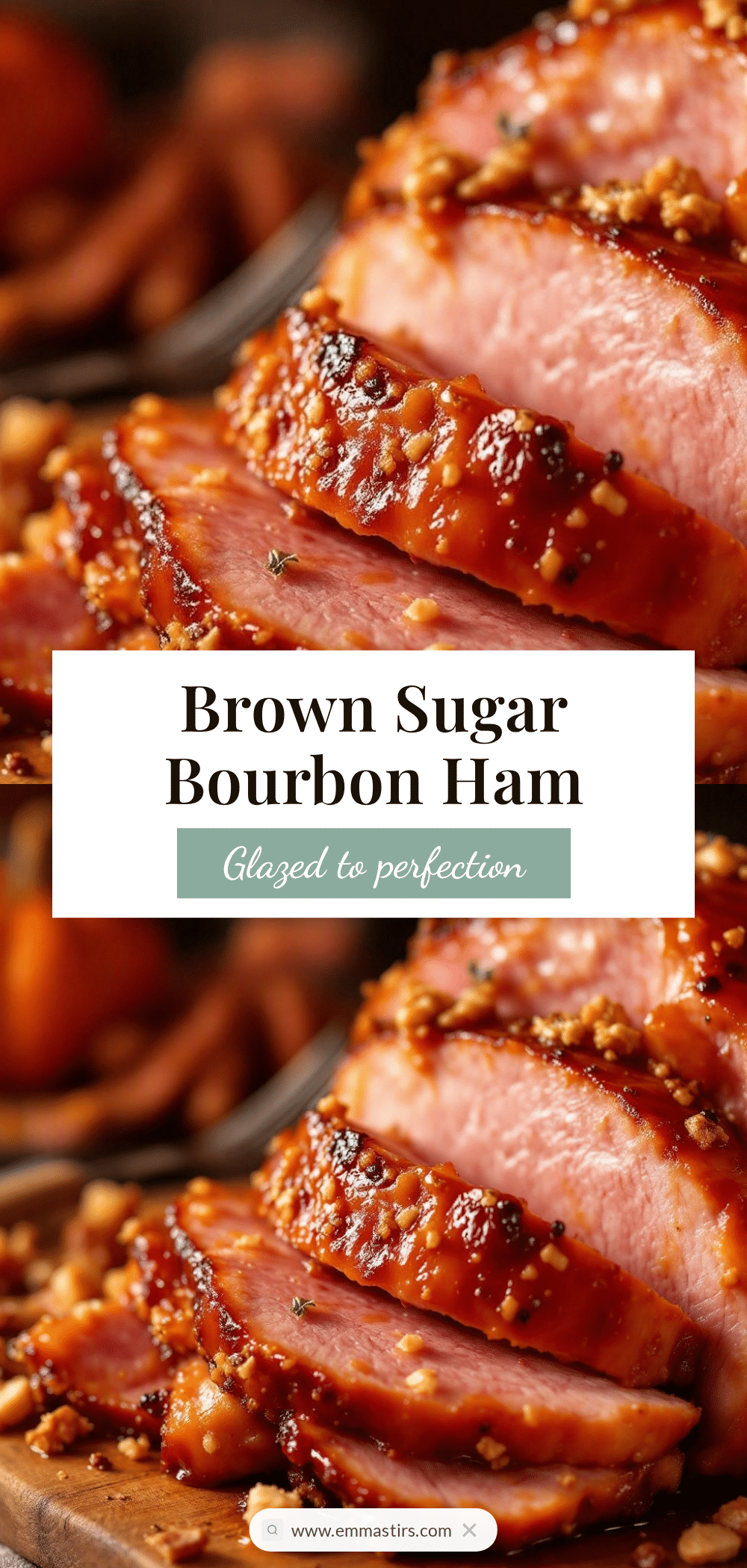
Perfect Brown Sugar Bourbon Glazed Ham – Easy Holiday Recipe
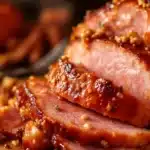
This Perfect Brown Sugar Bourbon Glazed Ham features a foolproof three-layer glaze technique that creates a glossy, caramelized crust. The bourbon cuts through the sweetness of the brown sugar, adding warm, smoky depth, making it the ultimate holiday centerpiece.
- Prep Time: 15 minutes
- Cook Time: 2 hours 30 minutes
- Total Time: 2 hours 45 minutes
- Yield: 16 servings 1x
- Category: Main Course
- Cuisine: American
Ingredients
- 1 bone-in, spiral-cut ham (8–10 pounds)
- 1 cup packed brown sugar (light or dark)
- 1/4 cup bourbon (e.g., Bulleit or Maker’s Mark)
- 1/4 cup unsalted butter, melted
- 2 tablespoons Dijon mustard
- 1 tablespoon apple cider vinegar
- 20–30 whole cloves (optional)
- 2 tablespoons honey
Instructions
- Prepare the ham: Remove ham from refrigerator 2 hours before cooking to bring to room temperature. Remove any plastic covering or bone cap. Place ham flat-side down on a rack in a roasting pan. If not spiral-cut, score surface in a diamond pattern (1/4 inch deep) and stud with cloves if desired.
- Make the glaze: In a small saucepan over medium heat, combine brown sugar, bourbon, melted butter, Dijon mustard, apple cider vinegar, and honey. Whisk continuously until sugar dissolves and mixture is smooth and slightly thickened (3-4 minutes). Do not let it boil vigorously. Remove from heat and set aside.
- First roast: Preheat oven to 325°F (163°C). Tent ham loosely with aluminum foil. Roast for 13-15 minutes per pound (about 1 hour 45 minutes to 2 hours for an 8-pound ham).
- Apply first glaze layer: Remove foil carefully. Brush a generous layer of glaze all over the ham, getting into cuts and crevices. Return ham to oven, uncovered, for 15 minutes.
- Apply second glaze layer: Remove ham from oven and brush on another generous layer of glaze. Return to oven, uncovered, for another 15 minutes.
- Final glaze and rest: Remove ham and brush on remaining glaze. Return to oven for 10-15 minutes, or until internal temperature reaches 140°F (60°C) in the thickest part away from the bone. Remove from oven and let rest for 15-20 minutes before carving.
- Carve and serve: Transfer ham to a cutting board. If spiral-cut, follow pre-cut slices. If not, carve against the grain into thin slices. Spoon pan juices over slices before serving.
Notes
The three-glaze rule is key: applying glaze in three layers creates a thick, caramelized crust. Do not skip the rest after cooking; it allows juices to redistribute and glaze to set. If glaze darkens too quickly, tent loosely with foil. Use pan juices for a quick sauce.
Nutrition
- Serving Size: 4 ounces (about 2-3
- Calories: 280
- Sugar: 16
- Sodium: 1200
- Fat: 12
- Saturated Fat: 5
- Carbohydrates: 18
- Protein: 22
Keywords: brown sugar bourbon glazed ham, holiday ham recipe, Easter ham, Christmas ham, glazed ham, bourbon ham, spiral ham