Love this? Save it for later!
Share the inspiration with your friends
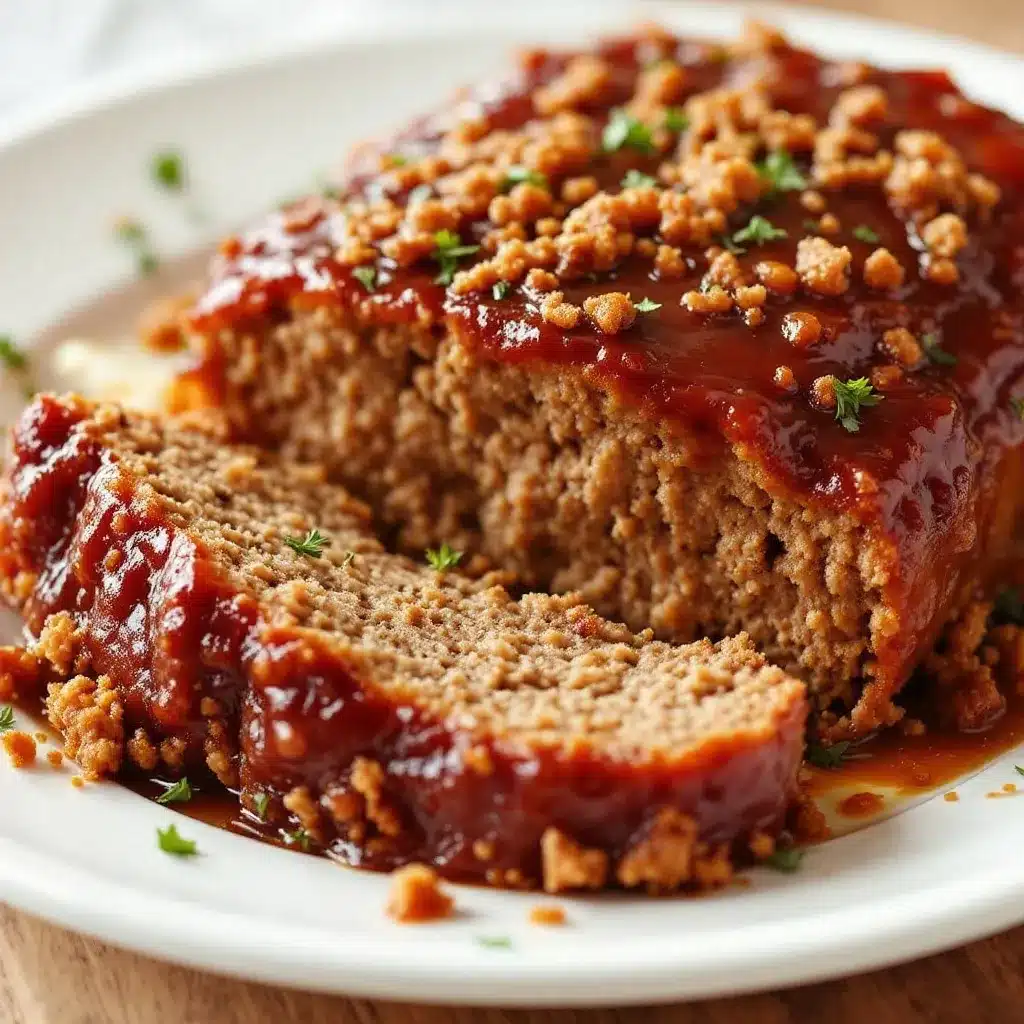
That first hit of it—sweet and tangy, with the scent of caramelized brown sugar drifting through the kitchen—still takes me straight to my grandmother’s tiny galley kitchen on a rainy Tuesday evening. I must have been eight or nine, sitting cross-legged on the worn linoleum floor, watching her pull a heavy glass loaf pan from the oven. The glaze was bubbling, almost black at the edges, and she didn’t even flinch as she set it down on the stovetop. “Let it rest,” she said, not to me really, just to the air. That smell—the combination of ground beef, onion, and that sticky sweet topping—was the definition of comfort before I even knew what the word meant.
Years later, I started making meatloaf myself, and honestly? My first few attempts were dry, crumbly disasters. I overworked the meat, skipped the panade (that’s the milk-and-breadcrumb mixture), and my glaze was always too runny. It took a few phone calls home and a lot of trial and error to get back to that rainy Tuesday feeling. This recipe—the best classic meatloaf with brown sugar glaze—is the one I finally landed on. It’s the one my kids ask for on their birthday week, the one I bring to potlucks where I know people are secretly skeptical of meatloaf.
It’s not fancy. It’s not trying to be. It’s just really, really good. And once you taste that sticky-sweet glaze against the savory, tender meat, you will understand why this particular loaf has earned a permanent spot in my dinner rotation. There is something deeply satisfying about a dish that asks for nothing more than simple ingredients, a little patience, and a hot oven.
Why You’ll Love This Recipe
Let’s be honest—meatloaf has a bit of a reputation. It can be dry, bland, or just… sad. But this one is different. I have tested this recipe more times than I care to count, tweaking the ratio of meat to binder, adjusting the glaze until it hit that perfect sweet-and-sour note. Here is why I think you’ll love it too:
- Incredibly Juicy: The secret is a panade (milk-soaked breadcrumbs) and the perfect ratio of ground beef to pork. No dry slices here.
- That Brown Sugar Glaze: It’s not just a topping; it’s the star. It caramelizes in the oven, creating a sticky, tangy crust that complements the savory meat beautifully.
- Simple Pantry Ingredients: You probably have everything you need already. No fancy trips to a specialty store.
- Perfect for Leftovers: Cold meatloaf sandwiches the next day? Honestly, sometimes I look forward to them more than the dinner itself.
- Family-Approved: My kids, who are usually suspicious of anything that isn’t a chicken nugget, devour this. It’s a true crowd-pleaser.
- Foolproof Method: I have included every little tip I learned the hard way, so you can skip the dry, crumbly phase and go straight to perfection.
This isn’t just another meatloaf recipe. It’s the one that makes you close your eyes after the first bite, the one that feels like a hug on a plate. It’s comfort food at its finest—simple, honest, and absolutely delicious.
What Ingredients You Will Need
This recipe uses simple, wholesome ingredients to deliver that classic, nostalgic flavor. Most of these are pantry staples, which makes this a perfect last-minute dinner option when you’re not sure what to cook.
For the Meatloaf
- Ground beef (80/20): 2 pounds. You want a little fat here for moisture. Lean ground beef will result in a drier loaf. I prefer 80/20 for the best flavor and texture.
- Ground pork: 1/2 pound. This adds incredible juiciness and a subtle sweetness. If you can’t find it, you can use all beef, but the texture won’t be quite as tender.
- Yellow onion: 1 medium, finely diced. Sautéing it first is a game-changer. Raw onion can be too harsh and release too much water.
- Garlic: 3 cloves, minced. Because everything is better with garlic.
- Breadcrumbs: 1 cup, plain. Panko works great here too. They act as a binder and help keep the meatloaf tender.
- Whole milk: 1/2 cup. This soaks into the breadcrumbs to create a panade, which is the secret to a moist meatloaf.
- Large eggs: 2, lightly beaten. Another binder that helps hold everything together.
- Worcestershire sauce: 2 tablespoons. Adds that deep, umami flavor that makes meatloaf taste like meatloaf.
- Ketchup: 1/4 cup. Adds a little tang and sweetness to the meat mixture itself.
- Dried thyme: 1 teaspoon. A classic herb that pairs beautifully with beef.
- Salt and black pepper: 1 teaspoon salt, 1/2 teaspoon pepper, or to taste.
- Fresh parsley: 2 tablespoons, chopped (optional, but nice for a little freshness).
For the Brown Sugar Glaze
- Ketchup: 1/2 cup. The base of the glaze.
- Brown sugar: 1/3 cup, packed. This is what gives the glaze its signature sweetness and sticky caramelization.
- Apple cider vinegar: 1 tablespoon. Cuts through the sweetness and adds a tangy kick.
- Yellow mustard: 1 teaspoon. Adds a subtle warmth and depth. (I sometimes use Dijon for a slightly different flavor.)
- Garlic powder: 1/2 teaspoon. Just a little extra savory note.
Ingredient Tips: For the best texture, I recommend using fresh breadcrumbs if you have them. Just pulse a couple of slices of sandwich bread in a food processor. Also, don’t skip sautéing the onion and garlic. It takes five minutes and makes a world of difference in the final flavor. If you are looking for a lighter side to serve alongside this hearty meal, a fresh low-calorie fruit salad with mint is a fantastic, refreshing counterpoint.
Equipment Needed
You don’t need a lot of fancy gear to make this meatloaf, which is part of its charm.
- Large mixing bowl: For combining all the meatloaf ingredients.
- Loaf pan: A standard 9×5-inch loaf pan works perfectly. You can also shape the meatloaf free-form on a baking sheet if you prefer a crustier exterior.
- Skillet: For sautéing the onion and garlic.
- Small bowl: For whisking together the glaze ingredients.
- Measuring cups and spoons: For accuracy.
- Chef’s knife and cutting board: For prepping your aromatics.
- Meat thermometer: This is non-negotiable for me. It takes the guesswork out of cooking and guarantees a perfectly cooked, safe-to-eat meatloaf.
Budget Tip: If you don’t have a loaf pan, just form the meat mixture into a free-form loaf on a parchment-lined baking sheet. It cooks a little faster and gets a nicer crust all around.
Preparation Method
Let’s get cooking. This process is straightforward, but I have added a few notes to help you avoid the mistakes I made in the beginning.
- Preheat and Prep: Preheat your oven to 350°F (175°C). Lightly grease your loaf pan with a little oil or non-stick spray, or line it with parchment paper for easy removal.
- Sauté the Aromatics: In a small skillet over medium heat, add a drizzle of olive oil. Add the finely diced onion and cook, stirring occasionally, for about 4-5 minutes, until softened and translucent. Add the minced garlic and cook for another 30 seconds until fragrant. Remove from heat and let it cool slightly. (This step is crucial—raw onion can make the meatloaf watery and harsh.)
- Make the Panade: In your large mixing bowl, combine the breadcrumbs and milk. Let it sit for 5 minutes. The breadcrumbs will absorb the milk and turn into a paste. This is your panade, and it is the single most important step for a moist meatloaf.
- Combine the Meatloaf Mixture: To the bowl with the panade, add the ground beef, ground pork, sautéed onion and garlic, beaten eggs, Worcestershire sauce, ketchup, dried thyme, salt, pepper, and fresh parsley if using. Use your hands (this is the best tool for the job—don’t be shy) to gently mix everything together. Do not overmix. Overworking the meat will make the meatloaf tough and dense. Mix just until everything is evenly combined.
- Shape the Loaf: Transfer the meat mixture to your prepared loaf pan. Gently press it into an even shape. Don’t pack it down too hard; just shape it so it holds together. If you are using a baking sheet, form it into a loaf shape about the same size as a loaf pan.
- Make the Glaze: In a small bowl, whisk together the ketchup, packed brown sugar, apple cider vinegar, yellow mustard, and garlic powder until smooth.
- First Bake (Without Glaze): Place the meatloaf in the preheated oven and bake for 45 minutes. This initial bake allows the meat to cook through and render some of the fat before we add the glaze.
- Glaze and Finish: After 45 minutes, carefully remove the meatloaf from the oven. Pour or brush about half of the brown sugar glaze over the top of the meatloaf, spreading it evenly. Return it to the oven and bake for another 15 minutes. Then, apply the remaining glaze and bake for a final 15–20 minutes.
- Check for Doneness: The total baking time is about 75–80 minutes. The meatloaf is done when an instant-read meat thermometer inserted into the center registers 160°F (71°C). The glaze should be dark, sticky, and caramelized.
- Rest and Slice: This is the hardest part. Remove the meatloaf from the oven and let it rest in the pan for at least 10–15 minutes. Resting allows the juices to redistribute throughout the loaf. If you slice it immediately, it will fall apart and be dry. Transfer to a cutting board, slice, and serve.
Cooking Tips & Techniques
I have made a lot of meatloaf in my day, and I have the burnt, dry, and crumbly loaves to prove it. Here are the things I wish I had known from the start.
- The Panade is Non-Negotiable: I cannot stress this enough. The milk-soaked breadcrumbs act as a sponge, holding onto moisture during cooking. Without it, your meatloaf will be dry. It’s the single best tip for a perfect result.
- Don’t Overmix: This is the second most common mistake. Mixing the meat too much develops the proteins, making the meatloaf tough and dense. Use a light hand and mix just until everything is combined. It’s okay if it looks a little shaggy.
- Use a Meat Thermometer: Ovens vary, and so do meatloaf shapes. A thermometer is the only way to be sure. 160°F (71°C) is the magic number for ground beef. It ensures it’s cooked through but still juicy.
- Let It Rest: I know it’s tempting to cut right into it, but please resist. Those 10-15 minutes of resting are not wasted time. They are what transform a good meatloaf into a great one. The slices will be clean and the meat will be tender.
- Line Your Pan: If you use parchment paper with a little overhang, you can lift the entire meatloaf out of the pan cleanly before slicing. It makes for a much prettier presentation.
Variations & Adaptations
One of the best things about this recipe is how easily it adapts. Feel free to make it your own.
- Turkey Meatloaf: Swap the ground beef and pork for ground turkey (93/7 is best to avoid dryness). Add a tablespoon of olive oil to the mixture to compensate for the lower fat content, and watch the cooking time—it may be slightly shorter.
- Gluten-Free: Use gluten-free breadcrumbs or rolled oats (pulsed in a food processor) and ensure your Worcestershire sauce is gluten-free. The texture will be slightly different but still delicious.
- Add Veggies: Finely grated carrots or zucchini (squeeze out the excess moisture!) can be added to the meat mixture for extra nutrients and moisture. It’s a great way to sneak in some veggies for picky eaters.
- Spicy Kick: Add a finely chopped jalapeño to the onion mixture or a teaspoon of sriracha to the glaze for a sweet and spicy version.
- Cheese-Stuffed: Make a well in the center of the meatloaf before baking and stuff it with shredded cheddar or mozzarella. It creates a gooey, cheesy center that is absolutely incredible.
For a completely different but equally satisfying weeknight meal, try these cheesy ground beef stuffed bell peppers—they use a similar flavor profile in a fun new shape.
Serving & Storage Suggestions
This meatloaf is a meal in itself, but it loves company.
Serving: Serve slices of the warm meatloaf with a generous spoonful of the caramelized pan juices. It pairs beautifully with creamy mashed potatoes, roasted green beans, or a simple side salad. I also love it with a side of crisp sweet potato fries for a fun, comforting plate. The sweetness of the sweet potatoes is a fantastic match for the tangy glaze.
Storage: Leftover meatloaf is a gift. Store it in an airtight container in the refrigerator for up to 4 days. The flavors actually meld and deepen overnight. It is fantastic cold in a sandwich the next day.
Reheating: To reheat, slice the meatloaf and warm it in a skillet over medium-low heat with a splash of water or broth to keep it moist. You can also reheat individual slices in the microwave, but the oven or stovetop will give you better results. For a quick and easy lunch, you can crumble leftover meatloaf into a pan and use it in a healthy egg white scramble with vegetables for a protein-packed start to your day.
Freezing: You can freeze the entire baked and cooled meatloaf (without the glaze, if possible) wrapped tightly in plastic wrap and then foil for up to 3 months. Thaw overnight in the refrigerator and reheat as directed. You can also freeze individual slices for easy lunches.
Nutritional Information & Benefits
While this is a classic comfort food, it does offer some solid nutritional benefits. Please note that these are estimates and will vary based on specific ingredients and portion sizes.
Estimated per serving (1/8th of recipe):
- Calories: ~380-420
- Protein: ~28-32g
- Fat: ~22-26g
- Carbohydrates: ~18-22g (mostly from the glaze and breadcrumbs)
- Fiber: ~1g
- Sugar: ~12-15g
Benefits: This dish is an excellent source of high-quality protein, iron, and B vitamins from the beef and pork. Protein is essential for muscle repair and satiety, making this a satisfying meal. The onions and garlic provide prebiotic fiber and immune-supporting compounds. While it is not a low-calorie dish, it is a nutrient-dense, whole-food meal that is far superior to processed convenience foods. If you are watching your sodium, you can reduce the salt and use a low-sodium ketchup for the glaze.
Conclusion
This classic meatloaf with brown sugar glaze is more than just a recipe—it’s a return to the kind of cooking that feels good in your bones. It’s the meal that fills your house with an aroma that says “welcome home” and the leftovers you genuinely look forward to the next day. It’s forgiving, adaptable, and deeply satisfying.
I hope you give it a try and make it your own. Maybe you add a little extra garlic, or swap the thyme for rosemary, or pile on even more glaze. That’s the beauty of a recipe like this—it becomes yours. When you do make it, I would love to hear how it turned out. Drop a comment below and tell me about your meatloaf memories, or share a photo of your creation. Happy cooking, friend.
Frequently Asked Questions
Can I make this meatloaf ahead of time?
Absolutely! You can assemble the meatloaf mixture, shape it in the pan, and cover it tightly. Store it in the refrigerator for up to 24 hours before baking. You may need to add 10-15 minutes to the baking time since it will be starting from cold.
Why is my meatloaf falling apart when I slice it?
This usually happens for two reasons: either the mixture was too wet (too many eggs or not enough breadcrumbs) or it wasn’t rested long enough after baking. The resting period is essential for the structure to set. Let it rest for at least 10-15 minutes before slicing.
Can I use ground turkey instead of beef?
Yes, you can. Use a blend of ground turkey (at least 93% lean) and maybe add a tablespoon of olive oil to the mixture to keep it moist. The cooking time might be slightly shorter, so keep an eye on the internal temperature, which should still be 160°F (71°C).
How do I know when my meatloaf is done without a thermometer?
While a thermometer is the most reliable method, you can check by cutting a small slit in the center. The juices should run clear, not pink. The meatloaf should also feel firm to the touch and pull away slightly from the sides of the pan. However, I really recommend investing in a simple meat thermometer for perfect results every time.
Can I freeze the meatloaf before or after cooking?
You can do both! To freeze before cooking, shape the loaf, wrap it tightly in plastic wrap and then foil, and freeze for up to 3 months. Thaw overnight in the fridge before baking. To freeze after cooking, let the meatloaf cool completely, then wrap and freeze. Thaw in the refrigerator and reheat in a 350°F oven until warmed through.
Pin This Recipe!
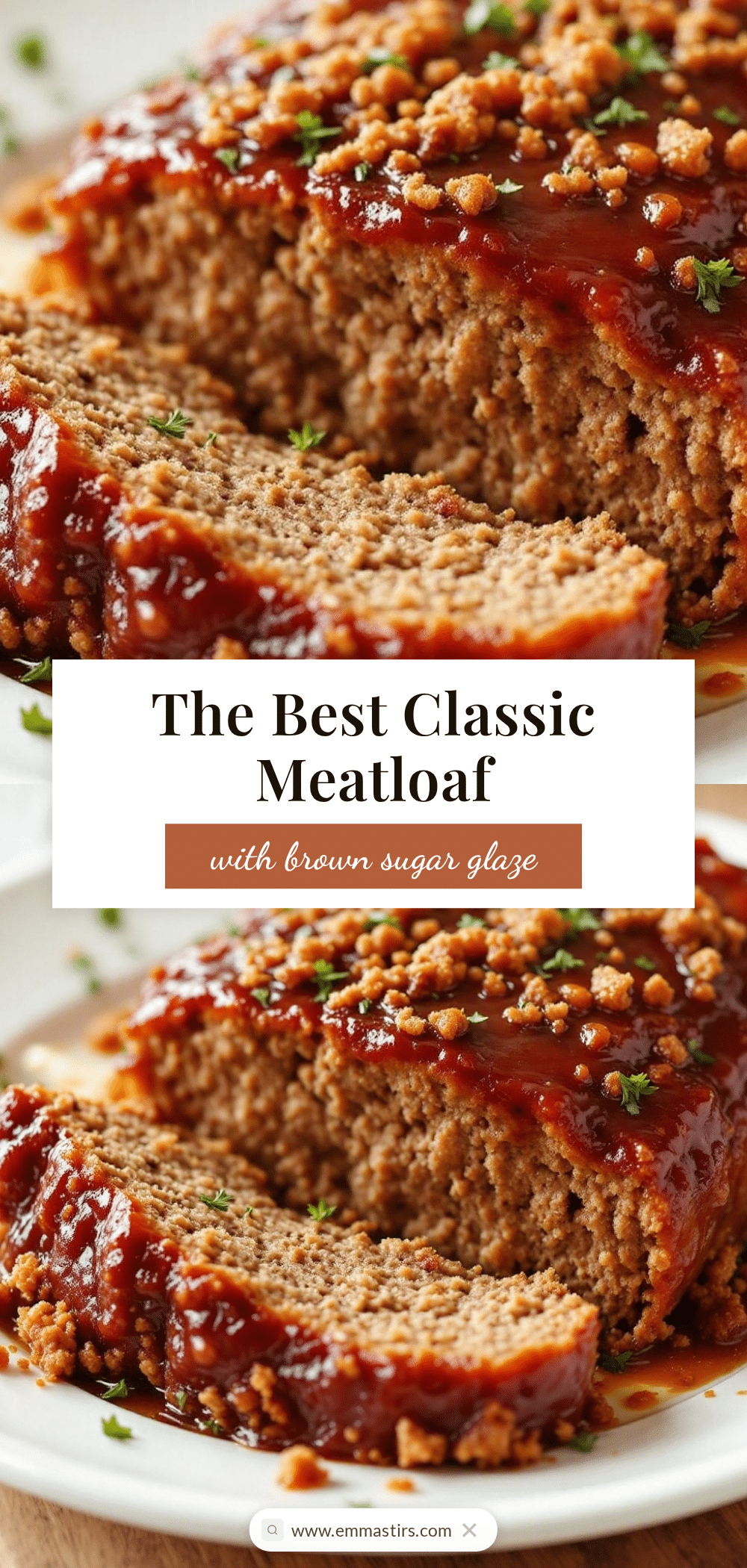
The Best Classic Meatloaf with Brown Sugar Glaze Made Easy
This classic meatloaf with a sweet and tangy brown sugar glaze is incredibly juicy, simple to make, and family-approved. It’s the ultimate comfort food that feels like a hug on a plate.
- Prep Time: 20 minutes
- Cook Time: 75 minutes
- Total Time: 95 minutes
- Yield: 8 servings 1x
- Category: Main Course
- Cuisine: American
Ingredients
- 2 pounds ground beef (80/20)
- 1/2 pound ground pork
- 1 medium yellow onion, finely diced
- 3 cloves garlic, minced
- 1 cup plain breadcrumbs (or panko)
- 1/2 cup whole milk
- 2 large eggs, lightly beaten
- 2 tablespoons Worcestershire sauce
- 1/4 cup ketchup
- 1 teaspoon dried thyme
- 1 teaspoon salt
- 1/2 teaspoon black pepper
- 2 tablespoons fresh parsley, chopped (optional)
- 1/2 cup ketchup (for glaze)
- 1/3 cup packed brown sugar (for glaze)
- 1 tablespoon apple cider vinegar (for glaze)
- 1 teaspoon yellow mustard (for glaze)
- 1/2 teaspoon garlic powder (for glaze)
Instructions
- Preheat oven to 350°F (175°C). Lightly grease a 9×5-inch loaf pan or line with parchment paper.
- In a small skillet over medium heat, add a drizzle of olive oil. Sauté the diced onion for 4-5 minutes until softened. Add minced garlic and cook for 30 seconds until fragrant. Remove from heat and let cool slightly.
- In a large mixing bowl, combine breadcrumbs and milk. Let sit for 5 minutes to form a panade.
- Add ground beef, ground pork, sautéed onion and garlic, beaten eggs, Worcestershire sauce, ketchup, dried thyme, salt, pepper, and parsley (if using) to the panade. Mix gently with your hands until just combined. Do not overmix.
- Transfer the meat mixture to the prepared loaf pan and gently shape into an even loaf. Do not pack too tightly.
- In a small bowl, whisk together ketchup, brown sugar, apple cider vinegar, yellow mustard, and garlic powder until smooth.
- Bake the meatloaf for 45 minutes without glaze.
- Remove from oven and brush half of the glaze over the top. Return to oven and bake for 15 minutes.
- Apply the remaining glaze and bake for another 15-20 minutes, until the internal temperature reaches 160°F (71°C).
- Let the meatloaf rest in the pan for 10-15 minutes before slicing. Transfer to a cutting board, slice, and serve.
Notes
For the best texture, use fresh breadcrumbs if possible. Don’t skip sautéing the onion and garlic. The panade (milk-soaked breadcrumbs) is essential for moisture. Let the meatloaf rest for 10-15 minutes before slicing to allow juices to redistribute. Use a meat thermometer for perfect doneness.
Nutrition
- Serving Size: 1 slice (1/8 of reci
- Calories: 400
- Sugar: 14
- Sodium: 650
- Fat: 24
- Saturated Fat: 9
- Carbohydrates: 20
- Fiber: 1
- Protein: 30
Keywords: meatloaf, brown sugar glaze, classic meatloaf, comfort food, ground beef, easy dinner