Love this? Save it for later!
Share the inspiration with your friends
My husband’s boss showed up at 4:30 PM with a wife and two kids, and the only thing in the fridge was a sad-looking butternut squash and a stick of butter that was definitely past its prime expiration date. I panicked for exactly three seconds before realizing the pantry was actually stocked with half a box of pasta and a handful of dried sage leaves I’d bought for a different recipe months ago. It wasn’t planned, and it definitely wasn’t elegant, but I had the oven on for something else anyway, so I threw the squash in to roast while I melted that butter until it smelled like hazelnuts. The house filled with this incredible nutty aroma that made us all forget about the awkward small talk for a minute. Honestly, that moment of panic turned into one of my favorite cooking memories because it proved you don’t need a perfect plan to make something delicious. I tossed the warm pasta with the browned butter, the crispy sage, and chunks of sweet, roasted squash, and my in-laws asked for the recipe before they even finished their wine. It’s not fancy, but it’s real, and it sticks with you because it was born from a little disaster.
Why You’ll Love This Creamy Brown Butter Sage Pasta
This isn’t just another pasta recipe; it’s the kind of meal that feels like a warm hug on a cold evening. I’ve tested this version over and over, tweaking the butter-to-cheese ratio until it was just right, and the result is a sauce that clings to every noodle without feeling heavy or greasy. The secret really lies in the brown butter, which adds a depth of flavor that regular melted butter just can’t match. Here is why this dish has become a staple in my weekly rotation:
* **Quick & Easy**: From boiling water to plating, this comes together in under 30 minutes, making it perfect for those busy weeknights when you’re starving but don’t want to spend hours in the kitchen.
* **Simple Ingredients**: You likely already have most of these items in your pantry. No fancy grocery trips needed, just butter, sage, pasta, and a good hard cheese.
* **Perfect for Cozy Dinners**: This is ideal for autumn evenings, date nights, or when you want to impress guests without stressing over a complicated menu.
* **Crowd-Pleaser**: The combination of savory, nutty, and slightly sweet flavors appeals to both picky eaters and foodies alike.
* **Unbelievably Delicious**: The texture is creamy and rich, with the crunch of sage and the softness of squash creating a next-level comfort food experience.
What makes this recipe different is the technique. Most people just melt butter, but browning it creates those milk solids that add a toasted, complex taste. I also roast the squash separately to keep it from getting mushy, ensuring every bite has a bit of structure. It’s comfort food reimagined—rich and satisfying, but balanced by the earthy sage. It’s the kind of dish that makes you close your eyes after the first bite and just breathe.
What Ingredients You Will Need
This recipe uses simple, wholesome ingredients to deliver bold flavor and satisfying texture without the fuss. The beauty of brown butter sage pasta lies in its simplicity, where each component plays a crucial role in the final harmony of the dish. Here is what you will need to get started, along with a few tips on selection.
* **Unsalted Butter**: You’ll need a good amount, about 1 cup (2 sticks). Using unsalted allows you to control the sodium level. I prefer European-style butter for its higher fat content, which browns more evenly and tastes richer.
* **Dried Sage Leaves**: A small jar, about 2 tablespoons. Dried sage is actually preferred here because it gets crispy in the hot butter, adding a wonderful textural contrast. Fresh sage can work, but it releases more water and might steam the pasta instead of crisping up.
* **Pasta**: One pound of your favorite shape. I recommend short shapes like cavatappi, rigatoni, or orecchiette because they hold the thick sauce and squash chunks better than long strands. Look for bronze-die extruded pasta if you can find it, as the rougher surface grabs the sauce better.
* **Butternut Squash**: One medium squash, peeled and cubed into 1-inch pieces. This adds natural sweetness and a creamy texture that mimics a heavy cream sauce.
* **Olive Oil**: Two tablespoons, for roasting the squash.
* **Garlic**: Three cloves, minced. This adds a savory backbone to the nutty butter.
* **Parmesan Cheese**: One cup, freshly grated. Avoid the pre-grated stuff in the green can; it has anti-caking agents that prevent it from melting smoothly. I recommend buying a wedge of Parmigiano-Reggiano and grating it yourself.
* **Pasta Water**: One cup of starchy water from the boiling pot. This is the liquid gold that emulsifies the butter and cheese into a silky sauce.
* **Salt and Black Pepper**: To taste. Use kosher salt for boiling the water and seasoning the squash.
* **Red Pepper Flakes**: Optional, for a little heat if you like it spicy.
Equipment Needed
You don’t need anything fancy to pull this off, but having the right tools makes the process much smoother. A large skillet is essential for browning the butter properly; if the pan is too small, the butter will spill over and burn. I use a stainless steel skillet because it distributes heat evenly, but a heavy-bottomed non-stick pan works too if you’re worried about sticking. You’ll also need a baking sheet for roasting the squash—line it with parchment paper for easy cleanup, because caramelized squash can be a pain to scrub off. A colander is obvious, but make sure to reserve some pasta water before you drain everything. A microplane or fine grater is helpful for the parmesan, and a wooden spoon for stirring the butter as it foams and browns. If you don’t have a large skillet, you can roast everything in one pan by doing it in stages, but two pans speed things up significantly.
Preparation Method
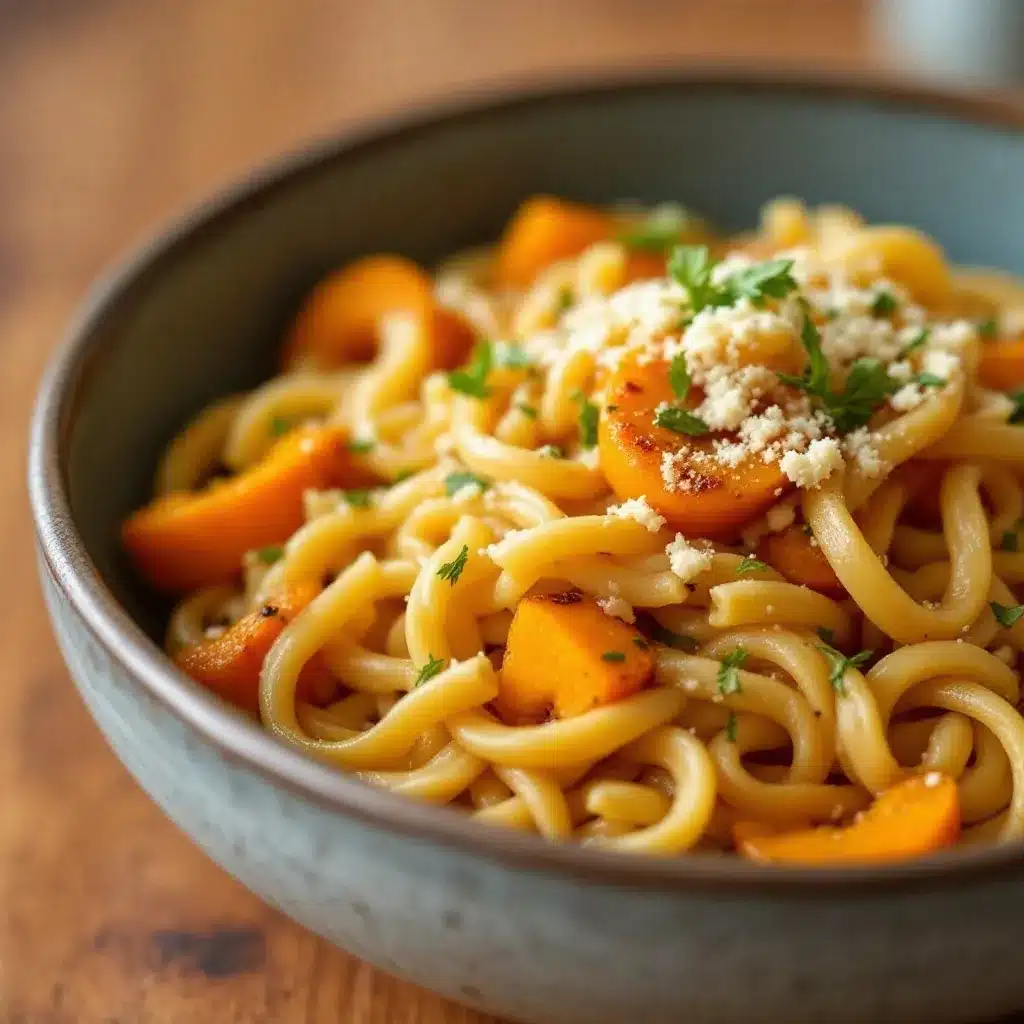
Getting this dish together is straightforward, but timing is everything to ensure everything is hot and ready at the same time. Follow these steps carefully for the best results.
1. **Preheat and Prep**: Start by preheating your oven to 400°F (200°C). Peel the butternut squash and cut it into uniform 1-inch cubes. Toss them on a baking sheet with olive oil, salt, and pepper. Roast for 20-25 minutes until tender and slightly caramelized at the edges. This step builds the sweet foundation of the dish.
2. **Boil the Pasta**: While the squash roasts, bring a large pot of salted water to a boil. Add the pasta and cook according to package directions, but start checking it one minute early. You want it *al dente* because it will finish cooking in the sauce. Before draining, scoop out about one cup of the starchy pasta water and set it aside. This is crucial for the sauce.
3. **Brown the Butter**: In a large skillet over medium heat, melt the butter. Let it melt completely, then let it continue to cook. It will foam up and then start to quiet down. Watch it closely! Once the foam subsides, you’ll see brown specks at the bottom and smell a nutty aroma. This takes about 3-5 minutes. Remove the pan from the heat immediately to prevent burning.
4. **Crisp the Sage**: While the butter is browning, add the dried sage leaves to the pan just before you take it off the heat. Let them fry in the residual heat for about 30 seconds until they are crisp and fragrant. Be careful, as hot butter can splatter.
5. **Make the Sauce**: Return the skillet to low heat. Add the minced garlic and stir for 30 seconds until fragrant, being careful not to burn it. Then, slowly whisk in the reserved pasta water. The mixture will bubble vigorously. Whisk in the grated parmesan cheese until it melts into a creamy sauce.
6. **Combine**: Add the drained pasta and the roasted squash to the skillet. Toss everything together vigorously, adding more pasta water if the sauce looks too thick. The starch from the pasta and the cheese will create a glossy coating.
7. **Serve**: Taste and adjust seasoning with more salt or pepper if needed. Serve immediately while hot, with extra parmesan on top.
How do I stop the butter from burning?
The key is to not leave the stove. Once the foam starts to settle, that’s when the milk solids begin to brown. If you see dark brown specks, it’s done. If the specks turn black, you have to start over. Trust your nose more than your eyes—if it smells like burnt toast, it’s ruined.
Cooking Tips & Techniques
I’ve made this recipe enough times to learn a few hard lessons along the way. The biggest mistake people make is using low-quality butter. Since butter is the star, cheap butter will taste flat. Also, don’t skip the pasta water. That starchy liquid is the emulsifier that turns separated butter and cheese into a cohesive sauce. If you add the cheese directly to the hot butter without the water, it will clump up. Another tip is to roast the squash ahead of time if you’re short on time; it reheats beautifully in the pasta pan. I also learned the hard way that you should add the sage at the very end. If you fry it too long, it turns bitter. Just a quick crisp in the hot butter is all you need. Multitasking is key here: start the squash, then the water, then the butter. By the time the pasta is done, the sauce will be ready to catch everything.
Can I use fresh sage instead of dried?
Yes, but you need more of it. Use about 15-20 fresh leaves. They will release water, so cook them a bit longer in the butter to crisp them up, and be aware that the sauce might be slightly thinner. Dried sage is more concentrated and crisps up faster, which is why I prefer it for this specific dish.
Variations & Adaptations
This recipe is a fantastic canvas for customization. If you want to make it lighter, you can swap half the butter for olive oil, though you lose some of that nutty depth. For a vegetarian boost, add toasted walnuts or pecans for crunch. If you’re not a fan of squash, roasted sweet potatoes or butternut squash can be replaced with caramelized onions or roasted broccoli. You can also add protein by tossing in some cooked chicken sausage or crispy pancetta. For a gluten-free version, simply use your favorite gluten-free pasta, though note that GF pasta often releases more starch, so use less pasta water initially. I once tried adding a splash of cream to make it richer, but the brown butter stood on its own beautifully, so I stuck to the original. The beauty of this dish is its flexibility.
What cheese can I substitute for Parmesan?
Pecorino Romano is a great alternative if you like a sharper, saltier flavor. You can also use a mix of both cheeses. Avoid soft cheeses like mozzarella, as they won’t create the same emulsified sauce texture.
Serving & Storage Suggestions
This pasta is best served immediately while the butter sauce is still glossy and the sage is crisp. Pair it with a simple green salad dressed with lemon vinaigrette to cut through the richness. A glass of white wine, like a Pinot Grigio or Chardonnay, complements the nutty flavors perfectly. Leftovers can be stored in an airtight container in the refrigerator for up to three days. When reheating, add a splash of water or broth to the pan to help loosen the sauce, as it will thicken up in the fridge. The flavors actually meld together nicely overnight, making it a great meal prep option for lunch.
Nutritional Information & Benefits
This dish provides a good balance of carbohydrates, fats, and proteins. The butternut squash adds a significant amount of Vitamin A and fiber, making it a nutrient-dense meal. The brown butter provides healthy fats, while the parmesan adds calcium and protein. For those watching their sodium, you can reduce the amount of salt in the pasta water and use less cheese. It’s a comforting meal that doesn’t leave you feeling sluggish, thanks to the complex carbs from the whole wheat pasta option.
Conclusion
This creamy brown butter sage pasta with roasted squash is a testament to the power of simple ingredients and a little bit of panic-induced creativity. It’s rich, flavorful, and incredibly satisfying. I encourage you to try it with your favorite pasta shape and maybe add a protein if you’re extra hungry. It’s a dish that feels special but is easy enough for a Tuesday night. Let me know in the comments if you added any extra veggies or swapped the cheese! I love hearing how people make recipes their own. Happy cooking, and remember, sometimes the best meals come from the least planned moments.
Frequently Asked Questions
Can I make this pasta ahead of time?
It’s best served fresh, but you can prep the squash and brown the butter in advance. Reheat the butter and toss with freshly cooked pasta for the best texture.
Why is my sauce separated?
This usually happens if the butter was too hot when you added the cheese or if you didn’t use enough pasta water. Whisking vigorously over low heat while adding pasta water usually brings it back together.
Is brown butter safe for people with dairy allergies?
No, brown butter is still dairy. The milk solids are just toasted, but they are still present. People with casein or whey allergies should avoid this.
Can I use other winter squash?
Yes, kabocha, acorn, or pumpkin squash all work well. Just make sure to peel them and cut them into similar-sized cubes for even roasting.
How do I know when the butter is browned?
Look for golden brown specks at the bottom of the pan and smell a nutty, toasted aroma. The foam will also settle down. If it smells burnt, discard it and start over.
Pin This Recipe!
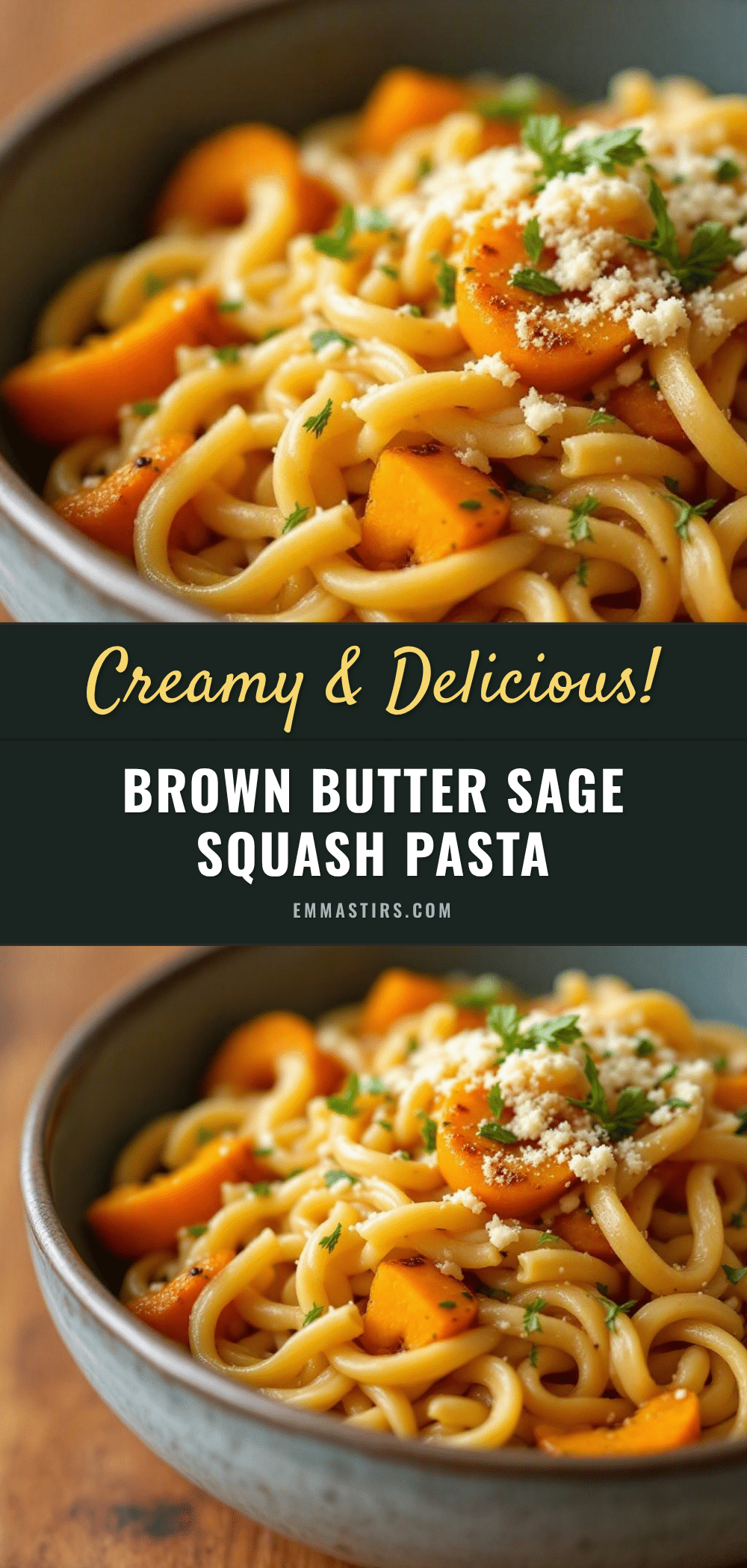
Creamy Brown Butter Sage Pasta with Roasted Squash

A quick, 30-minute comfort food dish featuring nutty brown butter, crispy sage, and sweet roasted butternut squash tossed with pasta for a rich, emulsified sauce.
- Prep Time: 10 minutes
- Cook Time: 20 minutes
- Total Time: 30 minutes
- Yield: 4 servings 1x
- Category: Main Course
- Cuisine: Italian
Ingredients
- 1 cup (2 sticks) unsalted butter
- 2 tablespoons dried sage leaves
- 1 pound pasta (cavatappi, rigatoni, or orecchiette recommended)
- 1 medium butternut squash, peeled and cubed into 1-inch pieces
- 2 tablespoons olive oil
- 3 cloves garlic, minced
- 1 cup freshly grated Parmesan cheese
- 1 cup starchy pasta water
- Salt and black pepper to taste
- Red pepper flakes (optional)
Instructions
- Preheat oven to 400°F (200°C). Toss squash cubes with olive oil, salt, and pepper on a baking sheet. Roast for 20-25 minutes until tender and caramelized.
- While squash roasts, bring a large pot of salted water to a boil. Cook pasta until al dente. Reserve 1 cup of pasta water before draining.
- In a large skillet over medium heat, melt butter. Cook until it foams, then subsides, revealing brown specks and a nutty aroma (3-5 minutes). Remove from heat immediately.
- Add dried sage leaves to the hot butter and fry for 30 seconds until crisp. Be careful of splatter.
- Return skillet to low heat. Add minced garlic and stir for 30 seconds until fragrant.
- Slowly whisk in reserved pasta water. Whisk in grated Parmesan cheese until melted and creamy.
- Add drained pasta and roasted squash to the skillet. Toss vigorously, adding more pasta water if needed to create a glossy sauce.
- Season with salt and pepper. Serve immediately with extra parmesan.
Notes
Use unsalted butter to control sodium. Dried sage is preferred for crispiness; if using fresh, use 15-20 leaves and cook slightly longer. Do not skip the pasta water; it is essential for emulsifying the sauce. Brown butter burns easily, so watch it closely once the foam subsides.
Nutrition
- Serving Size: 1/4 of the recipe
- Calories: 650
- Sugar: 6
- Sodium: 450
- Fat: 35
- Saturated Fat: 20
- Carbohydrates: 65
- Fiber: 5
- Protein: 18
Keywords: brown butter pasta, sage pasta, butternut squash recipe, quick dinner, comfort food, vegetarian pasta, 30 minute meals