Love this? Save it for later!
Share the inspiration with your friends
The color. That deep, jammy, almost burgundy red that happens when cherry tomatoes finally give up their summer pride in the oven. It’s the kind of color that makes you stop mid-chop and just stare at the baking sheet for a second. And that’s the whole point of this roasted cherry tomato basil sauce—it’s not about the chopping or the simmering or even the tasting (though that part’s pretty great). It’s about what happens to those little orbs of sweetness when you leave them alone in a hot oven long enough for them to surrender completely.
I didn’t plan on making this sauce the first time. It was one of those August afternoons where the farmer’s market haul was just… too much. You know the feeling—you buy the pretty pint baskets because they look so cheerful on the counter, and then three days later they’re starting to wrinkle and you’re panicking. I had a basket of Sungolds and another of little red cherries, and I was honestly this close to just tossing them into a salad and calling it a day. But then I remembered a trick my neighbor, an older Italian woman named Rosa, mentioned once in passing. “Roast them,” she said, waving her hand like it was the most obvious thing in the world. “The oven does all the work.”
She wasn’t wrong. That first batch came out so sweet and concentrated I ate half of it straight off the pan with a spoon. No pasta, no bread—just me, the spatula, and a moment of pure kitchen honesty. The sauce practically made itself after that. A blitz in the blender, a handful of fresh basil, and suddenly I had something that tasted like it had been simmering for hours. It hadn’t. It was maybe forty-five minutes from start to finish, and most of that was just the oven humming along while I folded laundry.
This roasted cherry tomato basil sauce has become my summer security blanket. It’s the thing I make when I need to feel like I have my life together, even if everything else is chaos. A jar of this in the freezer means dinner is never more than a pot of pasta away. It means I can impress guests without breaking a sweat. And honestly? It means I get to eat that deep, jammy red color all year long, even when the snow is piled up outside and the only tomatoes at the store are pale and sad. That’s the kind of magic worth holding onto.
Why You’ll Love This Recipe
Let’s be real for a second. There are a million tomato sauce recipes out there. Some are good, some are fine, and some are the kind you make once and forget about. This one? It sticks. And here’s why:
- Minimal Effort, Maximum Flavor : The oven does the heavy lifting. No standing over a hot stove stirring for an hour. You toss, you roast, you blend. That’s it.
- Simple, Whole Ingredients : Cherry tomatoes, garlic, olive oil, basil, salt, and a little balsamic vinegar. You probably have most of this right now. No weird additives or hard-to-find items.
- Perfect for Meal Prep : This sauce freezes like a dream. Make a double batch on Sunday, portion it out, and you’ve got quick dinners for weeks. It’s the ultimate creamy one-pan Tuscan chicken situation, but without the chicken—or the cream, for that matter.
- Crowd-Pleaser Status : I’ve served this to picky kids, foodie friends, and my dad who “doesn’t like tomato sauce” (he ate three servings). It’s sweet, not acidic, and the roasted flavor is universally loved.
- Healthier Than Jarred : No added sugar (the tomatoes get sweet enough on their own), no preservatives, and you control the salt and oil. It’s basically a vegetable delivery system disguised as comfort food.
What makes this different from every other roasted tomato sauce out there? Two things. First, I don’t peel the tomatoes. I know some recipes insist on it, but honestly? The skins soften so much during roasting that they blend right in, and they add fiber and color. Second, I add a tiny splash of balsamic vinegar at the end. It’s not enough to taste like balsamic—it just deepens the tomato flavor in a way that feels almost secret. It’s my little chef’s trick, and it makes all the difference.
This recipe isn’t just good. It’s the kind of sauce that makes you close your eyes after the first bite. It’s summer in a jar, ready whenever you need it.
What Ingredients You Will Need
This recipe is built on simplicity, so each ingredient really gets to shine. Here’s what you’ll need and why each one matters.
- Cherry or Grape Tomatoes (2 pounds / about 900g) : The star of the show. I prefer a mix of red and yellow or orange cherry tomatoes for color variation, but any variety works. If you can find Sungolds, grab them—they’re incredibly sweet. Look for firm, plump tomatoes without wrinkly skin. Pro tip: if your tomatoes are on the larger side, halve them so they roast evenly. Tiny ones can stay whole.
- Garlic (6-8 cloves, smashed) : Whole cloves, not minced. Smashing them with the flat side of your knife releases just enough oil to flavor the sauce without burning. If you love garlic (and who doesn’t?), throw in a couple extra. I’ve used up to 12 cloves before and it was glorious.
- Extra-Virgin Olive Oil (3-4 tablespoons) : Use a good-quality oil here since it’s a prominent flavor. I’m partial to California Olive Ranch or a nice Greek brand like Gaea. The oil helps the tomatoes caramelize and carries the flavor of the garlic and herbs.
- Fresh Basil (1/2 cup packed, plus more for serving) : Do not substitute dried basil here. The fresh stuff is what gives this sauce its bright, peppery finish. I add half before blending and save the rest to stir in at the end for texture and color.
- Balsamic Vinegar (1 tablespoon) : This is my secret ingredient. It doesn’t make the sauce taste like vinegar—it just rounds out the acidity and adds a touch of sweetness. Use a decent one, but no need to break out the 20-year-aged stuff.
- Salt (1 teaspoon, or to taste) : I use kosher salt like Diamond Crystal. Start with less and adjust at the end—different salts have different intensities.
- Black Pepper (1/2 teaspoon, freshly ground) : Adds a gentle warmth. Don’t skip it.
- Optional: Red Pepper Flakes (1/4 teaspoon) : If you like a little heat, add these to the roasting pan. They infuse the oil and give the sauce a subtle kick without overwhelming it.
- Optional: Fresh Oregano or Thyme (a few sprigs) : Toss these in with the tomatoes while roasting. They add an earthy, herbal note that pairs beautifully with the basil. Just remove the stems before blending.
That’s it. Seven core ingredients, maybe eight if you’re feeling spicy. No tomato paste, no sugar, no canned anything. Just pure, roasted goodness.
Equipment Needed
You don’t need a fancy kitchen to make this sauce. Here’s what you’ll need:
- Large Baking Sheet (half-sheet pan, about 18×13 inches) : You want enough room for the tomatoes to spread out in a single layer. If they’re crowded, they’ll steam instead of roast. I use my trusty Nordic Ware natural aluminum sheet—it’s sturdy and conducts heat evenly.
- Parchment Paper or Silicone Baking Mat : Not strictly necessary, but it makes cleanup a breeze. The tomatoes will release some juices that can caramelize and stick to the pan. Parchment saves you from scrubbing.
- Blender or Immersion Blender : A regular countertop blender gives you the smoothest sauce. An immersion blender works too, but you’ll get a chunkier texture—which is honestly fine if that’s your preference. I’ve used both and they each have their charm.
- Chef’s Knife and Cutting Board : For smashing garlic and halving larger tomatoes.
- Large Bowl or Jar for Storage : Glass jars (like mason jars) are perfect. If freezing, leave about an inch of headspace at the top since the sauce expands as it freezes.
- Optional: Food Mill : If you want an ultra-smooth sauce without tomato seeds, run the roasted tomatoes through a food mill before blending. I don’t bother with this step—the seeds are tiny and blend up fine—but it’s an option if you’re particular.
Budget-friendly tip: Don’t have a blender? Use a potato masher or a fork to break down the roasted tomatoes. You’ll end up with a rustic, chunky sauce that’s perfect for spooning over grilled chicken or fish.
Preparation Method
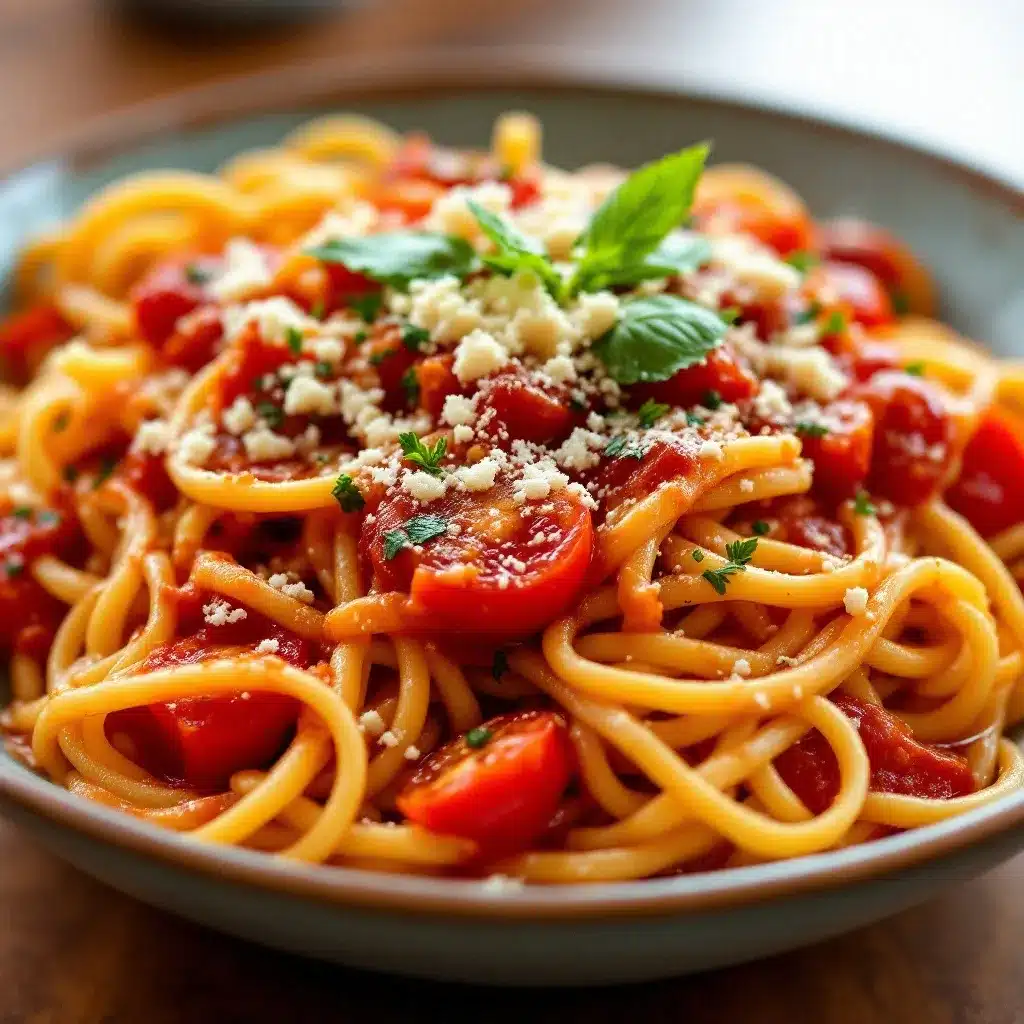
Alright, let’s get cooking. This is one of those recipes where the active time is laughably short and the oven does everything else.
- Preheat your oven to 400°F (200°C). Give it a good 15-20 minutes to come to temperature. A hot oven is key for caramelization.
- Prep the tomatoes. Rinse and dry your cherry tomatoes. If any are larger than a cherry tomato (like, say, a small plum tomato), halve them. Tiny ones can stay whole. Toss them onto your baking sheet.
- Add the garlic and aromatics. Smash 6-8 garlic cloves with the flat side of your knife and scatter them among the tomatoes. If you’re using red pepper flakes or fresh herb sprigs, add them now.
- Drizzle with olive oil. Pour 3-4 tablespoons of olive oil over everything. Use your hands (or two spatulas) to toss until every tomato is glistening. Spread them into a single layer—no overlapping.
- Season with salt and pepper. Sprinkle 1 teaspoon of kosher salt and 1/2 teaspoon of black pepper evenly over the pan.
- Roast for 35-45 minutes. Check at the 30-minute mark. You’re looking for the tomatoes to be wrinkled, blistered, and starting to collapse. The garlic should be soft and golden. If you see any dark spots on the garlic, that’s fine—roasted garlic is sweet and mellow. If it’s turning black, pull it out early.
- Let it cool slightly. Pull the pan out of the oven and let it sit for 5 minutes. This is a good moment to smell your kitchen—it’s going to smell like heaven. Remove any herb sprigs at this point.
- Transfer to a blender. Carefully scrape everything from the pan into your blender. Yes, all of it—the oil, the juices, the little caramelized bits. That’s liquid gold right there. Add 1/4 cup of packed fresh basil leaves and 1 tablespoon of balsamic vinegar.
- Blend until smooth. Start on low speed and gradually increase to high. Blend for 30-45 seconds until the sauce is as smooth as you like it. If it seems too thick, add a tablespoon of water at a time until it reaches your desired consistency. I like mine thick enough to coat the back of a spoon but still pourable.
- Taste and adjust. This is the fun part. Dip a spoon in and taste it. Need more salt? Add a pinch. Want it sweeter? Another splash of balsamic. More basil? Throw in a few more leaves and pulse. Trust your instincts here.
- Stir in remaining basil. If you reserved some basil, chop it roughly and stir it into the sauce after blending. This gives you little flecks of green and a fresh, peppery finish.
- Cool completely before storing. If you’re freezing the sauce, let it come to room temperature first. Then portion into jars or freezer bags, leaving headspace for expansion.
Sensory cue: When you open the blender, the smell should hit you like a warm hug—sweet, savory, and deeply tomato-y with a whisper of garlic and basil. If it smells flat, add another pinch of salt and blend again.
Cooking Tips & Techniques
I’ve made this sauce probably fifty times, and I’ve learned a few things the hard way. Here’s what I wish someone had told me from the start.
Don’t overcrowd the pan. This is the number one mistake. If your tomatoes are piled on top of each other, they’ll steam instead of roast. You want them to have breathing room so the moisture evaporates and the sugars concentrate. Use two pans if you need to—it’s worth the extra baking sheet.
Rotate the pan halfway through. Ovens have hot spots. About 20 minutes in, give the pan a quick spin to ensure even roasting. I learned this after a batch where one side was beautifully caramelized and the other was still pale and sad.
Watch the garlic closely. Garlic burns faster than tomatoes. If your garlic cloves are getting dark too quickly, you can pull them out of the pan and set them aside to add back in later. Burnt garlic tastes bitter and will ruin your sauce.
Don’t skip the cooling step. Blending hot liquid is a recipe for a blender explosion. Trust me—I’ve cleaned tomato sauce off my ceiling before. Let everything cool for at least 5-10 minutes, and always start your blender on low speed with the lid on tight.
Toast your pasta. This isn’t about the sauce itself, but it’s a game-changer for serving. Before boiling your pasta, toast the dry noodles in a skillet with a little olive oil until they’re golden and fragrant. It adds a nutty flavor that pairs beautifully with the sweet roasted tomatoes.
Double the batch. Seriously. This recipe is so easy that making twice as much barely takes more effort. Freeze half for a rainy day (or a busy Tuesday). You’ll thank yourself later.
One more thing: if your sauce tastes a little flat, it almost always needs more salt or a splash of acid. A squeeze of lemon juice works in a pinch if you don’t have balsamic.
Variations & Adaptations
This roasted cherry tomato basil sauce is a chameleon. Here are some ways to make it your own.
Vegan and Dairy-Free : This recipe is already vegan, so no changes needed. But if you want a creamy version, blend in a handful of soaked cashews or a dollop of coconut cream before serving. It turns into a luscious, rosy sauce that’s incredible over pasta or as a pizza base.
Low-Carb / Keto : Serve this sauce over zucchini noodles or roasted spaghetti squash instead of pasta. It’s also amazing as a dipping sauce for crispy air fryer chicken thighs—the sweetness of the tomatoes balances the savory, crispy skin perfectly.
Spicy Arrabbiata Version : Add 1-2 dried chili peppers (or 1 teaspoon of red pepper flakes) to the roasting pan. The heat infuses into the oil and gives the sauce a slow-building warmth. I love this version on cold winter nights when I need something to warm me from the inside out.
Herb Variations : Not a basil fan? Use fresh oregano, thyme, or rosemary instead. Or do a mix—basil and oregano together is a classic Italian combo that never disappoints. Just remember to remove woody herb stems before blending.
Roasted Vegetable Boost : Toss in a halved red bell pepper, a small zucchini (cut into chunks), or a quartered onion with the tomatoes. Roast everything together, then blend. It adds body and extra nutrients without changing the flavor profile too much.
No-Oven Method : If it’s the middle of summer and you can’t bear to turn on your oven, you can make this on the stovetop. Cook the tomatoes and garlic in a large skillet over medium heat with the olive oil, stirring occasionally, until they break down and start to caramelize (about 20-25 minutes). Then proceed with blending. The flavor won’t be quite as deep, but it’s still delicious.
I once made a version with roasted eggplant and smoked paprika—it turned into a smoky, almost baba ganoush-like sauce that was incredible on grilled bread. Don’t be afraid to experiment.
Serving & Storage Suggestions
This sauce is versatile, so let’s talk about how to use and store it properly.
Serving Temperature and Presentation : Serve this sauce warm or at room temperature. Toss it with hot pasta (reserve some pasta water to thin it if needed), spoon it over grilled chicken or fish, or use it as a pizza sauce. For a gorgeous presentation, swirl a little extra olive oil on top and garnish with fresh basil leaves and a sprinkle of flaky sea salt.
Complementary Dishes : This sauce pairs beautifully with a fresh grilled vegetable platter for a light summer meal. It’s also fantastic with crusty bread for dipping, or spooned over creamy polenta. For a protein boost, serve it alongside grilled lemon herb chicken breast—the bright citrus notes complement the sweet tomatoes wonderfully.
Storage Instructions : Store in an airtight container in the refrigerator for up to 5 days. The flavors actually deepen and meld over time, so day-old sauce is often even better. For longer storage, freeze in portion-sized containers or freezer bags. I like to freeze in 1-cup portions so I can defrost exactly what I need.
Freezer Tips : If using glass jars, leave at least an inch of headspace. Label with the date and contents. The sauce will keep in the freezer for up to 3 months. To thaw, place the jar in the refrigerator overnight, or run the sealed bag under warm water for a quick defrost.
Reheating : Warm the sauce gently in a saucepan over low heat, stirring occasionally. If it seems too thick after freezing, add a splash of pasta water or broth to loosen it up. Avoid boiling, as it can make the sauce taste flat.
One last note: the flavors continue to develop as the sauce sits. I actually prefer this sauce on day two or three, when the garlic and basil have had time to fully marry. So don’t be afraid to make it ahead.
Nutritional Information & Benefits
This sauce is as healthy as it is delicious. Here’s a rough breakdown per 1/2 cup serving (about 120g):
- Calories : 80-100
- Fat : 6-7g (mostly from olive oil)
- Carbohydrates : 8-10g
- Fiber : 2-3g
- Protein : 1-2g
- Sugar : 5-6g (naturally occurring)
- Sodium : 200-300mg (depending on salt added)
Health Benefits : Cherry tomatoes are packed with lycopene, a powerful antioxidant that’s been linked to heart health and reduced inflammation. Roasting actually increases the bioavailability of lycopene, so you absorb more of it. Olive oil provides healthy monounsaturated fats, and garlic is known for its immune-boosting properties. Basil adds a dose of vitamin K and anti-inflammatory compounds.
Dietary Considerations : This sauce is naturally vegan, gluten-free, dairy-free, and nut-free. It’s also low in added sugar—the sweetness comes entirely from the roasted tomatoes. If you’re watching your sodium, use less salt and rely on the balsamic vinegar and herbs for flavor.
Potential Allergens : None, unless you have an allergy to any of the ingredients. Always check your balsamic vinegar label if you have sulfite sensitivities.
From a wellness perspective, this sauce makes me feel good about eating pasta. It’s a way to get more vegetables into my diet without feeling like I’m “eating healthy.” It’s just good food that happens to be good for you.
Conclusion
This roasted cherry tomato basil sauce has become a staple in my kitchen for good reason. It’s simple enough for a Tuesday night but impressive enough for company. It captures the essence of summer and makes it available year-round. And honestly? It’s just really, really good.
I hope you make this sauce your own. Add more garlic if you’re a garlic lover. Throw in some chili if you like heat. Serve it over your favorite pasta, spoon it onto a sandwich, or eat it straight from the jar with a spoon—I won’t judge. The beauty of this recipe is that it’s forgiving and adaptable, just like the best recipes always are.
If you try this recipe, I’d love to hear about it. Leave a comment below and let me know how it turned out, what you served it with, or any tweaks you made. Tag me in your photos if you share them online—I love seeing your creations. And if you have a favorite way to use roasted tomato sauce that I haven’t mentioned, please share it. We’re all learning together here.
Now go roast some tomatoes. Your future self (and your dinner guests) will thank you.
Frequently Asked Questions
Can I use regular tomatoes instead of cherry tomatoes?
Yes, but you’ll need to adjust the roasting time. Larger tomatoes like Roma or beefsteak should be chopped into 1-inch chunks before roasting. They may take 10-15 minutes longer to caramelize. The flavor will still be great, but cherry tomatoes are sweeter and more concentrated, which is why I prefer them.
Do I need to peel the tomatoes before blending?
Nope! The skins soften during roasting and blend up completely smooth. If you’re using a high-powered blender like a Vitamix, you won’t even notice them. If you’re using a weaker blender, you might get tiny flecks of skin, but they’re not unpleasant. If you really want to avoid them, run the roasted tomatoes through a food mill before blending.
Can I make this sauce without a blender?
Absolutely. Use a potato masher or a fork to break down the roasted tomatoes right on the baking sheet. You’ll end up with a chunkier, more rustic sauce that’s perfect for spooning over grilled meats or spreading on crostini. It’s a different texture, but just as delicious.
How long does this sauce last in the freezer?
Up to 3 months when stored properly in an airtight container. For best quality, use within 2 months. Label your containers with the date so you don’t lose track. And remember to leave headspace—the sauce expands as it freezes.
Can I add meat to this sauce?
Sure! After roasting and blending, you can simmer the sauce with cooked Italian sausage, ground beef, or meatballs for a heartier meal. Just brown the meat first, then add the sauce and let it simmer together for 10-15 minutes. It’s a great way to stretch the sauce into a full dinner.
Pin This Recipe!
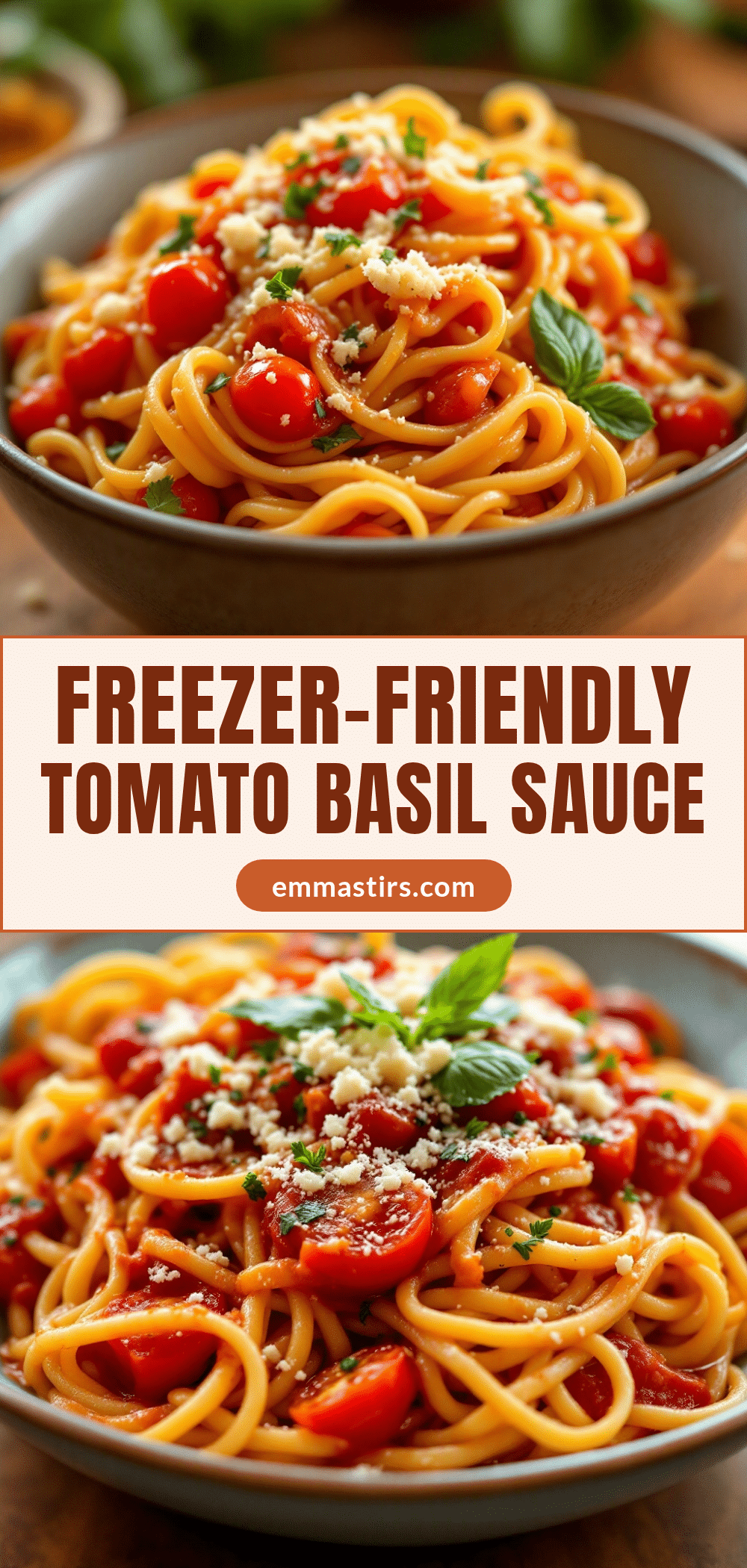
Best Roasted Cherry Tomato Basil Sauce (Freezer-Friendly)
This roasted cherry tomato basil sauce is a summer staple that captures the deep, jammy sweetness of cherry tomatoes with minimal effort. The oven does all the work, resulting in a versatile sauce that’s perfect for pasta, pizza, or dipping—and it freezes beautifully for year-round enjoyment.
- Prep Time: 10 minutes
- Cook Time: 40 minutes
- Total Time: 50 minutes
- Yield: 4 servings 1x
- Category: Sauce
- Cuisine: Italian
Ingredients
- 2 pounds (about 900g) cherry or grape tomatoes
- 6–8 cloves garlic, smashed
- 3–4 tablespoons extra-virgin olive oil
- 1/2 cup packed fresh basil leaves, plus more for serving
- 1 tablespoon balsamic vinegar
- 1 teaspoon kosher salt (or to taste)
- 1/2 teaspoon freshly ground black pepper
- 1/4 teaspoon red pepper flakes (optional)
- A few sprigs fresh oregano or thyme (optional)
Instructions
- Preheat your oven to 400°F (200°C).
- Rinse and dry the cherry tomatoes. Halve any larger ones; tiny ones can stay whole. Spread them on a large baking sheet.
- Smash 6-8 garlic cloves and scatter them among the tomatoes. Add red pepper flakes or fresh herb sprigs if using.
- Drizzle with 3-4 tablespoons olive oil and toss until everything is coated. Spread into a single layer.
- Season with 1 teaspoon kosher salt and 1/2 teaspoon black pepper.
- Roast for 35-45 minutes, until tomatoes are wrinkled, blistered, and collapsing. Rotate the pan halfway through.
- Let cool for 5 minutes. Remove any herb sprigs.
- Transfer everything from the pan to a blender. Add 1/4 cup packed fresh basil and 1 tablespoon balsamic vinegar.
- Blend until smooth, starting on low and increasing to high. Add water a tablespoon at a time if too thick.
- Taste and adjust seasoning with more salt, balsamic, or basil as desired.
- If desired, stir in additional chopped fresh basil after blending.
- Cool completely before storing in jars or freezer bags.
Notes
Don’t overcrowd the pan—tomatoes should be in a single layer to roast, not steam. Watch the garlic closely as it can burn faster than the tomatoes. Let the mixture cool before blending to avoid splattering. The sauce freezes well for up to 3 months; leave headspace in containers. For a chunkier texture, use a potato masher instead of a blender.
Nutrition
- Serving Size: 1/2 cup (about 120g)
- Calories: 90
- Sugar: 5.5
- Sodium: 250
- Fat: 6.5
- Saturated Fat: 1
- Carbohydrates: 9
- Fiber: 2.5
- Protein: 1.5
Keywords: roasted cherry tomato sauce, tomato basil sauce, freezer-friendly sauce, easy tomato sauce, homemade pasta sauce