Love this? Save it for later!
Share the inspiration with your friends
“Hey, what’s for dinner?” That question used to hit me like a wave every single evening during college summer breaks. Honestly, I wasn’t about to spend a fortune or hours in the kitchen after a long day of classes and part-time jobs. One evening, after a particularly exhausting day, I rummaged through my nearly empty fridge, threw together a few staples, and—surprise!—ended up with a meal that actually tasted good and didn’t break the bank. That accidental win got me hooked on crafting budget-friendly student summer meals that feel full and satisfying without emptying my wallet.
There’s this quiet satisfaction in knowing I can whip up ten different complete dishes for under $50 total, each one easy enough to make on a hectic day but tasty enough to share with friends. The smells of fresh herbs mingling with simple ingredients, the sizzle of something cooking on the stove, the quick chop of veggies—these little moments turned my “What do I eat?” panic into a fun challenge. It’s funny how a few smart choices and a bit of creativity can make summer dinners feel like a treat, even on a tight budget.
This collection of budget-friendly student summer meals isn’t about fancy gadgets or exotic items. It’s about real food that fits the student lifestyle: quick, tasty, and wholesome. And you know, if you find yourself wanting to add a grilled twist, some of the ideas here naturally pair with easy recipes like the flavorful grilled chicken skewers or a fresh side like the grilled vegetable platter I shared before. But the magic? It’s in the simplicity and the joy of making meals that work for your summer days without any fuss.
Why You’ll Love This Recipe
These budget-friendly student summer meals have been tested through the real hustle of student life and come out shining every time. I’ve spent many evenings tweaking these dishes to hit the sweet spot between affordability, flavor, and ease. Whether you’re juggling classes, work, or just want to have more fun with friends than stressing over dinner, these recipes are your new best friends.
- Quick & Easy: Most meals come together in under 30 minutes—perfect for those last-minute hunger pangs or when you’re running on limited energy.
- Simple Ingredients: No need for special trips to fancy stores. These recipes use pantry staples and fresh produce you can find anywhere.
- Perfect for Summer: Light but filling, these dishes are great for everything from solo dinners to casual get-togethers on warm evenings.
- Crowd-Pleaser: They’ve passed the ultimate test—friends and roommates keep asking for seconds (and the recipes!).
- Unbelievably Delicious: Don’t let the budget fool you. The flavors are layered and comforting, hitting all the right notes.
What sets these meals apart is the focus on versatility and balance. For example, one recipe uses a simple seasoning mix that brings out the best in cheap cuts of chicken, while another sneaks in fresh herbs and a little lemon zest for brightness. I also love swapping ingredients based on what’s on sale or what’s leftover in the fridge—this isn’t about rigid rules, but about making food work for you. These meals aren’t just good—they’re the kind that leave you feeling content and ready to take on whatever summer throws your way.
What Ingredients You Will Need
Each recipe in this collection relies on straightforward, budget-friendly ingredients that pack in flavor without the fuss. Think pantry staples, fresh produce, and versatile proteins that stretch across multiple meals. You’ll find most of these ingredients in any basic kitchen setup, and they’re easy to swap in case of dietary preferences or what’s on sale.
- Proteins:
- Chicken thighs or breasts (cost-effective and flavorful; I often pick up family packs for savings)
- Canned beans (black beans, chickpeas—great for protein and fiber)
- Eggs (a super versatile staple for everything from breakfast bowls to stir-fries)
- Ground beef or turkey (lean options work great here, and you can freeze portions)
- Grains & Starches:
- Rice (white or brown; I prefer brown for extra fiber)
- Pasta (regular or whole wheat; easy to cook and pairs well with fresh veggies)
- Potatoes (white or sweet, budget-friendly and filling)
- Vegetables & Fruits:
- Onions and garlic (the flavor backbone of many dishes)
- Bell peppers (adds color and crunch)
- Tomatoes (fresh or canned for sauces and salads)
- Leafy greens like spinach or kale (nutrient-dense and wallet-friendly)
- Lemons or limes (for brightness and zest)
- Seasonal veggies like zucchini or cucumbers (fresh and affordable in summer)
- Dairy & Extras:
- Cheese (cheddar or feta; a little goes a long way)
- Plain yogurt (great for sauces, dressings, or breakfast bowls)
- Olive oil or vegetable oil (for cooking and dressings)
- Basic spices: salt, black pepper, paprika, cumin, chili powder
- Fresh herbs if possible (parsley, cilantro, or basil—adds freshness without breaking the bank)
For a few recipes, I recommend grabbing a jar of good-quality tomato sauce or balsamic vinegar (brands like Colavita or Pompeian work well) to add depth without extra effort. If you’re feeling adventurous, a bag of frozen corn or peas can sneak in some sweetness and color. And hey, if you want to keep things keto or low-carb, swapping rice for cauliflower rice works surprisingly well—check out my crispy grilled zucchini and squash recipe for some inspiration on easy low-carb sides.
Equipment Needed
Keeping equipment simple is key for student kitchens, right? Most of these budget-friendly student summer meals can be made with just basic tools you likely already have.
- Non-stick skillet or frying pan (a good quality one makes cooking and cleanup easier)
- Medium saucepan (for boiling pasta, rice, or potatoes)
- Baking sheet (for roasting veggies or baking dishes)
- Mixing bowls (for prepping ingredients and tossing salads)
- Sharp chef’s knife (trust me, a good knife cuts prep time in half)
- Cutting board (preferably one that’s easy to clean and sturdy)
- Measuring cups and spoons (for accuracy, but eyeballing works too)
Don’t sweat if you don’t have fancy gear like cast iron pans or food processors. For example, when roasting vegetables like in the fresh grilled vegetable platter, a simple baking sheet and foil will do just fine. If you’re on a tight budget, dollar stores often carry decent kitchen basics, and keeping your knives sharp (a quick hone with a steel or even a ceramic mug base) can make a world of difference.
Preparation Method
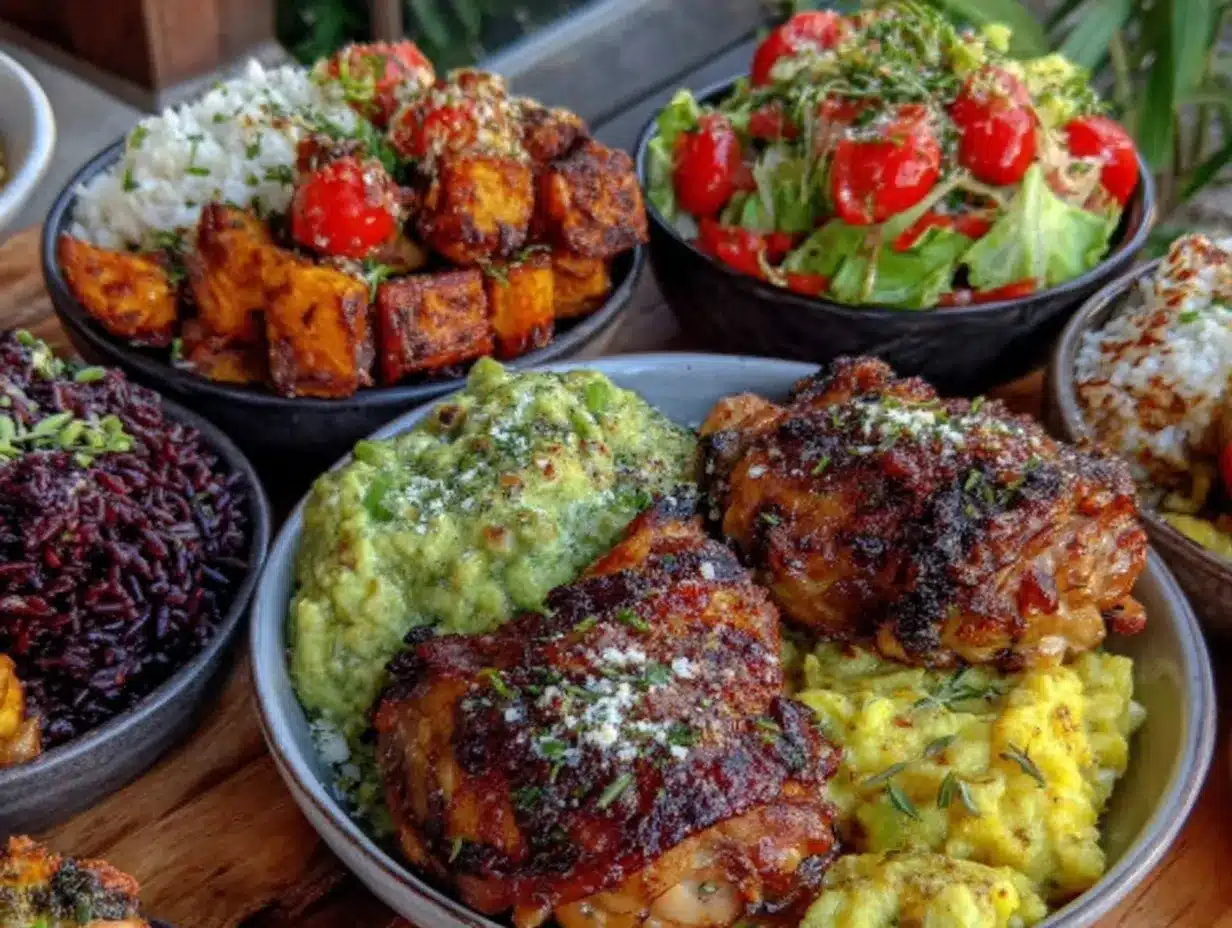
- Start with Mise en Place (10 minutes): Gather and prep all your ingredients. Chop veggies like onions, bell peppers, and tomatoes into bite-sized pieces. If using chicken, pat it dry and season with salt, pepper, and your choice of spices.
- Cook Your Grains or Starches (15-20 minutes): Rinse and cook rice or pasta according to package instructions. For rice, typically boil 1 cup (200g) rice with 2 cups (480ml) water until tender. Drain pasta well but save a little pasta water for sauces.
- Prepare Proteins (10-15 minutes): For chicken, heat a tablespoon of oil in your skillet over medium-high heat. Cook chicken thighs or breasts for about 5-7 minutes per side until golden brown and cooked through (internal temp 165°F/74°C). For beans or ground meat, sauté with onions and garlic until fragrant.
- Assemble Quick Sauces or Dressings (5 minutes): Whisk together simple dressings using olive oil, lemon juice, salt, pepper, and a pinch of herbs. For tomato-based dishes, simmer canned tomatoes with garlic and spices until thickened.
- Combine Ingredients (5-10 minutes): Toss cooked grains, proteins, and veggies in your sauce or dressing. Taste and adjust seasoning. Look for vibrant colors and a balance of textures—something fresh and inviting.
- Optional Final Touches (5 minutes): Sprinkle chopped herbs, crumbled cheese, or a squeeze of lemon over the dish before serving. These little details bring brightness and personality to simple meals.
Here’s a tip from my own mishaps: when cooking chicken, don’t overcrowd the pan. Give those pieces a little breathing room to get a nice sear rather than steam. Also, if your sauce feels too thick, adding a splash of saved pasta water can loosen it beautifully without watering down flavor. Keep a close eye on your veggies during roasting or sautéing—they should be tender but still have a bite for contrast.
Cooking Tips & Techniques
Honestly, the trickiest part of making budget-friendly student summer meals is balancing speed and flavor. Here are some tips I picked up after plenty of trial and error:
- Batch Prep Smartly: Chop all your veggies at once and store them in airtight containers. It makes throwing meals together much faster later in the week.
- Use One-Pot or Sheet Pan Methods: Less cleanup means more time to relax—especially handy when you’re juggling study and work. For example, roasting a medley of veggies alongside chicken breasts on a single pan works wonders.
- Spice It Right: Don’t be shy with spices. Paprika, cumin, and chili powder add warmth and depth without extra cost. I learned the hard way that under-seasoning makes dishes taste flat.
- Don’t Overcook Proteins: Chicken that’s too dry or beans that are mushy can ruin the whole dish. Use a meat thermometer if you can, or trust your instincts—juicy and tender is the goal.
- Multitask Efficiently: While rice boils, start sautéing your protein or prepping a quick salad. This saves precious minutes and keeps dinner on track.
One personal blunder I remember: I once tried to speed up cooking by cranking the heat on chicken, and ended up with burnt edges and raw centers. Lesson learned—medium heat and patience pay off. Also, I keep a small container of pre-mixed seasoning at hand for days when I can’t think straight—it’s a lifesaver.
Variations & Adaptations
One of the great things about these budget-friendly student summer meals is how easy they are to tweak depending on what you have or what you’re craving.
- Vegetarian Swap: Replace chicken or beef with roasted chickpeas or lentils. They add protein and texture without extra cost.
- Seasonal Flair: In the height of summer, swap out canned tomatoes for fresh heirloom varieties or add juicy watermelon cubes on the side for a refreshing contrast, similar to the watermelon cucumber feta salad.
- Gluten-Free: Use rice, quinoa, or gluten-free pasta instead of traditional wheat pasta. Most recipes adapt well to these swaps.
- Spice Level: Adjust heat by adding fresh chili, chili flakes, or a dash of hot sauce to suit your taste buds.
- Cooking Method Variations: If you don’t want to use the stove, many recipes can be adapted for the oven or even a slow cooker—perfect for hands-off cooking days.
Once, I replaced the chicken in a dish with the grilled portobello mushrooms from my balsamic grilled portobello mushrooms recipe, and it was surprisingly hearty and delicious. You don’t need to follow these recipes to the letter—playing with swaps keeps things interesting and helps stretch your budget.
Serving & Storage Suggestions
Most of these meals are best served fresh and warm, but they also handle leftovers like champs. I usually portion out meals into reusable containers for the next day’s lunch or a quick reheat after a long day.
- Serving Temperature: Room temperature or slightly warm works well for grain bowls or salads. Hot and juicy is perfect for roasted dishes.
- Presentation: A sprinkle of fresh herbs or a wedge of lemon instantly makes a simple plate feel a little more special.
- Storage: Store leftovers in airtight containers in the fridge for up to 3 days. For longer storage, many dishes freeze well—just thaw in the fridge overnight and reheat gently.
- Reheating Tips: Microwave with a damp paper towel to keep moisture, or warm in a skillet with a splash of water or broth to refresh flavors and texture.
- Flavor Development: Some dishes, like stews or bean salads, taste even better the next day as the flavors meld together.
For a balanced meal, I sometimes pair these dishes with a light side like the easy refreshing Greek pasta salad or a simple green salad tossed with lemon and olive oil. It brightens the plate and adds a crisp contrast to warm, savory mains.
Nutritional Information & Benefits
These budget-friendly student summer meals are designed to nourish without complexity. Each dish typically offers a balanced mix of protein, carbs, and fiber, keeping energy steady through long study sessions or active days. For example, chicken and beans provide lean protein, while veggies supply essential vitamins and minerals.
Many recipes here are naturally gluten-free or easily adapted, and you can swap ingredients to accommodate dairy sensitivities or plant-based diets. The inclusion of fresh produce and herbs means you’re getting antioxidants and important nutrients, even on a budget.
From a wellness perspective, these meals help avoid the temptation of fast food or overpriced takeout, offering wholesome, homemade alternatives that fuel both body and mind. Plus, controlling the ingredients means less hidden sugar or sodium compared to many convenience options.
Conclusion
Making budget-friendly student summer meals doesn’t have to be a chore or a compromise. These ten dishes prove you can enjoy complete, flavorful, and satisfying meals without stressing over cost or time. I love how each recipe encourages creativity and simplicity, turning everyday ingredients into something worth sitting down for.
Feel free to tailor these ideas to what’s in your pantry or your personal tastes—cooking is as much about experimentation as it is about tradition. And if you’re looking for more inspiration, some of the grilled dishes and fresh salads on this site might spark new favorites.
Here’s to summer meals that are easy on your wallet, kind to your schedule, and good for your soul. I’d love to hear how you make these recipes your own or what budget-friendly hacks you’ve discovered along the way.
FAQs
What are some tips for keeping meals under $50 for the whole summer?
Plan meals around affordable staples like rice, beans, and seasonal veggies. Buy in bulk when possible, prep in advance, and use versatile ingredients across multiple dishes to stretch your budget.
Can these recipes be made vegan or vegetarian?
Absolutely! Swap out any meat for beans, lentils, or tofu, and use plant-based oils and dairy alternatives. Many recipes naturally lend themselves to vegetarian or vegan versions with simple ingredient swaps.
How can I store leftovers safely?
Use airtight containers and refrigerate leftovers within two hours of cooking. Consume within 3-4 days or freeze for longer storage, thawing overnight before reheating.
Are these meals suitable for meal prepping?
Yes, they are perfect for meal prep. Most dishes keep well in the fridge for a few days and can be quickly reheated, making them ideal for busy student schedules.
What’s a good substitute if I don’t have access to fresh herbs?
Dried herbs can work in a pinch, but use about one-third the amount since they’re more concentrated. Alternatively, a squeeze of lemon or a dash of spice can add brightness and flavor.
Pin This Recipe!
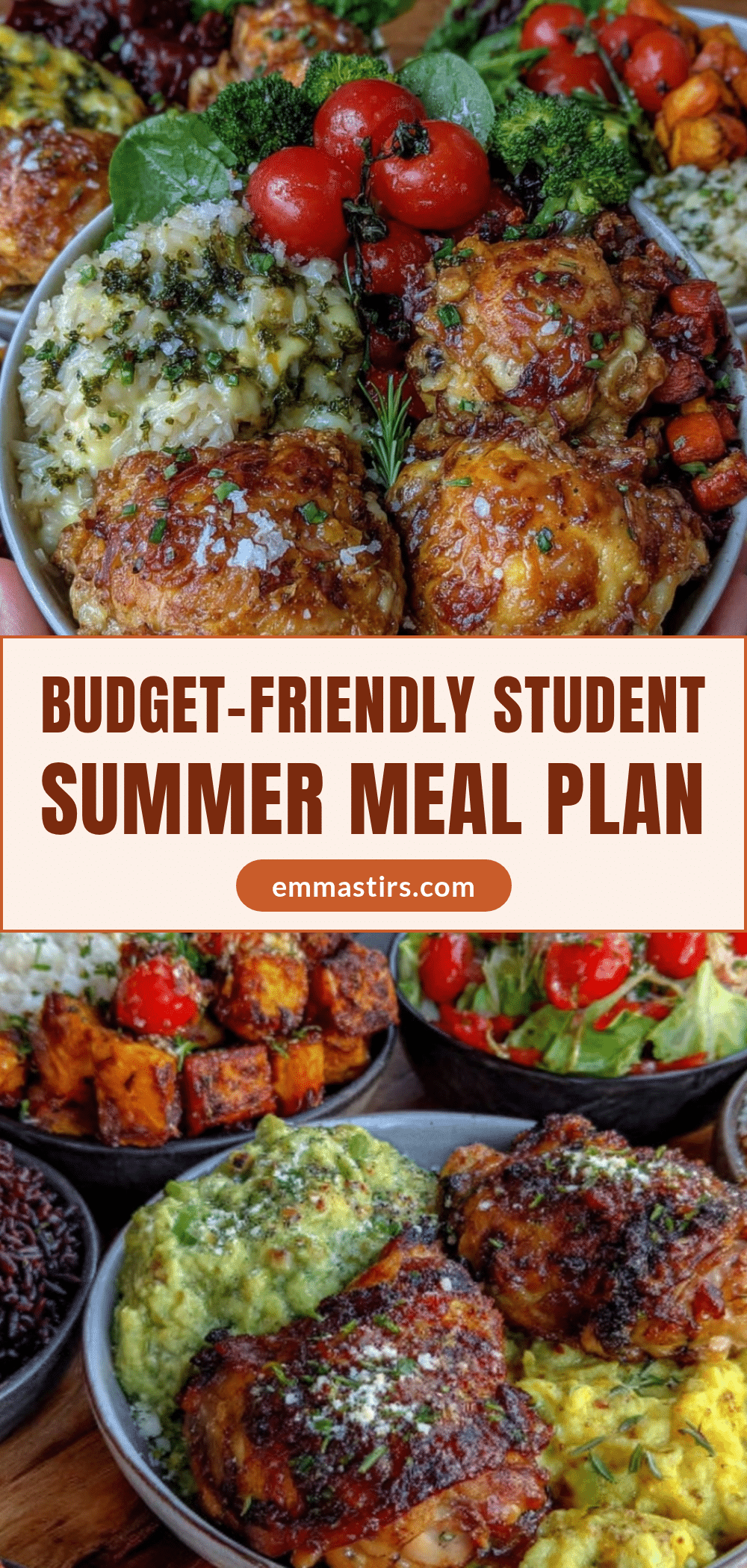
Budget-Friendly Student Summer Meals 10 Easy Complete Dishes Under 50 Dollars

A collection of ten easy, affordable, and complete summer meals perfect for students, designed to be quick, tasty, and budget-friendly without sacrificing flavor or nutrition.
- Prep Time: 10 minutes
- Cook Time: 30 minutes
- Total Time: 40 minutes
- Yield: 4 servings
- Category: Main Course
- Cuisine: American
Ingredients
- Chicken thighs or breasts
- Canned beans (black beans, chickpeas)
- Eggs
- Ground beef or turkey
- Rice (white or brown)
- Pasta (regular or whole wheat)
- Potatoes (white or sweet)
- Onions
- Garlic
- Bell peppers
- Tomatoes (fresh or canned)
- Leafy greens (spinach or kale)
- Lemons or limes
- Seasonal veggies (zucchini or cucumbers)
- Cheese (cheddar or feta)
- Plain yogurt
- Olive oil or vegetable oil
- Basic spices: salt, black pepper, paprika, cumin, chili powder
- Fresh herbs (parsley, cilantro, or basil)
- Optional: tomato sauce, balsamic vinegar, frozen corn or peas
Instructions
- Start with Mise en Place (10 minutes): Gather and prep all your ingredients. Chop veggies like onions, bell peppers, and tomatoes into bite-sized pieces. If using chicken, pat it dry and season with salt, pepper, and your choice of spices.
- Cook Your Grains or Starches (15-20 minutes): Rinse and cook rice or pasta according to package instructions. For rice, typically boil 1 cup (200g) rice with 2 cups (480ml) water until tender. Drain pasta well but save a little pasta water for sauces.
- Prepare Proteins (10-15 minutes): For chicken, heat a tablespoon of oil in your skillet over medium-high heat. Cook chicken thighs or breasts for about 5-7 minutes per side until golden brown and cooked through (internal temp 165°F/74°C). For beans or ground meat, sauté with onions and garlic until fragrant.
- Assemble Quick Sauces or Dressings (5 minutes): Whisk together simple dressings using olive oil, lemon juice, salt, pepper, and a pinch of herbs. For tomato-based dishes, simmer canned tomatoes with garlic and spices until thickened.
- Combine Ingredients (5-10 minutes): Toss cooked grains, proteins, and veggies in your sauce or dressing. Taste and adjust seasoning. Look for vibrant colors and a balance of textures—something fresh and inviting.
- Optional Final Touches (5 minutes): Sprinkle chopped herbs, crumbled cheese, or a squeeze of lemon over the dish before serving.
Notes
Do not overcrowd the pan when cooking chicken to ensure a good sear. Add saved pasta water to loosen thick sauces without diluting flavor. Keep an eye on veggies to maintain a tender but crisp texture. Batch prep veggies to save time. Use one-pot or sheet pan methods to reduce cleanup. Adjust spices to taste and avoid under-seasoning.
Nutrition
- Serving Size: Approximately 1 plat
- Calories: 450
- Sugar: 6
- Sodium: 550
- Fat: 15
- Saturated Fat: 3.5
- Carbohydrates: 45
- Fiber: 7
- Protein: 30
Keywords: budget-friendly, student meals, summer meals, quick recipes, affordable dinner, easy cooking, healthy meals, meal prep, chicken recipes, vegetarian options