Love this? Save it for later!
Share the inspiration with your friends
Three times in one week, and I still wasn’t sick of it. That’s how this stuffed acorn squash thing started—not with a plan, but with a squash sitting on my counter looking at me every time I walked past. By Wednesday I’d already made it twice, tweaking the filling each time because something about that combo of sweet roasted squash and savory wild rice just wouldn’t leave my brain. The first version was too dry. The second had too much cranberry (yes, that’s a thing). The third? That one made me stop chewing and just sit there for a second. I knew I’d landed on something worth repeating. And honestly, I’ve been making it every week since.
There’s something about fall that makes me want to stuff things into other things. Bell peppers, sweet potatoes, even portobello mushrooms—if it has a cavity, I’m filling it. But acorn squash? It’s the perfect little bowl nature made. Those ridges, that deep orange flesh, the way it holds heat like a tiny edible oven. And when you stuff it with nutty wild rice, tart dried cranberries, and a few savory things that tie it all together, you get a dinner that feels cozy without being heavy. It’s the kind of meal that makes you want to light a candle and put on a sweater, even if it’s still technically September.
This cozy stuffed acorn squash with wild rice and cranberries became my go-to for those nights when I want something that feels special but doesn’t require a trip to three different grocery stores. It’s vegetarian on its own, easy to make vegan, and filling enough that you won’t be hunting for a snack an hour later. I’ve served it to friends who swore they didn’t like squash and watched them go back for seconds. That’s the kind of recipe I want to hold onto—and share with you.
Why You’ll Love This Recipe
Let me tell you why this one earned a permanent spot in my fall rotation. I’ve tested this recipe more times than I care to admit—burned my fingers on hot squash, over-salted the filling once (don’t ask), and learned exactly how to get that perfect tender-but-not-mushy texture. So trust me when I say this version is the one.
- Simple Ingredients — Everything is easy to find at any grocery store. No specialty items, no hunting down obscure grains. You probably already have most of the pantry staples.
- Make-Ahead Friendly — Cook the rice and prep the filling a day ahead. Stuff and bake when you’re ready. It actually gets better as the flavors meld together.
- Perfect for Entertaining — Each squash half is its own serving. No slicing, no plating drama. Just set them on a platter and watch people dig in.
- Crowd-Pleaser — I’ve served this to meat-eaters, vegetarians, and picky kids. Everyone finds something to love about that sweet-savory combo.
- Unbelievably Satisfying — The wild rice gives it this chewy, nutty texture that feels substantial. You won’t miss the meat, I promise.
What makes this different from other stuffed squash recipes? It’s the balance. So many versions go too sweet or too savory. This one hits that perfect middle ground where the maple syrup enhances the squash’s natural sweetness without making it taste like dessert, and the savory herbs keep everything grounded. Plus, I figured out the trick to par-cooking the squash before stuffing so the filling doesn’t dry out while the squash gets tender. That little step changes everything.
Honestly, this is the kind of recipe that makes you feel like you’ve got your life together. It’s impressive enough for Thanksgiving but simple enough for a Tuesday night when you need something warm and comforting. That’s a rare combo.
What Ingredients You Will Need
This recipe uses simple, honest ingredients that work together to create something greater than the sum of their parts. Most of these are pantry staples or easy fall finds, so you shouldn’t need to hunt anything down.
- Acorn squash (2 medium) — Look for squash that feels heavy for its size with firm, unblemished skin. The ones with more orange on the outside tend to be sweeter. You’ll cut each in half and scoop out the seeds, so each person gets one half.
- Wild rice (1 cup, uncooked) — I use a blend of actual wild rice and brown rice sometimes, but straight wild rice gives the best texture. Lundberg is my go-to brand—it cooks evenly and has that nice nutty flavor. Rinse it before cooking to remove any debris.
- Vegetable broth (2 cups) — Cooking the rice in broth instead of water adds so much more flavor. Use a good-quality one; I like Pacific Foods or Swanson’s organic. Low-sodium is best so you can control the salt.
- Dried cranberries (1/2 cup) — Look for ones that are plump and moist, not hard and shriveled. Craisins work fine, but if you can find unsweetened dried cranberries, the tartness balances the sweetness better. Chop them roughly if they’re large.
- Yellow onion (1 medium, diced) — A standard yellow onion gives the right savory base. Sweet onion works too, but don’t use red—it’s too sharp for this dish.
- Celery (2 stalks, diced) — Adds that classic stuffing aroma and a little crunch. Make sure to dice them small so they blend into the filling.
- Garlic (3 cloves, minced) — Fresh garlic only here. The pre-minced stuff in a jar won’t give you the same punch. Trust me on this one.
- Fresh sage (1 tablespoon, chopped) — Sage and winter squash are a match made in heaven. If you can’t find fresh, use 1 teaspoon dried sage, but fresh really makes a difference.
- Fresh thyme (1 teaspoon, leaves stripped) — Adds an earthy, slightly floral note that ties everything together. Run your fingers down the stem to strip the leaves off easily.
- Maple syrup (2 tablespoons) — This gets brushed on the squash before roasting and adds a little to the filling. Real maple syrup only—the pancake syrup stuff is too artificial and sugary.
- Olive oil (3 tablespoons, divided) — Use a good extra virgin for the filling and a lighter one for brushing the squash. Don’t skimp here; the fat carries all the flavors.
- Pecans (1/2 cup, chopped) — Toast them first for maximum flavor. They add crunch and richness. Walnuts work too if that’s what you have.
- Salt and black pepper (to taste) — I use kosher salt for cooking and flaky sea salt for finishing. Freshly cracked black pepper makes a difference.
- Optional: Vegan butter (2 tablespoons) — Adds richness to the filling if you’re not worried about keeping it vegan. Regular butter works too if that’s your thing.
Equipment Needed
Nothing too fancy here. Most of this you probably already have, but I’ll note a few things that make the process smoother.
- Sharp chef’s knife — Acorn squash is tough. A dull knife is dangerous here. Use your sharpest one, and be careful cutting through that tough skin.
- Large baking dish or rimmed baking sheet — Big enough to hold all four squash halves without crowding. A 9×13 dish works perfectly.
- Medium saucepan with lid — For cooking the wild rice. A heavy-bottomed one distributes heat better and prevents sticking.
- Large skillet — For sautéing the vegetables and making the filling. A 12-inch skillet gives you plenty of room to stir everything together.
- Mixing bowl — For combining the filling ingredients before stuffing the squash.
- Pastry brush — For brushing the maple syrup and oil onto the squash. A silicone one is easiest to clean.
- Measuring cups and spoons — Standard set for accurate measurements. Wild rice is forgiving, but the liquid ratio matters.
- Aluminum foil — For covering the squash during the first part of baking so it steams and gets tender without drying out.
I’ve made this with a cheap baking sheet and a worn-out skillet, and it still turned out great. Don’t stress if you don’t have the perfect equipment. A little patience goes further than fancy tools.
Preparation Method
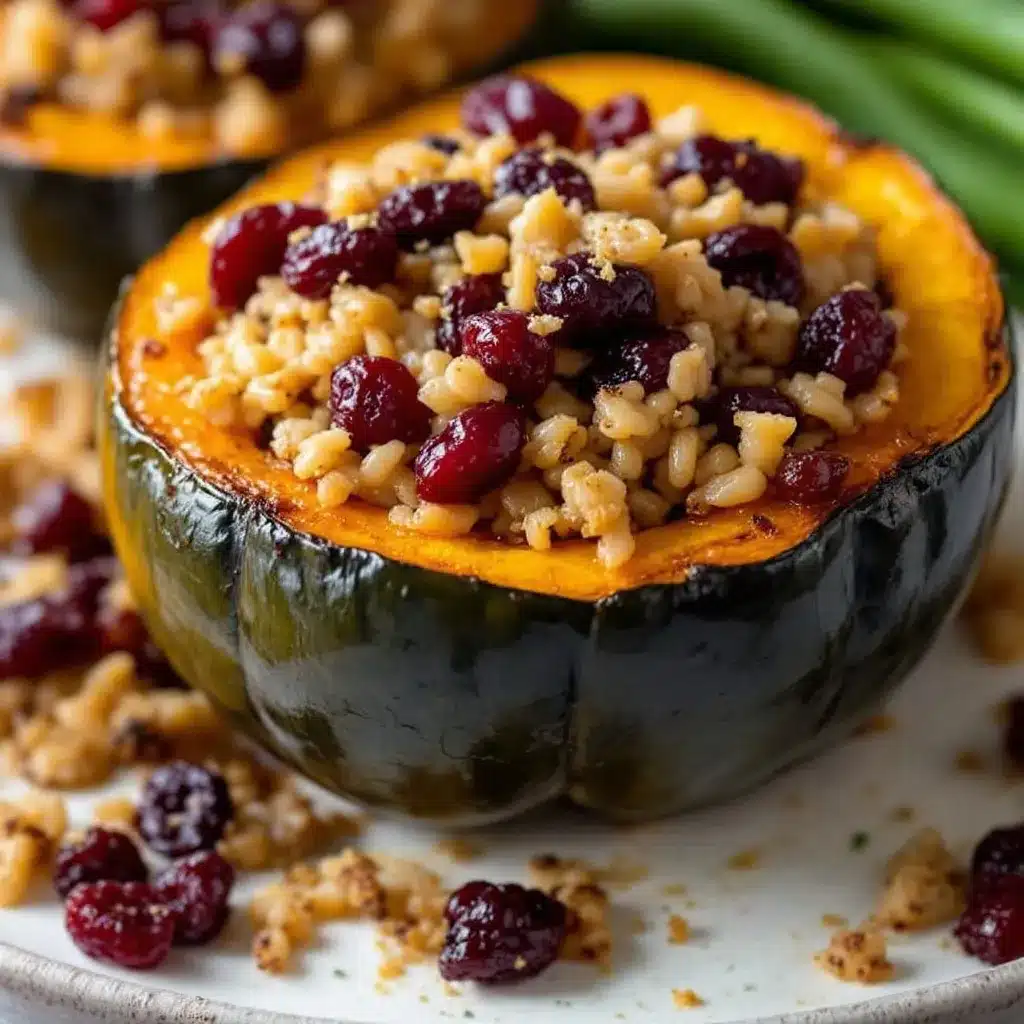
Let’s walk through this step by step. I’ve organized it so you can multitask efficiently, but if you need to take it slow, that works too.
- Preheat your oven to 400°F (200°C). Get this going first so it’s hot when you need it. Position a rack in the middle of the oven.
- Start the wild rice. Rinse 1 cup of wild rice under cold water in a fine-mesh strainer. In a medium saucepan, combine the rinsed rice with 2 cups of vegetable broth and a pinch of salt. Bring to a boil over high heat, then reduce to a simmer, cover, and cook for 45-55 minutes. The rice is done when it’s tender and some grains have split open, revealing the lighter interior. Drain any excess liquid if needed. Fluff with a fork and set aside. (Pro tip: cook the rice a day ahead and refrigerate—it actually works better when it’s slightly dried out.)
- Prepare the squash. While the rice cooks, carefully cut each acorn squash in half from stem to tip. Use a sharp chef’s knife and go slowly—these things are dense. Scoop out the seeds and stringy pulp with a spoon. A grapefruit spoon with serrated edges works great here, but a regular spoon does the job too. Brush the cut sides and cavities with 1 tablespoon of olive oil and 1 tablespoon of maple syrup mixed together. Season lightly with salt and pepper.
- Par-bake the squash. Place the squash halves cut-side down on a rimmed baking sheet or in a baking dish. Add about 1/4 cup of water to the pan (this creates steam and keeps them moist). Cover tightly with foil and bake for 25 minutes. This par-cooking step is crucial—it softens the squash enough that you don’t have to bake the filling to death waiting for the squash to get tender.
- Make the filling. While the squash bakes, heat 2 tablespoons of olive oil in a large skillet over medium heat. Add the diced onion and celery, and cook for 5-6 minutes until softened and translucent. Add the minced garlic and cook for another minute until fragrant. Stir in the chopped sage and thyme leaves, cooking for 30 seconds until you can really smell them. Remove from heat.
- Combine the filling. In a large mixing bowl, combine the cooked wild rice, sautéed vegetables, dried cranberries, and toasted pecans. Add the remaining 1 tablespoon of maple syrup, and season with salt and pepper to taste. If the mixture seems dry, add a tablespoon of melted vegan butter or olive oil. Taste and adjust seasoning—this is your chance to get it right before stuffing. The filling should be savory with little bursts of sweetness from the cranberries.
- Stuff the squash. Remove the squash from the oven and carefully flip each half over so the cut side faces up. They’ll be hot, so use tongs or oven mitts. Divide the filling evenly among the four cavities, mounding it slightly. Don’t pack it too tightly—you want some air in there so everything heats through evenly.
- Finish baking. Return the stuffed squash to the oven, uncovered this time, and bake for another 20-25 minutes. The squash should be fork-tender (a knife should slide in easily) and the filling should be hot throughout. The edges of the filling will get slightly crispy, which is exactly what you want.
- Rest and serve. Let the squash rest for 5 minutes before serving. This lets the filling set slightly and prevents burning your mouth. Drizzle with a little extra maple syrup or a sprinkle of flaky sea salt if you’re feeling fancy. Serve warm.
Cooking Tips & Techniques
After making this cozy stuffed acorn squash with wild rice and cranberries more times than I can count, I’ve picked up a few tricks that make the process smoother and the results more consistent.
Don’t skip the par-bake. I learned this the hard way. The first time I made stuffed squash, I put everything in the oven raw and ended up with either crunchy squash or dried-out filling. Par-baking the squash cut-side down with a little water creates steam that softens the flesh evenly. You want the squash to be about 75% done before you add the filling. That way, everything finishes together.
Toast your pecans. This takes three minutes and makes a huge difference. Throw the chopped pecans in a dry skillet over medium heat and shake them around until they smell nutty and are slightly darker. Watch them carefully—they go from toasted to burned in about 30 seconds. Toasted nuts add crunch and depth that raw nuts just don’t have.
Season in layers. Don’t just dump all the salt in at the end. Season the squash lightly before baking, season the vegetables as they cook, and season the filling before you stuff. Each layer builds flavor. I use kosher salt for cooking and save the flaky sea salt for finishing right before serving.
Make extra filling. I always cook a little more wild rice than I need. Leftover filling is amazing on its own as a grain bowl, or you can stuff it into bell peppers or portobello mushrooms later in the week. It keeps for 4-5 days in the fridge.
Watch the liquid. If your filling seems dry before stuffing, add a splash of vegetable broth or melted butter. If it seems wet (which can happen if you didn’t drain the rice well), spread it on a baking sheet and let it dry out in the oven for a few minutes while the squash par-bakes. The texture should be moist but not soggy.
Variations & Adaptations
One of the best things about this recipe is how flexible it is. Here are some ways I’ve adapted it depending on what I have on hand or who I’m feeding.
Make it vegan. This recipe is already vegetarian, but making it vegan is easy. Use maple syrup instead of honey (which I already do), and skip the optional butter or use a vegan butter substitute. The filling is naturally vegan as written—just double-check your vegetable broth doesn’t contain any animal products.
Add protein. If you want to make this a heartier meal, add cooked sausage (chorizo or Italian sausage works great), shredded rotisserie chicken, or crumbled tempeh. Cook the protein separately and stir it into the filling before stuffing. I’ve done this with leftover honey garlic baked chicken chopped into small pieces, and it was fantastic.
Swap the grains. Not a fan of wild rice? Use farro, quinoa, or even cooked brown rice. Each gives a different texture. Farro is chewy and nutty like wild rice, while quinoa is lighter and fluffier. If you use quinoa, cook it in vegetable broth for the most flavor.
Change the nuts. Pecans are my favorite here, but walnuts, slivered almonds, or even pine nuts work beautifully. Toast them first no matter what you use. For a nut-free version, use pepitas (pumpkin seeds) or sunflower seeds.
Seasonal swaps. In the fall, stick with cranberries and sage. In winter, try dried cherries and rosemary. In spring, use dried apricots and fresh parsley. The formula stays the same—just change the dried fruit and herb to match the season.
Different squash. Acorn squash is perfect for stuffing because of its shape, but you can use small sugar pumpkins, delicata squash (no need to peel), or even halved bell peppers if squash isn’t your thing. Adjust baking times accordingly—delicata cooks faster, pumpkins take a bit longer.
Serving & Storage Suggestions
This cozy stuffed acorn squash with wild rice and cranberries is a meal in itself, but here’s how to round it out or save it for later.
Serving suggestions. Serve the squash warm, right out of the oven. Each half is one serving, so it’s naturally portioned. I like to drizzle a little extra maple syrup over the top and sprinkle with flaky sea salt right before serving. A side of simple greens with a lemon vinaigrette cuts through the richness perfectly. If you’re feeding a crowd, pair it with a Mediterranean chickpea bowl or a simple roasted vegetable platter for variety.
What to drink with it. A dry Riesling or a light Pinot Noir complements the sweetness of the squash and the earthiness of the wild rice. For non-alcoholic options, apple cider (hot or cold) or a sparkling water with a splash of cranberry juice works beautifully.
Storing leftovers. Store leftover stuffed squash in an airtight container in the refrigerator for up to 4 days. The flavors actually meld together and get better overnight. The squash will soften more as it sits, so don’t expect it to be as firm as when it was fresh.
Reheating. The best way to reheat is in the oven at 350°F for 10-15 minutes, covered loosely with foil to prevent drying out. The microwave works in a pinch, but the squash gets mushy and the filling loses its texture. If you’re meal-prepping, consider storing the filling and squash separately and assembling when you’re ready to eat.
Freezing. You can freeze the stuffed squash for up to 3 months. Assemble completely, then wrap each half tightly in plastic wrap and foil. Thaw overnight in the fridge and reheat in the oven at 350°F until hot throughout, about 20-25 minutes. The texture won’t be quite as perfect as fresh, but it’s still delicious for a busy night.
Nutritional Information & Benefits
This recipe is as nourishing as it is delicious. Here’s a rough breakdown per serving (one stuffed squash half):
| Nutrient | Amount |
|---|---|
| Calories | ~385 |
| Protein | 8g |
| Carbohydrates | 52g |
| Fiber | 8g |
| Fat | 16g |
| Sugar | 14g (naturally occurring) |
Acorn squash is packed with vitamin A (great for eye health and immunity), vitamin C, and potassium. Wild rice is a whole grain with more protein and fiber than white rice, plus it contains B vitamins and magnesium. The pecans add healthy fats and a little zinc, while the cranberries provide antioxidants. This is the kind of meal that fills you up without weighing you down—perfect for those transitional fall days when you want something cozy but still light.
If you’re watching your carbohydrate intake, you can reduce the wild rice by half and add more sautéed vegetables or cooked lentils to bulk up the filling. The squash itself is relatively low in carbs compared to other winter squashes, with about 15g of carbs per half before the filling.
Conclusion
This cozy stuffed acorn squash with wild rice and cranberries has become my fall anchor recipe. It’s the one I make when I want to feel like I’ve got dinner under control, when I want to impress someone without breaking a sweat, or when I just need a warm, satisfying meal that makes my kitchen smell amazing. The sweet squash, the nutty rice, the tart cranberries, the crunchy pecans—every bite hits a different note, and somehow they all harmonize.
I hope you make this your own. Maybe you’ll add a little more maple syrup, swap the pecans for walnuts, or throw in some leftover chicken from last night’s dinner. That’s the beauty of a recipe like this—it’s a framework, not a prison. The first time you make it, follow the instructions. The second time, start playing. That’s where the magic happens.
If you try this recipe, I’d love to hear how it turned out. Drop a comment below or tag me in your photos. Did you change something that made it even better? Tell me about it. That’s how recipes evolve, and I’m always looking for new ideas to try. Happy cooking, friends—and here’s to a cozy, delicious fall.
Frequently Asked Questions
Can I make this stuffed acorn squash ahead of time?
Absolutely. You can cook the wild rice and prepare the filling up to two days in advance. Store them separately in the fridge. When you’re ready to eat, par-bake the squash, stuff them, and bake as directed. You can also assemble the entire dish a day ahead and bake it the next day—just add 5-10 minutes to the final baking time since everything will be cold from the fridge.
Can I use a different type of rice?
Yes, but the texture will change. Brown rice is the closest substitute and works beautifully. White rice will be softer and less nutty. Quinoa or farro are also great options—just cook them according to package directions before adding to the filling. If you use a quicker-cooking grain, adjust your timeline accordingly.
How do I cut acorn squash safely?
Acorn squash is tough, so use a sharp chef’s knife and a stable cutting board. First, microwave the whole squash for 2 minutes to soften it slightly (this makes cutting much easier). Let it cool for a minute, then carefully cut off a thin slice from the bottom so it sits flat. Slice through the squash from stem to tip, using a gentle rocking motion. If you’re struggling, try cutting it in half crosswise instead of lengthwise—sometimes that’s easier.
Can I freeze the stuffed squash?
Yes, but with a caveat. The squash will be softer after freezing and thawing, so the texture won’t be quite as perfect. To freeze, assemble the stuffed squash completely but don’t bake it. Wrap each half tightly in plastic wrap, then foil, and freeze for up to 3 months. Thaw overnight in the fridge and bake as directed, adding 10-15 minutes to the cooking time.
What can I serve with this for a complete meal?
This stuffed squash is pretty substantial on its own, but if you want to round it out, a simple green salad with a tangy vinaigrette is perfect. The acidity cuts through the richness of the squash. Roasted Brussels sprouts or a side of steamed green beans also work well. For a heartier meal, serve it alongside a bowl of creamy cheeseburger soup or a simple lentil soup for a cozy fall dinner spread.
Pin This Recipe!
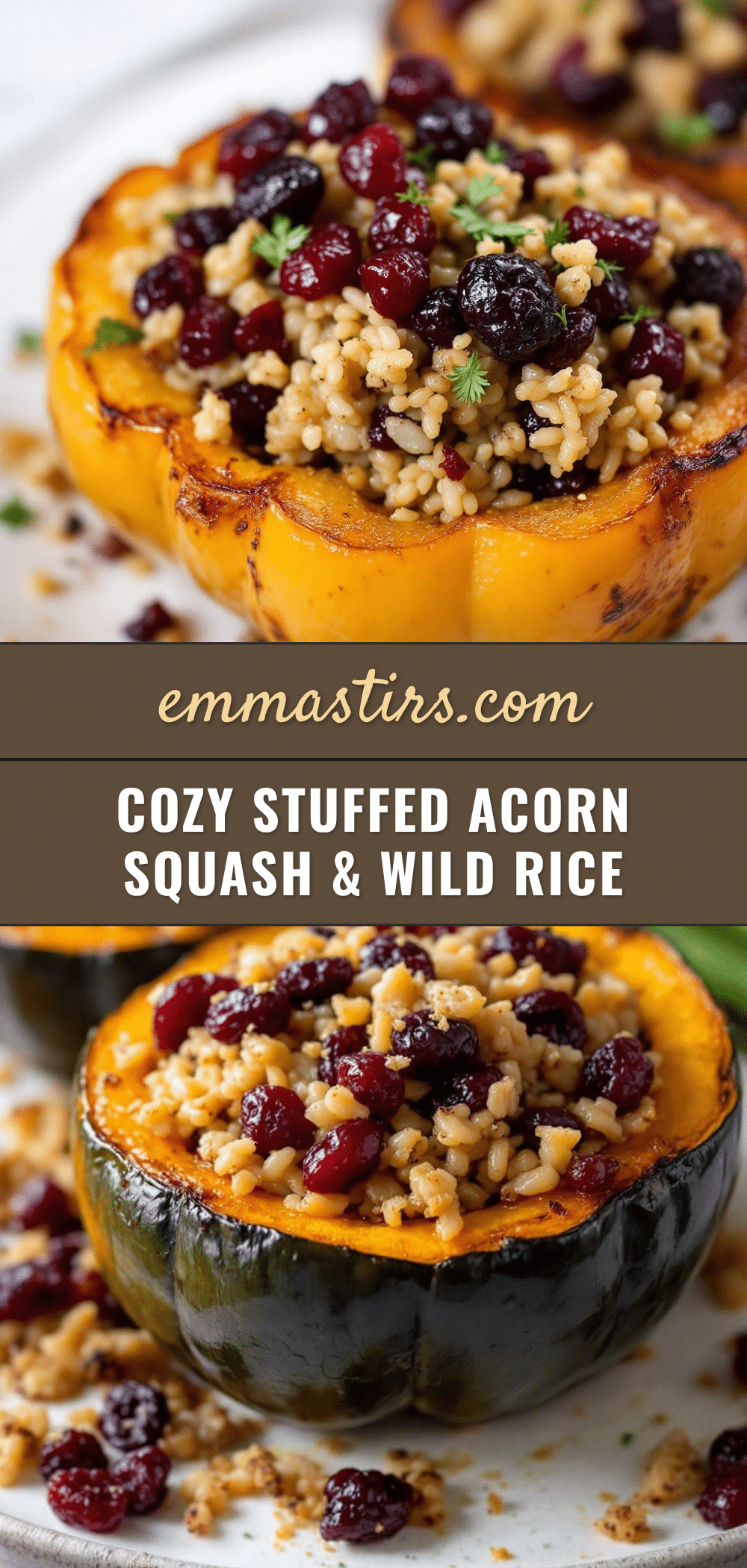
Cozy Stuffed Acorn Squash with Wild Rice and Cranberries
A cozy fall dinner featuring tender acorn squash halves stuffed with nutty wild rice, tart dried cranberries, toasted pecans, and savory herbs. Perfect for weeknights or entertaining, this vegetarian dish is both satisfying and impressive.
- Prep Time: 20 minutes
- Cook Time: 1 hour 10 minutes
- Total Time: 1 hour 30 minutes
- Yield: 4 servings 1x
- Category: Main Course
- Cuisine: American
Ingredients
- 2 medium acorn squash
- 1 cup wild rice, uncooked
- 2 cups vegetable broth
- 1/2 cup dried cranberries
- 1 medium yellow onion, diced
- 2 stalks celery, diced
- 3 cloves garlic, minced
- 1 tablespoon fresh sage, chopped
- 1 teaspoon fresh thyme leaves
- 2 tablespoons maple syrup
- 3 tablespoons olive oil, divided
- 1/2 cup pecans, chopped and toasted
- Salt and black pepper to taste
- 2 tablespoons vegan butter (optional)
Instructions
- Preheat oven to 400°F (200°C).
- Rinse wild rice under cold water. In a medium saucepan, combine rice, vegetable broth, and a pinch of salt. Bring to a boil, then reduce to a simmer, cover, and cook for 45-55 minutes until tender. Drain excess liquid if needed and fluff with a fork.
- Cut each acorn squash in half from stem to tip. Scoop out seeds and stringy pulp. Brush cut sides and cavities with 1 tablespoon olive oil and 1 tablespoon maple syrup mixed together. Season lightly with salt and pepper.
- Place squash halves cut-side down on a rimmed baking sheet or in a baking dish. Add 1/4 cup water to the pan. Cover tightly with foil and bake for 25 minutes.
- While squash bakes, heat 2 tablespoons olive oil in a large skillet over medium heat. Add onion and celery; cook 5-6 minutes until softened. Add garlic and cook 1 minute. Stir in sage and thyme; cook 30 seconds. Remove from heat.
- In a large bowl, combine cooked wild rice, sautéed vegetables, dried cranberries, and toasted pecans. Add remaining 1 tablespoon maple syrup. Season with salt and pepper. If dry, add melted vegan butter or olive oil.
- Remove squash from oven. Carefully flip each half cut-side up. Divide filling evenly among cavities, mounding slightly.
- Return stuffed squash to oven, uncovered, and bake 20-25 minutes until squash is fork-tender and filling is hot.
- Let rest 5 minutes before serving. Drizzle with extra maple syrup or sprinkle with flaky sea salt if desired.
Notes
Par-baking the squash before stuffing prevents the filling from drying out. Toast pecans in a dry skillet for 3 minutes for best flavor. Cook rice a day ahead for better texture. Leftover filling can be used in grain bowls or stuffed into bell peppers.
Nutrition
- Serving Size: 1 stuffed squash hal
- Calories: 385
- Sugar: 14
- Sodium: 480
- Fat: 16
- Saturated Fat: 2
- Carbohydrates: 52
- Fiber: 8
- Protein: 8
Keywords: stuffed acorn squash, wild rice, cranberries, fall recipe, vegetarian, vegan option, Thanksgiving side dish