Love this? Save it for later!
Share the inspiration with your friends
“These tomatoes are perfect—don’t you dare cook them into oblivion.” My neighbor Carol leaned over the fence, a colander overflowing with Roma tomatoes balanced on her hip. It was late August, and her garden was practically throwing fruit at anyone who walked by. I’d mentioned making soup, and she’d all but marched over to supervise.
I laughed, taking the offering. “No pressure, then.”
She wasn’t wrong, though. Those tomatoes—warm from the sun, still carrying the scent of vine and earth—deserved better than a sad, canned puree situation. They deserved something creamy. Something slow. Something that let them be the star of the show, not just a background player.
That’s how this creamy one-pot tomato soup with fresh garden tomatoes was born. Not from a fancy restaurant menu or a chef’s notebook, but from a neighbor’s insistence and a counter full of ripe produce I couldn’t let go to waste. And honestly? It’s become the soup I measure all others against.
This isn’t a throw-together-in-ten-minutes kind of soup—though the one-pot cleanup is a beautiful thing. It’s the kind you make when you want to taste summer, even if it’s February outside. The cream softens the acidity of the tomatoes without masking their brightness. A little butter, a little onion, a splash of stock, and suddenly you’ve got something that tastes like it’s been simmering all day, even if it took you under an hour.
I’ve made this soup every year since that August afternoon. Sometimes I double the batch and freeze it in quart bags. Sometimes I eat it for lunch three days in a row with a grilled cheese that’s more cheese than bread. It always, always makes me feel like I’ve done right by those tomatoes.
Why You’ll Love This Recipe
Let me tell you why this particular tomato soup has earned a permanent spot in my fall and winter rotation. I’ve tested it maybe seven times—yes, seven—to get the texture exactly right. Not too thin, not so thick it feels like pasta sauce. Just that perfect, velvety consistency that coats the back of a spoon.
One-Pot Wonder
Everything happens in a single pot. Sauté the aromatics, add the tomatoes, simmer, blend, stir in the cream. That’s it. No transferring between pans, no extra dishes to wash. I’m all for anything that gets me from stove to couch faster.
Fresh Tomato Magic
Using fresh garden tomatoes instead of canned changes everything. The flavor is brighter, more complex—almost sweet in a way that canned tomatoes can’t replicate. You get those little bits of char from the roasting, that deep, concentrated tomato taste that only comes from fruit picked at its peak.
Simple Ingredients
You probably have most of these in your kitchen right now. Onion, garlic, butter, cream, stock. The only special thing is the tomatoes themselves, and even those are easy to find at a farmers’ market or grocery store during summer months.
Freezer-Friendly
This soup freezes beautifully. Make a double batch, let it cool, and stash it in freezer-safe containers. On a cold, rainy Tuesday, you’ll thank past you for thinking ahead.
Customizable
Want it dairy-free? Swap the butter for olive oil and use coconut cream instead of heavy cream. Prefer a chunkier texture? Skip the blending step and leave it rustic. This recipe bends to your preferences without breaking.
I’ve served this at casual weeknight dinners and at a small dinner party where someone actually asked for the recipe before finishing their bowl. That’s the kind of soup this is—unpretentious, but memorable.
What Ingredients You Will Need
This recipe relies on a handful of quality ingredients, each playing a specific role in building flavor and texture. Here’s what you’ll need and why each one matters.
For the Soup Base
- 3 pounds fresh Roma or San Marzano tomatoes – These meaty varieties have fewer seeds and less water content, which means a thicker, more concentrated soup. If you can’t find them, any ripe garden tomato will work—just expect a slightly thinner result.
- 2 tablespoons unsalted butter – Adds richness and helps sauté the aromatics. I prefer unsalted so I can control the salt level myself. You can substitute olive oil for a dairy-free version.
- 1 medium yellow onion, diced – Provides a savory backbone. Yellow onions are my go-to here for their balanced sweetness when cooked down.
- 4 cloves garlic, minced – Fresh garlic is non-negotiable. The jarred stuff won’t give you the same aromatic depth.
- 1 cup vegetable or chicken stock – Use a good-quality stock here. I like Better Than Bouillon for its clean flavor. The stock thins the soup just enough without diluting the tomato taste.
- 1 teaspoon salt – Start here and adjust at the end. Tomatoes vary in saltiness depending on how they’re grown.
- ½ teaspoon black pepper – Freshly ground, please. It makes a difference.
- 1 teaspoon sugar – This is optional, but if your tomatoes are a little acidic, a pinch of sugar balances them beautifully.
For the Creamy Finish
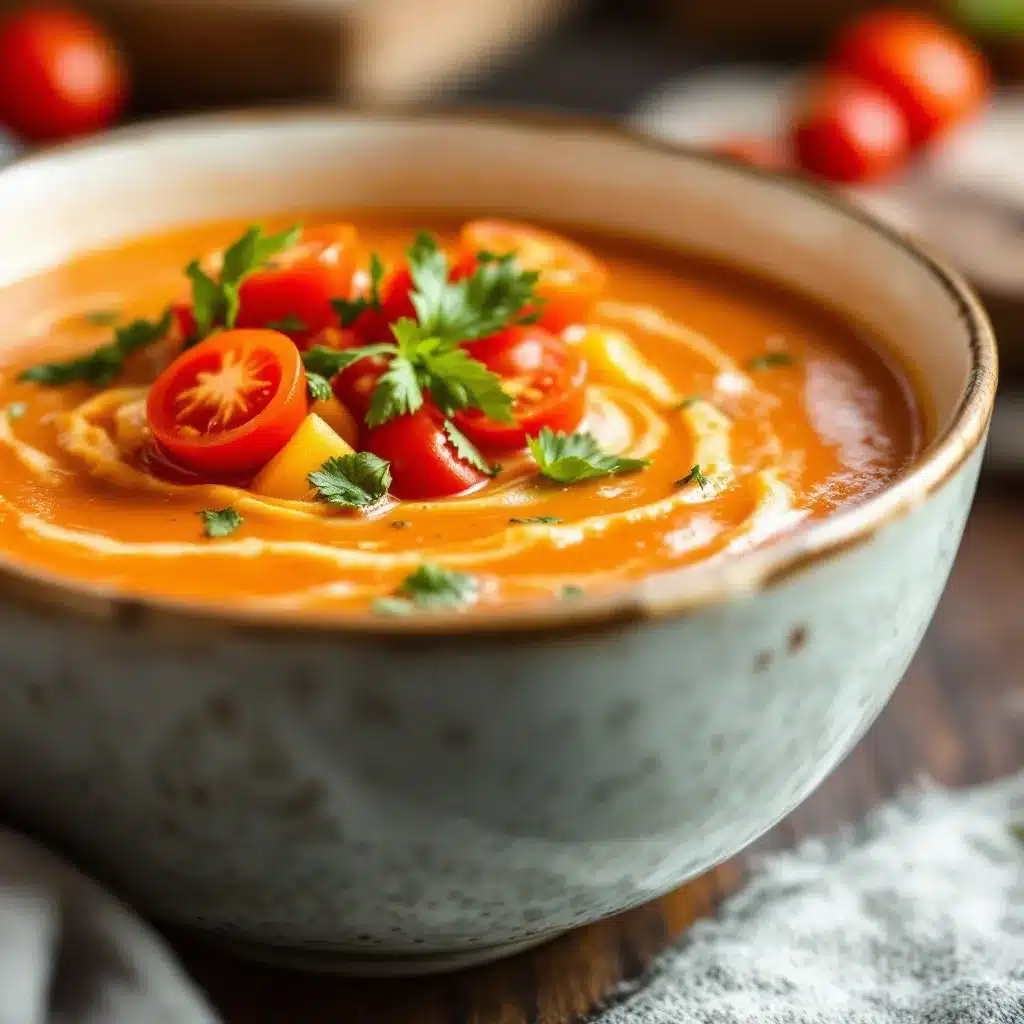
- ½ cup heavy cream – This is what makes the soup silky and luxurious. For a lighter option, use half-and-half or full-fat coconut milk.
- 2 tablespoons tomato paste – Adds an extra layer of concentrated tomato flavor. I use Cento double-concentrated paste—it’s worth seeking out.
- Fresh basil leaves, for garnish – A handful of torn basil brightens the finished soup and adds a lovely herbal note.
Optional Add-Ins
- ¼ teaspoon red pepper flakes – For a subtle kick of heat.
- 1 tablespoon balsamic vinegar – Stirred in at the end, it adds a touch of acidity and depth.
- Croutons or crusty bread – For serving. I’m partial to a good sourdough.
Ingredient Tip: If your tomatoes aren’t quite ripe—maybe a little firm or pale—roast them in the oven at 400°F for 20 minutes before adding them to the pot. It concentrates their flavor and brings out natural sweetness. I learned this trick after a disappointing batch of store-bought tomatoes in January.
Equipment Needed
One of the best things about this recipe is how little equipment it requires. Here’s what you’ll need:
- Large heavy-bottomed pot or Dutch oven – A 5- to 6-quart pot is ideal. The heavy bottom prevents scorching and helps the onions cook evenly. I use my trusty Le Creuset Dutch oven, but any sturdy pot works.
- Immersion blender – This is my preferred tool for blending the soup directly in the pot. Less mess, fewer dishes. If you don’t have one, a regular blender works too—just blend in batches and be careful with the hot liquid.
- Cutting board and sharp knife – For prepping the onions, garlic, and tomatoes.
- Wooden spoon or silicone spatula – For stirring and scraping the bottom of the pot.
- Measuring cups and spoons – Accuracy matters, especially with the cream and stock.
- Ladle – For serving.
Budget-Friendly Alternative: If you don’t have an immersion blender, a potato masher works for a chunkier texture, or you can use a food mill. I’ve done all three methods, and each gives a slightly different result—none of them bad.
Maintenance Tip: After blending, rinse your immersion blender immediately under hot water. Tomato sauce has a way of drying onto blades and becoming a nightmare to clean later. Learned that one the hard way.
Preparation Method
Let’s get cooking. I’ve broken this down into clear steps with time estimates and sensory cues so you know exactly what to look for.
Step 1: Prep the Tomatoes
Wash your tomatoes and remove the cores. If you’re using Roma tomatoes, cut them in half lengthwise. For larger varieties, quarter them. Don’t worry about peeling them—the blender will take care of that later. Set them aside.
Time: 5 minutes
Step 2: Sauté the Aromatics
Place your pot over medium heat and add the butter. Once it’s melted and bubbling—but not browning—add the diced onion. Stir to coat and let it cook for 5-7 minutes, until the onion is translucent and soft. You should smell sweetness, not sharpness. Add the minced garlic and cook for another minute, stirring constantly. Garlic burns fast, so don’t walk away.
Time: 8 minutes
Step 3: Cook the Tomatoes
Add the tomato paste to the pot and stir it into the onion mixture for about 30 seconds. This cooks out the raw flavor and deepens the tomato taste. Then add your fresh tomatoes, salt, pepper, and sugar (if using). Stir everything together, scraping up any browned bits from the bottom of the pot—that’s flavor you want to keep.
Let the tomatoes cook for 10-12 minutes, stirring occasionally. They’ll release their juices and start to break down. The pot should be bubbling gently, not furiously. You’ll see the tomatoes go from firm and bright to soft and slightly darker in color.
Time: 12 minutes
Step 4: Add the Stock
Pour in the stock and stir to combine. Bring the soup to a gentle simmer, then reduce the heat to low. Let it cook for 15 minutes, uncovered. This allows the flavors to meld and the liquid to reduce slightly, concentrating the tomato taste.
Time: 15 minutes
Troubleshooting Tip: If your soup looks too thick at this point, add another ¼ cup of stock. If it looks too thin, let it simmer a few minutes longer to reduce.
Step 5: Blend Until Smooth
Remove the pot from the heat. Using an immersion blender, blend the soup until it’s completely smooth. Start at the bottom and work your way up to avoid splashing. The soup should be a uniform, silky texture with no visible chunks.
If using a regular blender, let the soup cool for 5 minutes first, then blend in batches—fill the blender no more than halfway each time. Hold the lid down with a kitchen towel to prevent steam from blowing it off.
Time: 3 minutes
Step 6: Stir in the Cream
Return the pot to low heat. Pour in the heavy cream slowly, stirring constantly. You’ll see the color shift from bright red to a soft, coral-pink. Taste the soup and adjust seasoning—add more salt, pepper, or a pinch of sugar if needed. Heat gently for 2-3 minutes, but don’t let it boil, or the cream could curdle.
Time: 5 minutes
Step 7: Serve
Ladle the soup into bowls. Top with torn fresh basil and a drizzle of extra cream if you’re feeling fancy. Serve hot with crusty bread or a creamy BLT pasta salad on the side for a complete meal.
Total active time: About 45 minutes
Cooking Tips & Techniques
After making this soup more times than I can count, I’ve collected a few tricks that make a real difference. Here are the ones I swear by.
Don’t skip the tomato paste step. I know it’s tempting to just dump everything in at once and call it a day, but cooking the tomato paste for those 30 seconds before adding the fresh tomatoes changes the flavor profile completely. It adds a roasted, almost caramelized depth that fresh tomatoes alone can’t provide.
Watch your heat. This is a gentle soup. High heat will scorch the dairy and make the tomatoes taste bitter. Keep everything at a simmer, not a rolling boil. If you see bubbles that are too aggressive, turn the heat down immediately.
Season in layers. Add salt at the beginning when you cook the onions, then again after you blend the soup. Seasoning in stages builds complexity. I once forgot to salt the onions and ended up with a flat-tasting soup that needed way more salt at the end to fix.
Blend with caution. Hot liquid expands in a blender. I learned this the messy way—tomato soup on the ceiling is not a good look. Always let the soup cool slightly before blending, and never fill the blender more than halfway.
Make it ahead. This soup actually tastes better the next day. The flavors have time to meld and mellow. I often make it a day ahead and reheat it gently on the stove, adding a splash of stock or cream to loosen it up if needed.
Multitasking tip: While the soup simmers, prep your garnishes and toast your bread. That way, everything comes together at once and you’re not scrambling at the end.
Variations & Adaptations
One of the best things about this soup is how easily it adapts to different diets, seasons, and cravings. Here are a few ways I’ve made it my own.
Roasted Tomato Version
For deeper, smokier flavor, roast the tomatoes before adding them to the pot. Toss them with olive oil, salt, and pepper, then spread on a baking sheet and roast at 400°F for 25-30 minutes. The edges should be slightly charred and the tomatoes should look collapsed. Add them to the pot with their juices and proceed with the recipe. This version is especially good in winter when fresh tomatoes aren’t at their peak.
Dairy-Free Adaptation
Replace the butter with olive oil and use full-fat coconut milk instead of heavy cream. The coconut milk adds a subtle sweetness that pairs surprisingly well with the tomatoes. I’ve served this to dairy-free friends who didn’t even notice the swap.
Spicy Tomato Soup
Add ½ teaspoon of red pepper flakes along with the garlic, or stir in a minced chipotle pepper in adobo sauce. The smoky heat cuts through the creaminess beautifully. I make this version when I’m fighting a cold—it’s practically medicinal.
Herb-Infused Variation
Tie a few sprigs of fresh thyme and a bay leaf together with kitchen twine and add them to the pot when you add the stock. Remove them before blending. The herbal notes lift the soup and make it feel more complex.
Protein Boost
Stir in a cup of cooked white beans or shredded rotisserie chicken after blending for a heartier meal. I’ve done this on busy weeknights when I needed the soup to be dinner, not just a starter.
Serving & Storage Suggestions
This soup is versatile enough for a quick lunch or a cozy dinner. Here’s how I like to serve and store it.
Serving temperature: Serve the soup hot, but not boiling. Let it cool for a minute or two after ladling—it’ll be easier to eat and the flavors will be more pronounced.
Presentation: A swirl of cream on top and a few torn basil leaves make the soup look restaurant-ready. I sometimes add a sprinkle of black pepper or a drizzle of olive oil for extra visual appeal.
What to serve with it: A classic grilled cheese is the obvious choice, but I also love this soup with a fresh Mediterranean chickpea bowl for a lighter meal. Crusty sourdough bread, a simple green salad, or even roasted vegetables work well too.
Storage: Let the soup cool completely before transferring to an airtight container. It will keep in the refrigerator for up to 5 days. The flavors actually deepen over time, so day-old soup is often better than fresh.
Freezing: Pour cooled soup into freezer-safe bags or containers, leaving an inch of headspace for expansion. It freezes well for up to 3 months. Thaw overnight in the refrigerator before reheating.
Reheating: Warm the soup gently on the stovetop over medium-low heat, stirring occasionally. Add a splash of stock or water if it’s too thick. You can also microwave individual portions in 30-second intervals, stirring between each. Avoid boiling, as it can cause the cream to separate.
Flavor note: The soup will thicken as it sits in the fridge. Don’t worry—this is normal. Just thin it with a little stock or water when you reheat it, and it’ll be back to its silky self.
Nutritional Information & Benefits
Here’s the approximate nutritional breakdown for one serving (about 1.5 cups) of this creamy tomato soup, based on the recipe as written.
| Nutrient | Amount per Serving |
|---|---|
| Calories | 210 |
| Total Fat | 14g |
| Saturated Fat | 8g |
| Cholesterol | 45mg |
| Sodium | 680mg |
| Total Carbohydrates | 18g |
| Dietary Fiber | 4g |
| Sugars | 10g |
| Protein | 5g |
| Vitamin A | 30% DV |
| Vitamin C | 45% DV |
| Potassium | 15% DV |
Health Benefits: Tomatoes are packed with lycopene, a powerful antioxidant that supports heart health and may reduce the risk of certain cancers. Cooking tomatoes actually increases the bioavailability of lycopene, making this soup a smart choice. The cream adds calcium and vitamin D, while the onions and garlic provide prebiotic fiber that supports gut health.
Dietary Considerations: This recipe is vegetarian as written. For a vegan version, use the dairy-free adaptations mentioned above. It’s naturally gluten-free and nut-free. If you’re watching your sodium, use low-sodium stock and reduce the added salt—you can always add more at the table.
Personal Note: I love that this soup feels indulgent but isn’t actually heavy. It’s the kind of meal that satisfies without weighing you down, which is exactly what I want on a chilly evening.
Conclusion
This creamy one-pot tomato soup with fresh garden tomatoes is more than just a recipe—it’s a way to capture a moment. That late-summer abundance, the kindness of a neighbor, the simple pleasure of turning something fresh into something warm and nourishing.
I hope you make this soup with tomatoes from your own garden, or from a farmers’ market, or even from the grocery store when you’re craving a taste of summer in the middle of winter. I hope you serve it with a grilled cheese that’s too big for the bowl. I hope you make a double batch and freeze half for a rainy day.
And when you do, I’d love to hear about it. Leave a comment below and tell me how it turned out—did you add any twists? Serve it with something unexpected? Mess up and learn something new? That’s the whole point of cooking, honestly. It’s not about perfection. It’s about the story that comes with every bowl.
So go ahead. Grab those tomatoes. Make a mess. Make it yours.
Frequently Asked Questions
Can I use canned tomatoes instead of fresh?
Absolutely. If fresh tomatoes aren’t in season, use two 28-ounce cans of whole peeled San Marzano tomatoes. Drain them slightly before adding to the pot, and reduce the stock by ¼ cup since canned tomatoes have more liquid. The flavor won’t be quite the same, but it’ll still be delicious.
How do I make this soup thicker?
Let the soup simmer longer after adding the stock—15-20 minutes instead of 10—to allow more liquid to evaporate. You can also stir in a tablespoon of tomato paste for extra body. If you prefer a very thick soup, blend in a handful of cooked white beans or a peeled, diced potato that’s been boiled until tender.
Can I make this soup in a slow cooker?
Yes, with a few adjustments. Sauté the onions and garlic on the stovetop first, then transfer everything except the cream to a slow cooker. Cook on low for 4-6 hours or high for 2-3 hours. Blend the soup, then stir in the cream before serving. The texture won’t be quite as velvety, but it’s a great hands-off option.
Why did my soup turn out bitter?
Bitterness usually comes from overcooked garlic or scorched dairy. Make sure you add the garlic just a minute before the tomatoes, and never let the cream boil. If your soup is already bitter, try stirring in a pinch of sugar or a splash of balsamic vinegar to balance it out.
Can I skip the cream to make it lighter?
Yes. For a lighter version, omit the cream entirely and blend the soup with an extra ¼ cup of stock. The soup will be thinner and less rich, but still flavorful. You can also use evaporated milk or half-and-half for a middle-ground option. If you’re looking for more protein-packed meal ideas, check out this healthy egg white breakfast burrito recipe for another satisfying option.
Pin This Recipe!
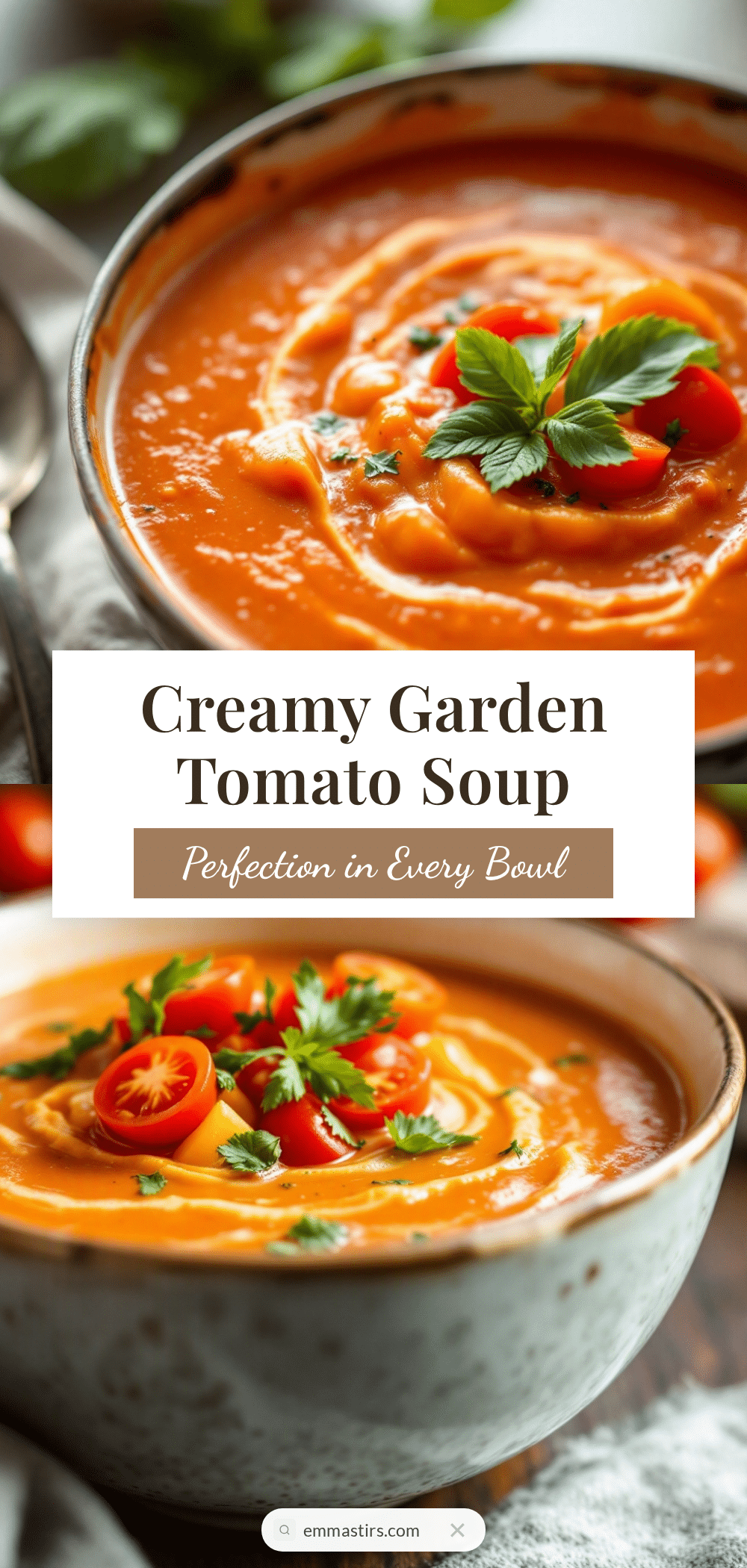
Creamy One-Pot Tomato Soup with Garden Fresh Tomatoes

A velvety, creamy tomato soup made with fresh garden tomatoes, simmered gently and finished with cream. This one-pot wonder captures the bright flavor of summer tomatoes and is perfect for cozy meals any time of year.
- Prep Time: 15 minutes
- Cook Time: 30 minutes
- Total Time: 45 minutes
- Yield: 4 servings 1x
- Category: Soup
- Cuisine: American
Ingredients
- 3 pounds fresh Roma or San Marzano tomatoes, cored and halved
- 2 tablespoons unsalted butter
- 1 medium yellow onion, diced
- 4 cloves garlic, minced
- 1 cup vegetable or chicken stock
- 1 teaspoon salt
- ½ teaspoon black pepper, freshly ground
- 1 teaspoon sugar (optional)
- ½ cup heavy cream
- 2 tablespoons tomato paste
- Fresh basil leaves, for garnish
- ¼ teaspoon red pepper flakes (optional)
- 1 tablespoon balsamic vinegar (optional)
- Croutons or crusty bread, for serving
Instructions
- Wash tomatoes, remove cores, and cut in half lengthwise (or quarter larger varieties). Set aside.
- Place a large heavy-bottomed pot or Dutch oven over medium heat. Add butter and let melt until bubbling. Add diced onion and cook for 5-7 minutes until translucent and soft.
- Add minced garlic and cook for 1 minute, stirring constantly.
- Stir in tomato paste and cook for 30 seconds.
- Add fresh tomatoes, salt, pepper, and sugar (if using). Stir, scraping up any browned bits from the bottom. Cook for 10-12 minutes, stirring occasionally, until tomatoes soften and release juices.
- Pour in stock and stir. Bring to a gentle simmer, then reduce heat to low. Cook uncovered for 15 minutes.
- Remove pot from heat. Using an immersion blender, blend soup until completely smooth. (Alternatively, let cool 5 minutes, then blend in batches in a regular blender.)
- Return pot to low heat. Slowly pour in heavy cream, stirring constantly. Heat gently for 2-3 minutes without boiling. Adjust seasoning to taste.
- Ladle into bowls, garnish with torn fresh basil and a drizzle of extra cream if desired. Serve hot with crusty bread.
Notes
For deeper flavor, roast tomatoes at 400°F for 25-30 minutes before adding. For dairy-free, use olive oil and coconut cream. Soup thickens as it sits; thin with stock when reheating. Freezes well for up to 3 months.
Nutrition
- Serving Size: 1.5 cups
- Calories: 210
- Sugar: 10
- Sodium: 680
- Fat: 14
- Saturated Fat: 8
- Carbohydrates: 18
- Fiber: 4
- Protein: 5
Keywords: creamy tomato soup, fresh tomato soup, one-pot soup, garden tomato soup, easy tomato soup, homemade tomato soup