Love this? Save it for later!
Share the inspiration with your friends
“Grab whatever’s left in the fridge and toss it in the pan,” my roommate had joked one evening after a long day at work. Honestly, I rolled my eyes at first. Leftover pasta? Sounds like sad, soggy scraps. But that night, with a fridge full of random bits and zero energy to shop, I gave it a shot. The result? Surprisingly tasty, comforting, and satisfying — way better than I expected from a “clean-out” meal. It wasn’t fancy, but it hit that sweet spot between effortless and delicious, and I found myself making this easy leftover refrigerator clean-out pasta over and over.
There was something about the way the salty bits of cheese mingled with wilted greens and that dash of garlic that made me pause mid-bite. I realized this meal wasn’t just about saving food or time; it was a small, quiet victory against kitchen chaos. It reminded me that sometimes the best dinners come from what’s already around you — no special trips or planning required. Over a couple of weeks, I refined this recipe here and there, turning the chaotic scramble into a reliable weeknight winner. If you’ve ever stared into your fridge wondering if those odds and ends could somehow become dinner, this pasta is for you.
What stuck with me was how flexible it was — no strict rules, just a framework that lets you get creative and feel good about wasting less. Plus, it’s the kind of meal that makes you feel a little proud, like you just pulled off something clever without breaking a sweat. That’s why I keep coming back to this easy leftover refrigerator clean-out pasta recipe — it’s the friend who always has your back when the day’s been long and the fridge looks scary.
Why You’ll Love This Recipe
After countless experiments with this leftover refrigerator clean-out pasta, I can honestly say it’s become my go-to for those nights when I want something quick but still satisfying. Here’s why this recipe stands out:
- Quick & Easy: Ready in about 20 minutes, perfect for those evenings when you’re racing the clock.
- Simple Ingredients: It uses whatever you have on hand — odds and ends from your fridge or pantry staples.
- Perfect for Weeknights: No fancy prep, no last-minute shopping, just a hassle-free way to feed yourself or your family.
- Crowd-Pleaser: The blend of flavors always gets thumbs-up from friends and family, even picky eaters.
- Unbelievably Delicious: The mix of textures and flavors feels rich and homey — you won’t believe it’s made from leftovers.
What really makes this pasta different? It’s the method of layering flavors — starting with garlic and onions, then adding whatever veggies or proteins you have, and finishing with a splash of pasta water to create a silky sauce. I sometimes toss in a sprinkle of Parmesan or a handful of fresh herbs, like basil or parsley, which lifts the whole dish without fuss. Honestly, it’s like comfort food reimagined — quick, flexible, and surprisingly fresh every time.
This recipe is that little secret weapon for busy cooks who want a meal that feels thoughtful but requires minimal effort. If you’re in the mood for a no-stress, cozy dinner that doesn’t skimp on flavor, this is your new best friend.
What Ingredients You Will Need
This recipe is all about simplicity and making the most of what you’ve got. The ingredients are usually pantry and fridge staples, making it easy to whip up anytime. Here’s a basic rundown — but remember, the fun is in customizing!
- Pasta: Any type works — spaghetti, penne, fusilli, even leftover cooked pasta. I like Barilla for reliable texture.
- Olive oil: For sautéing and flavor. Use extra virgin for that fruity undertone.
- Garlic cloves: Minced or thinly sliced for that aromatic kick.
- Onion or shallots: Finely chopped to build the flavor base.
- Vegetables: Whatever you have on hand — bell peppers, zucchini, spinach, cherry tomatoes, mushrooms. Frozen peas or corn work well too.
- Protein (optional): Leftover cooked chicken, cooked sausage, canned beans, or even a fried egg on top.
- Cheese: Parmesan, feta, mozzarella, or any crumbly cheese you enjoy — adds saltiness and creaminess.
- Herbs: Fresh parsley, basil, oregano, or dried Italian seasoning blends.
- Salt and pepper: To taste, essential for balancing flavors.
- Red pepper flakes (optional): For a gentle heat boost.
- Pasta cooking water: The secret ingredient to marry everything into a silky sauce.
For example, one night I pulled out some kale, sun-dried tomatoes, and leftover grilled chicken from the fridge. Tossed them in with garlic and finished with a generous handful of Parmesan. That combo felt fresh and hearty enough to make me forget it was a “leftover” meal. Also, if you’re interested in making this gluten-free, swapping regular pasta for a gluten-free variety or zucchini noodles works great. And if dairy is a no-go, nutritional yeast can add that cheesy flavor without the milk.
Equipment Needed
- Large pot: For boiling pasta. A 5-quart pot is perfect for most families.
- Large skillet or sauté pan: For cooking the veggies, garlic, and combining everything. A non-stick pan helps with easy cleanup.
- Colander: To drain the pasta.
- Wooden spoon or spatula: For stirring and scraping up those tasty browned bits.
- Knife and cutting board: For chopping veggies and herbs.
If you don’t have a non-stick pan, a well-seasoned cast iron skillet works beautifully but requires a bit more attention to avoid sticking. For budget-friendly options, a simple stainless steel pan will do just fine as long as you watch the heat closely. I’ve found that investing in a sharp chef’s knife makes chopping veggies much faster and more enjoyable, which is key when you’re pulling together a quick meal.
Preparation Method
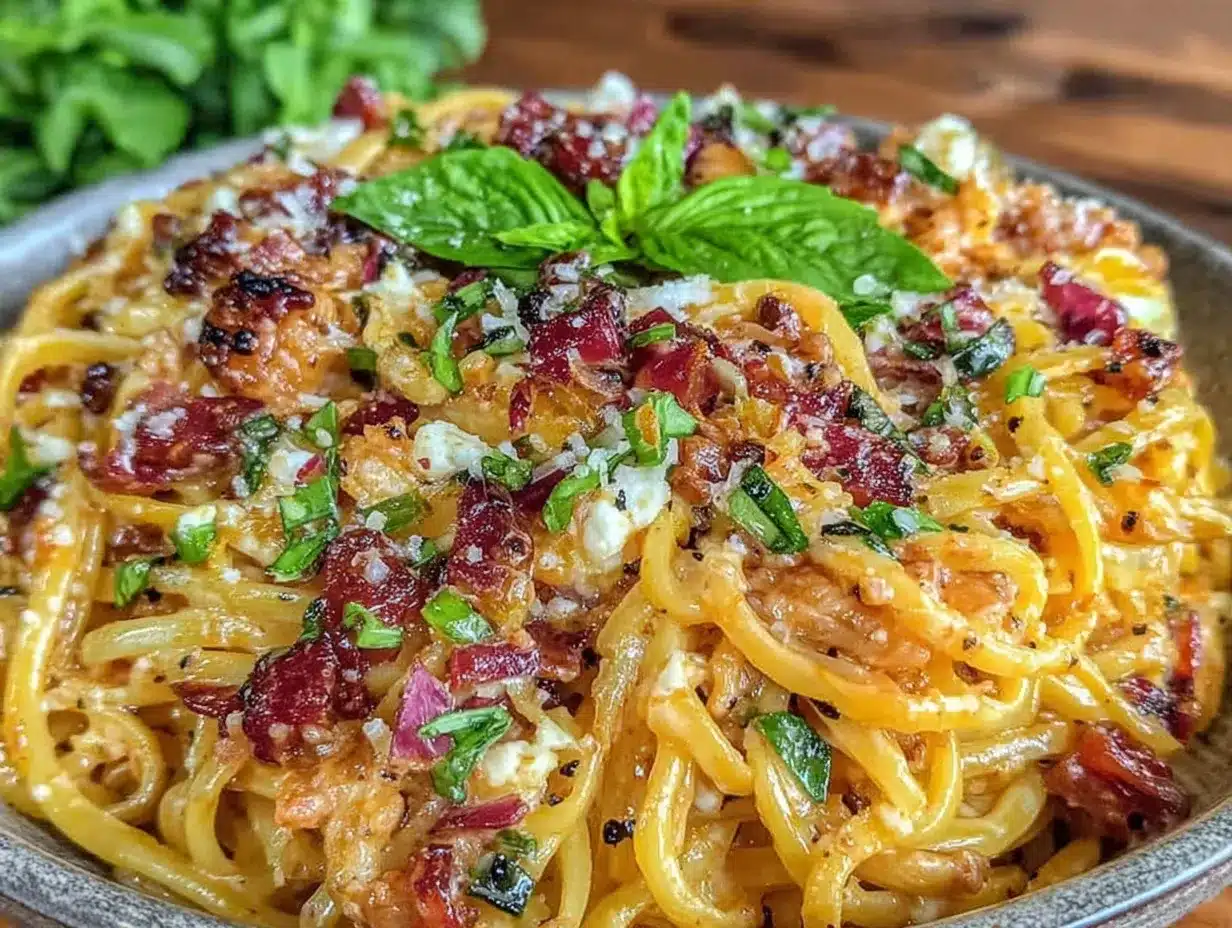
- Boil the pasta: Bring a large pot of salted water to a boil. Add 8 ounces (225 g) of your pasta choice and cook according to package instructions until al dente (about 8-10 minutes). Reserve 1 cup (240 ml) of pasta cooking water before draining. This starchy water helps create a silky sauce later.
- Prepare your ingredients: While the pasta cooks, mince 3 garlic cloves and finely chop 1 small onion or 2 shallots. Chop about 2 cups (150 g) of any vegetables you want to use — bell peppers, zucchini, mushrooms, or leafy greens work well. If you have any cooked protein, shred or dice it now.
- Sauté aromatics: Heat 2 tablespoons (30 ml) of olive oil in a large skillet over medium heat. Add the garlic and onion, cooking until fragrant and translucent, about 3-4 minutes. Watch carefully so the garlic doesn’t burn — burnt garlic turns bitter, which nobody wants.
- Add vegetables & protein: Toss in your chosen veggies and cook until tender, about 5-7 minutes depending on the vegetable. Stir occasionally. If using protein, add it in now to warm through.
- Combine pasta & sauce: Add the drained pasta to the skillet, then pour in about ½ cup (120 ml) of the reserved pasta water. Toss everything together over medium heat, allowing the water to reduce slightly and coat the pasta with a light sauce. If the mixture seems dry, add more pasta water gradually.
- Season and finish: Season with salt, pepper, and a pinch of red pepper flakes if you like heat. Stir in ¼ cup (25 g) grated Parmesan or crumble in some feta for creaminess. Add chopped fresh herbs like parsley or basil at the end for brightness.
- Serve warm: Plate your pasta immediately, maybe with an extra sprinkle of cheese or a drizzle of olive oil.
Pro tip: If you find the pasta sticking together after draining, a quick splash of olive oil and tossing can help before adding it to the skillet. Also, keep an eye on the heat when adding the pasta water — too high and it evaporates too fast, too low and the sauce won’t thicken properly. A medium flame is usually the sweet spot.
Cooking Tips & Techniques
Honestly, this recipe shines because of its flexibility, but here are a few tips that make it foolproof:
- Don’t overcook your pasta: It will cook a bit more once tossed with the hot veggies and sauce, so aim for al dente.
- Use reserved pasta water: This little trick is a magical way to bring everything together, giving the sauce a silky texture without heaviness.
- Layer flavors: Starting with garlic and onion builds a base, and adding herbs at the end keeps the freshness alive.
- Mind your heat: Garlic burns fast; lower the heat if it’s browning too quickly.
- Multitasking is your friend: Chop veggies while pasta cooks to save time.
- Don’t be afraid to experiment: Leftover roasted veggies from a grilled vegetable platter or bits of grilled chicken from flavorful grilled lemon herb chicken breast work perfectly here.
I remember the first time I forgot to reserve pasta water — the dish felt dry and flat. After that, I never skip it. Also, tossing the pasta right into the pan while it’s still hot helps absorb all those flavors better than mixing it in a bowl. Trust me on this one.
Variations & Adaptations
This recipe is practically a template for what’s in your fridge, so here are a few ideas to mix things up:
- Vegetarian: Load it with roasted or sautéed veggies like mushrooms, zucchini, or bell peppers. Add canned chickpeas or white beans for protein.
- Protein-packed: Stir in shredded rotisserie chicken, crumbled sausage, or even crispy bacon bits for a heartier meal.
- Spicy twist: Add chili flakes or a splash of hot sauce. A spoonful of harissa or sriracha stirred in right before serving amps up flavor.
- Seasonal swaps: In winter, use sautéed kale and roasted butternut squash. Summer calls for fresh tomatoes and basil.
- Dairy-free: Use nutritional yeast instead of cheese and swap butter for olive oil or vegan butter.
One personal favorite is adding a fried egg on top for an indulgent finish — the runny yolk melds beautifully with the pasta. Also, I once tossed in some leftover grilled veggies from a balsamic grilled portobello mushrooms and was amazed how it turned this humble dish into something special.
Serving & Storage Suggestions
This leftover refrigerator clean-out pasta is best served hot, straight from the stove while the cheese is melty and the herbs are fresh. I like to keep it simple with a drizzle of good olive oil and a few extra cheese shavings on top. Pair it with a crisp salad or a side like garlic bread if you want to make it feel a bit more substantial.
For storage, place leftovers in an airtight container and refrigerate for up to 3 days. When reheating, add a splash of water or broth to loosen the sauce and warm gently on the stove or in the microwave to avoid drying out. Flavors tend to deepen after a day, so leftovers can be surprisingly tasty.
If you want a lighter side, try pairing it with a fresh and tangy salad such as the watermelon cucumber feta salad — the crispness cuts through the pasta’s richness beautifully.
Nutritional Information & Benefits
While this recipe varies depending on your ingredients, here’s a rough estimate per serving (based on 4 servings):
| Calories | 350-450 |
|---|---|
| Protein | 12-18 grams |
| Carbohydrates | 45-55 grams |
| Fat | 8-15 grams |
| Fiber | 4-6 grams |
Key ingredients like olive oil provide heart-healthy fats, and the vegetables boost fiber and micronutrients. Using whole grain or legume-based pasta can increase fiber and protein content. This dish can easily fit gluten-free or dairy-free diets with simple swaps. As someone who values balanced eating but hates complicated recipes, I appreciate how this pasta nourishes without stress.
Conclusion
This easy leftover refrigerator clean-out pasta recipe proves that good food doesn’t have to be complicated or planned to taste wonderful. It’s flexible, quick, and surprisingly satisfying — a perfect solution for busy nights or when you just want to clear out your fridge without wasting a bite.
Feel free to swap ingredients based on what you love or have available. The best part? You’re turning random leftovers into a meal that feels intentional and comforting. For me, it’s a recipe that’s become a quiet kitchen hero — reliable, forgiving, and delicious.
If you try it, I’d love to hear how you made it your own or what unexpected combos you discovered. Cooking doesn’t always have to be fancy; sometimes it’s just about making the most of what you have and enjoying the process.
FAQs
Can I use fresh pasta for this recipe?
Absolutely! Fresh pasta cooks faster, so reduce boiling time accordingly. Just be gentle when tossing it with the veggies to avoid breaking it.
What if I don’t have any cheese on hand?
No worries. You can skip it, or sprinkle some nutritional yeast for a cheesy flavor without dairy. Adding a bit more olive oil or a squeeze of lemon juice can also brighten the dish.
How do I keep the pasta from sticking when reheating?
Add a splash of water or broth before reheating and warm gently on the stove or microwave. Stir occasionally to loosen the sauce and prevent clumping.
Can I make this recipe vegan?
Yes! Use plant-based pasta, skip the cheese or substitute with vegan cheese or nutritional yeast, and cook veggies in olive oil or vegan butter.
What are some good proteins to add to leftover pasta?
Leftover grilled chicken, sausage, beans, or even canned tuna work great. A fried or poached egg on top also adds richness and protein.
Pin This Recipe!
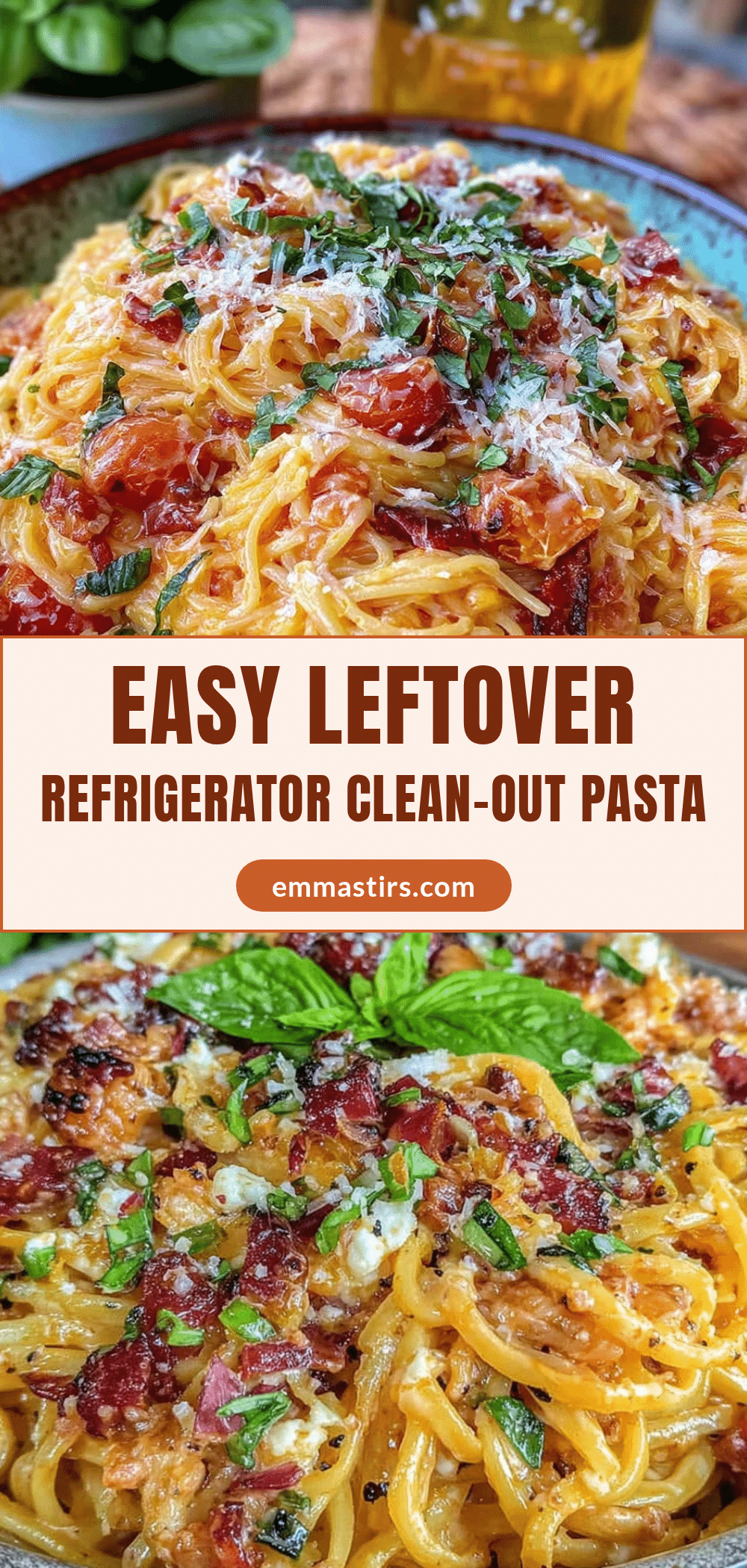
Easy Leftover Refrigerator Clean-Out Pasta Recipe for Quick Meals
A flexible, quick, and satisfying pasta recipe using leftover ingredients from your fridge, perfect for busy weeknights and minimizing food waste.
- Prep Time: 10 minutes
- Cook Time: 10 minutes
- Total Time: 20 minutes
- Yield: 4 servings 1x
- Category: Main Course
- Cuisine: Italian-inspired
Ingredients
- 8 ounces pasta (any type: spaghetti, penne, fusilli, or leftover cooked pasta)
- 2 tablespoons extra virgin olive oil
- 3 garlic cloves, minced or thinly sliced
- 1 small onion or 2 shallots, finely chopped
- 2 cups mixed vegetables (bell peppers, zucchini, spinach, cherry tomatoes, mushrooms, frozen peas or corn)
- Optional protein: leftover cooked chicken, cooked sausage, canned beans, or a fried egg
- 1/4 cup grated Parmesan or crumbled feta cheese
- Fresh herbs (parsley, basil, oregano) or dried Italian seasoning
- Salt and pepper to taste
- Pinch of red pepper flakes (optional)
- 1 cup reserved pasta cooking water
Instructions
- Bring a large pot of salted water to a boil. Add 8 ounces of pasta and cook according to package instructions until al dente (about 8-10 minutes). Reserve 1 cup of pasta cooking water before draining.
- While pasta cooks, mince garlic cloves and finely chop onion or shallots. Chop about 2 cups of vegetables and prepare any protein by shredding or dicing.
- Heat 2 tablespoons olive oil in a large skillet over medium heat. Add garlic and onion and cook until fragrant and translucent, about 3-4 minutes, avoiding burning the garlic.
- Add vegetables and cook until tender, about 5-7 minutes, stirring occasionally. Add protein now if using and warm through.
- Add drained pasta to the skillet, pour in about 1/2 cup of reserved pasta water, and toss to combine over medium heat. Add more pasta water if mixture seems dry.
- Season with salt, pepper, and red pepper flakes if desired. Stir in grated Parmesan or crumble feta cheese. Add chopped fresh herbs at the end.
- Serve immediately, optionally topped with extra cheese or a drizzle of olive oil.
Notes
Reserve pasta cooking water to create a silky sauce. Avoid burning garlic by cooking on medium heat. Toss pasta immediately after draining to absorb flavors. Use whatever vegetables and proteins you have on hand. For gluten-free, use gluten-free pasta or zucchini noodles. For dairy-free, substitute cheese with nutritional yeast and use vegan butter or olive oil.
Nutrition
- Serving Size: 1 serving (about 1/4
- Calories: 350450
- Sugar: 36
- Sodium: 400600
- Fat: 815
- Saturated Fat: 24
- Carbohydrates: 4555
- Fiber: 46
- Protein: 1218
Keywords: leftover pasta, quick meals, refrigerator clean-out, easy pasta recipe, weeknight dinner, flexible recipe, no waste cooking