Love this? Save it for later!
Share the inspiration with your friends
By the third time I made this Mediterranean pasta salad in a single week, I started wondering if I had a problem—or a solution. It was Tuesday, and there I was, standing over the colander, watching the rotini steam rise while a tiny voice in my head said, you could eat this for lunch again tomorrow and be perfectly fine with that. The first batch came together on a whim, a desperate attempt to use up the half-empty jar of Kalamata olives and the block of feta that was staring at me every time I opened the fridge. The second batch was intentional—I wanted to see if it was as good the next day (spoiler: it was better). The third batch? That was the one where I stopped measuring and started trusting my instincts. I threw in a handful of sun-dried tomatoes I found hiding in the pantry, used the last of a cucumber that was going soft, and drizzled in a little extra red wine vinegar because it felt right. And honestly, that third bowl—the one born from leftover odds and ends—was the best one yet.
This isn’t a recipe that demands precision. It’s the kind of dish that invites you to use what you have, to taste as you go, and to stop worrying about whether it’s “authentic” enough. What it is, is a bowl of cold, tangy, salty, herby pasta that somehow works for a packed lunch, a backyard barbecue, or a lazy dinner eaten straight from the mixing bowl. The feta crumbles into every nook and cranny, the olives bring that briny pop, and the dressing—oh, the simple dressing—soaks into the pasta just enough to make every bite feel intentional. I kept making it because it made me feel like I actually knew what I was doing in the kitchen. And maybe that’s the whole point.
Why You’ll Love This Recipe
Look, I’ve tested a lot of pasta salads over the years. Some are too dry, some turn into a soggy mess by day two, and some just taste like… well, cold pasta with nothing exciting happening. This one is different. It’s the kind of recipe that makes you look forward to leftovers, and honestly, that’s a superpower in my book.
- Quick & Easy: From start to table in about 25 minutes. No complicated steps, no fancy techniques—just boil, chop, toss, and eat.
- Simple Ingredients: You probably already have olive oil, red wine vinegar, and garlic in your pantry. A trip to the store for feta and olives is all you really need.
- Perfect for Summer: This pasta salad is made for hot days when you don’t want to turn on the oven. Serve it cold or at room temperature, and it only gets better as it sits.
- Crowd-Pleaser: I brought this to a potluck last month, and three different people asked for the recipe before they even finished their first serving. It’s one of those dishes that disappears fast.
- Unbelievably Delicious: The combination of salty feta, briny olives, tangy dressing, and fresh vegetables creates a flavor that’s way more than the sum of its parts. It’s the kind of pasta salad that makes you close your eyes after the first bite.
What makes this recipe stand out from the dozens of other pasta salads out there is the dressing. It’s not just oil and vinegar thrown together—it’s an emulsified, garlicky, herb-flecked vinaigrette that clings to every piece of pasta. And the feta? I use a block of the good stuff and crumble it myself. Pre-crumbled feta has anti-caking agents that keep it from melting into the salad the way it should. Trust me on this one.
This isn’t just a recipe—it’s the kind of dish that becomes a reliable friend in your kitchen. It’s comfort food that’s actually good for you, fast enough for a weeknight, and impressive enough for company.
What Ingredients You Will Need
This recipe uses simple, wholesome ingredients that come together to create something genuinely special. Most of these are pantry staples or easy to find at any grocery store. The beauty of this Mediterranean pasta salad is that it’s incredibly forgiving, so feel free to swap things in and out based on what you have on hand.
- Pasta (12 oz / 340 g): I prefer rotini or fusilli for this recipe because the spirals catch all the dressing and little bits of feta. Penne or farfalle work great too. Just avoid long, thin pasta like spaghetti—it doesn’t hold up as well in a cold salad.
- Feta Cheese (8 oz / 225 g block): Buy a block of feta packed in brine, not the pre-crumbled stuff. The texture is creamier, the flavor is more pronounced, and it crumbles beautifully into the salad. I like the sheep’s milk feta from Greek producers, but cow’s milk feta works too.
- Kalamata Olives (1 cup / 150 g, pitted and halved): These bring that signature briny, slightly fruity flavor that makes Mediterranean food so addictive. Make sure they’re pitted—nobody wants to bite into a pit mid-chew. If you’re not a fan of Kalamatas, Castelvetrano olives are milder and buttery.
- Cherry Tomatoes (1 ½ cups / 250 g, halved): Use the ripest, most flavorful cherry or grape tomatoes you can find. In summer, I use a mix of red and yellow for color. If tomatoes aren’t in season, sun-dried tomatoes (rehydrated in warm water) are a fantastic substitute.
- English Cucumber (1 medium, diced): English cucumbers have fewer seeds and a thinner skin, so you don’t need to peel them. Regular cucumbers work too—just peel them and scoop out the seeds before dicing.
- Red Onion (½ small, thinly sliced): A little goes a long way here. If you’re sensitive to raw onion, soak the slices in cold water for 10 minutes before adding them—it takes the sharp edge off.
- Red Bell Pepper (1 medium, diced): Adds sweetness and crunch. Orange or yellow peppers work just as well.
- Fresh Parsley (½ cup / 20 g, chopped): Flat-leaf parsley is best here. It adds freshness and color. Don’t skip it—it’s not just a garnish, it’s part of the flavor.
- Fresh Basil (¼ cup / 10 g, chiffonade): If you have it, use it. Basil and tomatoes are a classic pairing for a reason.
For the Dressing:
- Extra Virgin Olive Oil (⅓ cup / 80 ml): Use a good-quality olive oil here—it’s the backbone of the dressing. You want something fruity and slightly peppery, not bland.
- Red Wine Vinegar (3 tbsp / 45 ml): The acidity cuts through the richness of the feta and olive oil. White wine vinegar or lemon juice work in a pinch.
- Lemon Juice (1 tbsp / 15 ml, freshly squeezed): Adds brightness. Bottled lemon juice won’t give you the same fresh flavor.
- Garlic (2 cloves, minced): Use fresh garlic, not the jarred stuff. Let it sit in the vinegar for a few minutes before adding the oil—it mellows the raw bite.
- Dried Oregano (1 tsp): The quintessential Mediterranean herb. Rub it between your palms before adding to release the oils.
- Salt and Black Pepper (to taste): Go easy on the salt—feta and olives are already salty. A good crack of black pepper is non-negotiable.
Equipment Needed
You don’t need a fancy kitchen to make this pasta salad. Here’s what you’ll need:
- Large Pot: For boiling the pasta. Make sure it’s big enough to give the pasta room to move around.
- Colander: For draining the pasta. Rinsing it with cold water stops the cooking process and cools it down for the salad.
- Large Mixing Bowl: Big enough to toss everything together without spilling. I use my grandmother’s old ceramic bowl—it’s the perfect size.
- Chef’s Knife and Cutting Board: For chopping vegetables. A sharp knife makes all the difference.
- Small Bowl or Jar: For whisking or shaking the dressing. A mason jar with a tight lid works perfectly—just shake it like crazy.
- Measuring Cups and Spoons: For accuracy, though honestly, after the first time, you’ll probably just eyeball it.
- Wooden Spoon or Salad Tongs: For mixing. Use a gentle hand so you don’t break up the pasta or smash the tomatoes.
If you don’t have a mason jar for the dressing, a small bowl and a whisk work just fine. And if you’re making this for a crowd, a large serving platter with a lip looks beautiful for presentation.
Preparation Method
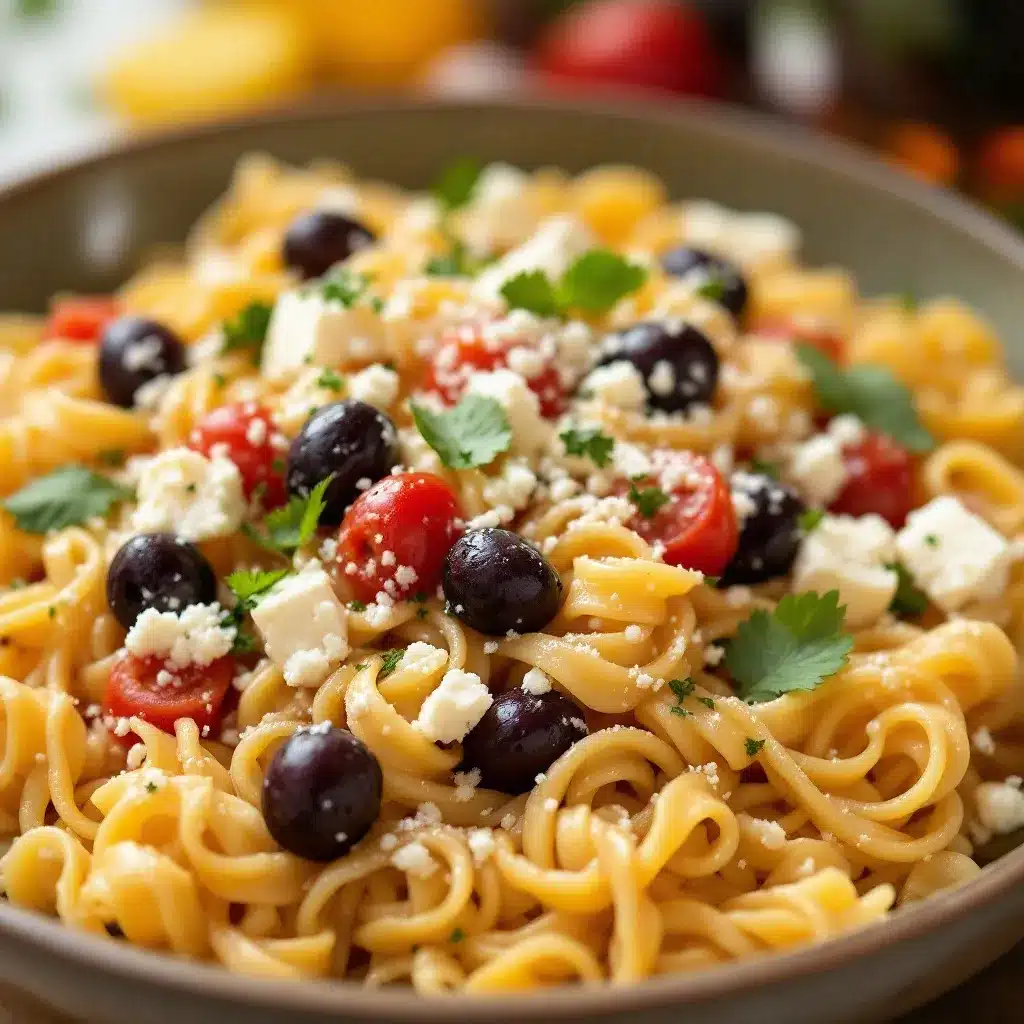
Let’s get cooking. This comes together faster than you think.
- Boil the pasta. Fill your large pot with water and bring it to a rolling boil over high heat. Add a generous tablespoon of salt—the water should taste like the sea. Add the pasta and cook according to package directions until al dente (usually 8-10 minutes). Taste a piece to be sure—it should be tender but still have a slight bite in the center.
- Drain and rinse. Once the pasta is done, drain it in a colander. Immediately rinse it under cold running water until it’s cool to the touch. This stops the cooking and removes excess starch that would make the salad gummy. Shake the colander well to remove as much water as possible. Let it sit and drain while you prep the vegetables.
- Make the dressing. In a small bowl or mason jar, combine the red wine vinegar, lemon juice, minced garlic, dried oregano, and a pinch of salt and pepper. Let it sit for 5 minutes—this mellows the garlic and lets the oregano bloom. Then add the olive oil and whisk (or shake) until emulsified. Taste and adjust seasoning. The dressing should be tangy and bold because it’ll mellow out once it coats the pasta.
- Prep the vegetables. While the pasta cools, dice the cucumber, halve the cherry tomatoes, dice the bell pepper, thinly slice the red onion, and chop the parsley and basil. If you’re using the red onion, soak the slices in a small bowl of cold water for 10 minutes to tame the bite, then drain and pat dry.
- Prepare the feta. Pat the block of feta dry with paper towels. Crumble it into uneven pieces with your fingers—some small, some slightly larger. This gives you pockets of creamy, salty goodness throughout the salad.
- Combine everything. In your large mixing bowl, add the cooled pasta, halved olives, cherry tomatoes, cucumber, bell pepper, red onion, and most of the parsley and basil. Pour the dressing over the top and toss gently with your hands or salad tongs until everything is evenly coated. Be gentle—you don’t want to break the pasta or smash the tomatoes.
- Add the feta. Gently fold in the crumbled feta, reserving a small handful for the top. Fold just a few times—you want the feta distributed but not dissolved into the dressing.
- Rest and serve. Let the pasta salad sit at room temperature for 15-20 minutes before serving. This allows the flavors to meld and the pasta to absorb some of the dressing. Top with the reserved feta and remaining fresh herbs. Serve at room temperature or cold.
Cooking Tips & Techniques
I’ve made this recipe more times than I can count, and I’ve learned a few things along the way. Here are my best tips:
Don’t overcook the pasta. Mushy pasta in a cold salad is a tragedy. Cook it al dente—firm to the bite—because it will continue to absorb dressing as it sits, which softens it slightly. If you cook it too soft to begin with, you’ll end up with a sad, sticky mess.
Rinse the pasta well. I know some people say never rinse pasta, but for cold pasta salads, it’s essential. Rinsing removes the surface starch that would make the salad gluey. Just make sure you drain it thoroughly afterward—excess water will water down your dressing.
Let the dressing sit. That 5-minute rest after mixing the vinegar, lemon, and garlic isn’t just for show. It allows the garlic to mellow and the dried oregano to rehydrate and release its flavor. Trust me, this small step makes a big difference.
Season in layers. Don’t just dump all the salt into the dressing. Season the pasta water generously (it’s your only chance to season the pasta itself), and taste the salad before adding extra salt. The feta and olives bring plenty of saltiness on their own.
Make it ahead. This pasta salad is actually better the next day. The flavors meld and deepen overnight. If you’re making it ahead, reserve a little dressing and the fresh herbs to add just before serving to freshen it up.
One mistake I made: The first time I made this, I added the feta too early and tossed too vigorously. The feta basically dissolved into the dressing, and the salad turned into a cloudy, salty mess. Now I fold the feta in gently at the very end, and it makes all the difference.
Variations & Adaptations
This recipe is endlessly adaptable. Here are some of my favorite variations:
Add Protein: Grilled chicken, shrimp, or chickpeas turn this into a full meal. I love adding the Mediterranean chickpea bowl vibes by tossing in a can of drained and rinsed chickpeas. For seafood lovers, the shrimp and avocado salad inspiration works beautifully here—just add grilled shrimp.
Make It Vegan: Skip the feta or use a high-quality vegan feta alternative. Add a handful of toasted pine nuts or walnuts for richness. The balsamic grilled portobello mushrooms would be an incredible addition for a heartier vegan version.
Gluten-Free Option: Use your favorite gluten-free pasta. Chickpea or lentil pasta works great and adds extra protein. Just be careful not to overcook it—gluten-free pasta can go from al dente to mush very quickly.
Seasonal Swaps: In spring, add blanched asparagus and fresh peas. In summer, use peak-season tomatoes and fresh corn cut off the cob. In fall, roasted butternut squash cubes and a sprinkle of pomegranate seeds are gorgeous.
Herb Variations: Don’t have parsley and basil? Use fresh mint, dill, or even arugula. Each brings a different personality to the salad. Mint is especially nice with the feta and cucumber.
My personal favorite variation: I once added a handful of watermelon cucumber feta salad leftovers to this pasta salad, and it was incredible. The sweetness of the watermelon against the salty feta and briny olives was next-level. Don’t be afraid to experiment!
Serving & Storage Suggestions
This pasta salad is incredibly versatile when it comes to serving. Here’s how to make the most of it:
Serving Temperature: Serve it cold or at room temperature. If it’s been in the fridge, let it sit on the counter for 15-20 minutes before serving to take the chill off—the flavors are more pronounced when it’s not ice-cold.
Presentation: Transfer the salad to a large, shallow serving platter for a beautiful presentation. Top with the reserved feta, a sprinkle of fresh herbs, and a drizzle of good olive oil. A few extra olives on top look lovely too.
What to Serve With It: This pasta salad is a meal on its own, but it pairs beautifully with grilled meats or vegetables. Try it alongside grilled lemon herb chicken or grilled vegetable platter for a complete summer feast. A crusty baguette and a glass of crisp white wine complete the picture.
Storage: Store leftovers in an airtight container in the refrigerator for up to 4 days. The pasta will absorb some of the dressing as it sits, so if it seems dry, drizzle a little extra olive oil and a splash of vinegar before serving.
Reheating: This is a cold pasta salad, so no reheating needed. If you prefer it less cold, just let it sit at room temperature for a bit.
Flavor Development: Here’s the thing—this salad gets better with time. The flavors meld and deepen, and the pasta absorbs the dressing. Day 2 is actually my favorite. Just refresh it with a handful of fresh herbs and a squeeze of lemon before serving.
Nutritional Information & Benefits
This Mediterranean pasta salad is as nutritious as it is delicious. Here’s a rough breakdown per serving (based on 8 servings):
- Calories: ~320
- Protein: 9g
- Fat: 16g (mostly from heart-healthy olive oil and feta)
- Carbohydrates: 35g
- Fiber: 4g
- Sodium: 480mg (varies based on feta and olives)
Health Benefits: This salad is packed with good-for-you ingredients. Olive oil is rich in monounsaturated fats and antioxidants. Feta cheese provides calcium and protein, and because it’s lower in fat than many other cheeses, you get the creamy goodness without the guilt. Tomatoes are loaded with lycopene, a powerful antioxidant. Cucumbers and bell peppers add hydration and vitamin C. And olives? They’re a great source of vitamin E and healthy fats.
Dietary Considerations: This recipe is naturally vegetarian. To make it gluten-free, use gluten-free pasta. To make it vegan, omit the feta or use a vegan alternative. It’s also relatively low in added sugars—only what’s naturally in the vegetables and the tiny bit in the vinegar.
My take: This is one of those rare recipes that feels indulgent but is actually pretty balanced. It’s the kind of meal that leaves you feeling satisfied, not weighed down. Perfect for summer when you want something light but filling.
Conclusion
Look, I’m not going to tell you this pasta salad will change your life. But I will say this: it has changed my summer. It’s become my go-to for lazy lunches, impromptu gatherings, and those evenings when I just don’t want to cook anything complicated. It’s forgiving, it’s flexible, and it’s genuinely delicious every single time.
What I love most about this recipe is that it doesn’t demand perfection. Use the pasta you have. Swap in whatever vegetables are in your fridge. Add more olives if you’re an olive fiend (I am). Make it your own. That’s the beauty of a recipe like this—it’s a starting point, not a rigid set of rules.
I’d love to hear how it turns out for you. Did you add something unexpected? Did you serve it at a barbecue and watch it disappear? Drop a comment below and let me know. And if you’re looking for more summer inspiration, check out the Greek pasta salad with chickpeas for another take on this theme. Happy cooking, friends!
Frequently Asked Questions
Can I make this pasta salad ahead of time?
Absolutely! In fact, it’s better the next day. The flavors meld and deepen overnight. Just reserve a little dressing and fresh herbs to add before serving to freshen it up. Store it in an airtight container in the fridge for up to 4 days.
What’s the best pasta shape for this salad?
Short, sturdy shapes with nooks and crannies work best. Rotini, fusilli, farfalle, or penne are my top picks. The ridges and spirals catch the dressing and hold onto the feta and herbs. Avoid long, thin pasta like spaghetti or angel hair—they don’t hold up well in a cold salad.
Can I freeze this pasta salad?
I don’t recommend freezing it. The texture of the vegetables and feta will suffer, and the pasta can become mushy when thawed. This salad is best enjoyed fresh or within a few days of making it.
How do I keep the pasta from getting mushy?
Cook it al dente—firm to the bite—since it will continue to absorb dressing as it sits. Rinse it thoroughly with cold water after draining to stop the cooking process and remove excess starch. And don’t overdress it; you can always add more dressing later if needed.
Can I use pre-crumbled feta instead of a block?
You can, but I really recommend using a block of feta packed in brine. Pre-crumbled feta contains anti-caking agents that prevent it from melting and blending into the salad the way fresh crumbled feta does. The texture and flavor are noticeably better with the good stuff.
Pin This Recipe!
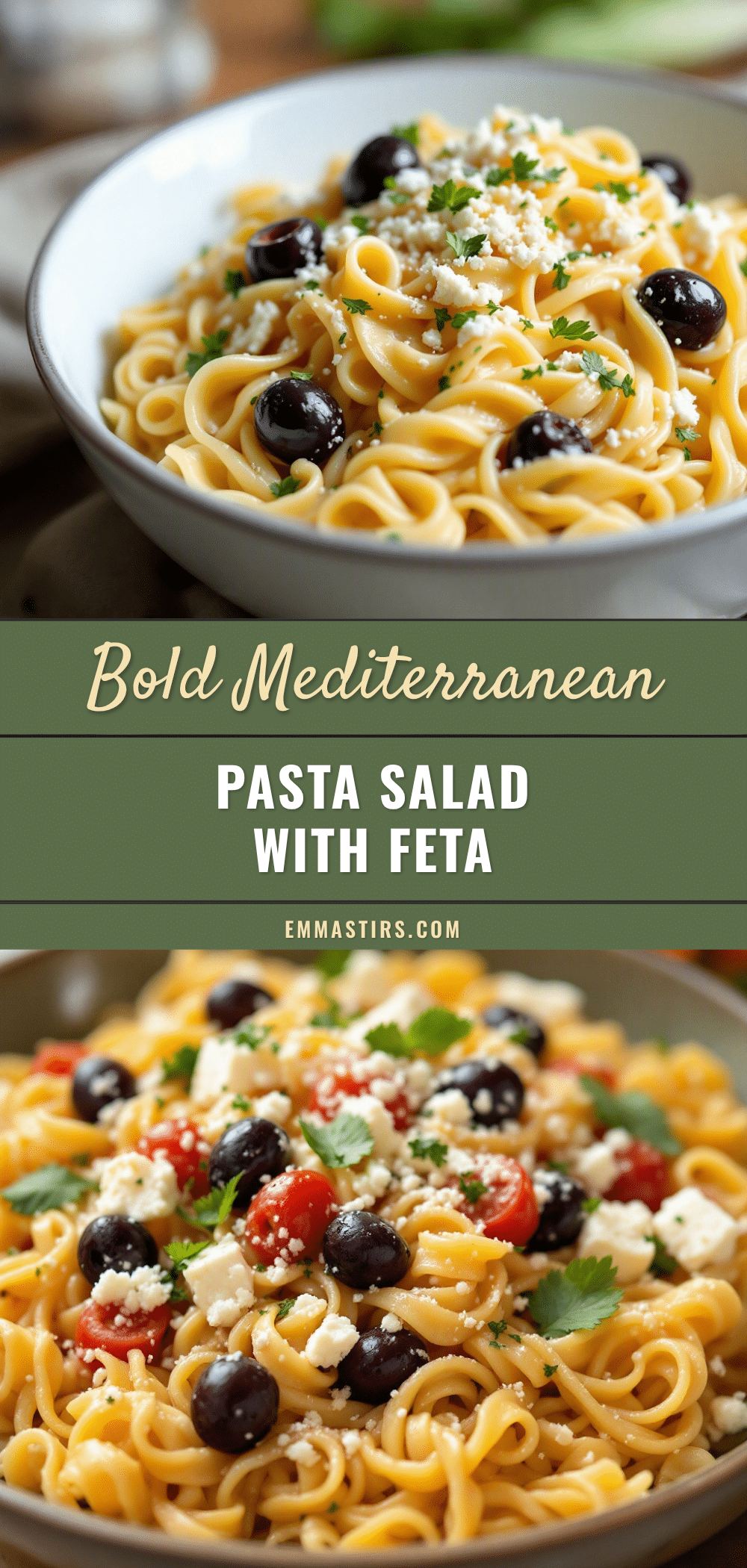
Easy Mediterranean Pasta Salad (Best Summer Recipe)
A quick and easy Mediterranean pasta salad with tangy vinaigrette, salty feta, briny olives, and fresh vegetables. Perfect for summer lunches, potlucks, and weeknight dinners.
- Prep Time: 15 minutes
- Cook Time: 10 minutes
- Total Time: 25 minutes
- Yield: 8 servings 1x
- Category: Main Course
- Cuisine: Mediterranean
Ingredients
- 12 oz (340 g) rotini or fusilli pasta
- 8 oz (225 g) block feta cheese, crumbled
- 1 cup (150 g) Kalamata olives, pitted and halved
- 1 ½ cups (250 g) cherry tomatoes, halved
- 1 medium English cucumber, diced
- ½ small red onion, thinly sliced
- 1 medium red bell pepper, diced
- ½ cup (20 g) fresh flat-leaf parsley, chopped
- ¼ cup (10 g) fresh basil, chiffonade
- ⅓ cup (80 ml) extra virgin olive oil
- 3 tbsp (45 ml) red wine vinegar
- 1 tbsp (15 ml) freshly squeezed lemon juice
- 2 cloves garlic, minced
- 1 tsp dried oregano
- Salt and black pepper to taste
Instructions
- Boil the pasta: Fill a large pot with water and bring to a rolling boil. Add a generous tablespoon of salt. Cook pasta according to package directions until al dente (8-10 minutes).
- Drain and rinse: Drain pasta in a colander and rinse under cold running water until cool. Shake well to remove excess water. Let drain.
- Make the dressing: In a small bowl or mason jar, combine red wine vinegar, lemon juice, minced garlic, dried oregano, and a pinch of salt and pepper. Let sit for 5 minutes. Add olive oil and whisk or shake until emulsified. Taste and adjust seasoning.
- Prep the vegetables: Dice cucumber, halve cherry tomatoes, dice bell pepper, thinly slice red onion, and chop parsley and basil. If using red onion, soak slices in cold water for 10 minutes, then drain and pat dry.
- Prepare the feta: Pat feta dry with paper towels. Crumble into uneven pieces with your fingers.
- Combine everything: In a large mixing bowl, add cooled pasta, olives, cherry tomatoes, cucumber, bell pepper, red onion, and most of the parsley and basil. Pour dressing over top and toss gently until evenly coated.
- Add the feta: Gently fold in crumbled feta, reserving a small handful for the top. Fold just a few times.
- Rest and serve: Let pasta salad sit at room temperature for 15-20 minutes before serving. Top with reserved feta and remaining fresh herbs. Serve at room temperature or cold.
Notes
This salad is better the next day. Reserve a little dressing and fresh herbs to add before serving if making ahead. Don’t overcook the pasta; cook al dente. Rinse pasta well to remove excess starch. Let dressing sit for 5 minutes to mellow garlic and bloom oregano. Fold feta in gently at the end to avoid dissolving it.
Nutrition
- Serving Size: 1 serving
- Calories: 320
- Sugar: 4
- Sodium: 480
- Fat: 16
- Saturated Fat: 4
- Carbohydrates: 35
- Fiber: 4
- Protein: 9
Keywords: Mediterranean pasta salad, summer pasta salad, easy pasta salad, cold pasta salad, feta pasta salad, vegetarian pasta salad