Love this? Save it for later!
Share the inspiration with your friends
It was 11:47 PM on a random Wednesday, and I had a very specific craving for something warm, salty, and deeply satisfying. I didn’t have any fancy ramen broth packets or pork belly in the fridge, but I had a few packs of instant noodles, some garlic, a sad-looking ginger root, and a single egg. Honestly, I almost just boiled the noodles and called it a night. But then this idea arrived—what if I actually made the broth from scratch, right in the same pot, using stuff I already had? No extra dishes, no late-night grocery run. Just me, a pot, and a desperate need for comfort.
I mean, maybe you’ve been there. You’re tired, the day was long, and you just want something that tastes like a hug in a bowl. Not the sad, watery kind of hug—the real deal. The kind that makes you close your eyes after the first sip. So I grabbed my go-to pot, threw in some aromatics, and started building flavor. I honestly didn’t expect much. I was just hungry and stubborn.
But then it happened. The broth turned this beautiful, golden-brown color. The smell of garlic and ginger filled my tiny kitchen. And when I dropped that egg in to soft-boil right alongside the noodles? That was the moment I knew I had stumbled onto something good. This Easy One-Pot Ramen with Soft-Boiled Egg became my late-night secret weapon. It’s the recipe I keep coming back to because it’s simple, it’s fast, and it tastes like you spent hours on it—when really, you just needed 20 minutes and a little bit of faith in your pantry.
Why You’ll Love This Recipe
Let me tell you why this Easy One-Pot Ramen with Soft-Boiled Egg is about to become your new favorite weeknight dinner. I’ve tested this method more times than I can count, and I promise you—it works every single time.
- Quick & Easy: From start to finish, this comes together in under 20 minutes. Perfect for those nights when you’re hangry and impatient.
- Simple Ingredients: No fancy grocery trips needed. You likely already have garlic, ginger, soy sauce, and noodles in your kitchen.
- One Pot, Zero Mess: The whole thing happens in one pot. That means less cleanup and more time actually enjoying your food.
- Perfect for Cozy Nights: This is the ultimate comfort food for rainy evenings, sick days, or when you just need a warm bowl of something good.
- Crowd-Pleaser: I’ve made this for friends who swore they didn’t like “homemade ramen,” and they went back for seconds every single time.
- Unbelievably Delicious: The broth is rich, savory, and deeply flavorful. The soft-boiled egg adds this luxurious creaminess that takes it over the top.
What makes this recipe different from the rest? It’s the method. Instead of boiling your noodles in plain water and adding seasoning later, you build the broth first in the same pot—infusing every strand of noodle with flavor from the inside out. It’s not just another version of ramen. It’s the best version, and I’m not exaggerating.
This is the kind of bowl that makes you close your eyes after the first bite. It’s comfort food reimagined—faster, simpler, but with the same soul-soothing satisfaction. Perfect for impressing yourself on a Tuesday night, or turning a simple meal into something you genuinely look forward to.
What Ingredients You Will Need
This recipe uses simple, everyday ingredients to deliver bold flavor and satisfying texture without the fuss. Most of these are pantry staples, which is exactly why I love this recipe.
- For the Broth Base:
- 1 tablespoon sesame oil (adds a nutty, toasty flavor)
- 3 cloves garlic, minced (fresh is best, but jarred works in a pinch)
- 1 teaspoon fresh ginger, grated (I use a microplane for this)
- 4 cups low-sodium chicken or vegetable broth (I prefer Pacific Foods for its clean taste)
- 2 tablespoons soy sauce (use tamari for gluten-free)
- 1 tablespoon mirin (or substitute with 1 teaspoon sugar + 1 tablespoon water)
- 1 teaspoon chili garlic sauce (optional, but highly recommended for heat)
- For the Noodles:
- 2 packs instant ramen noodles (discard the seasoning packets, or save them for another use)
- 1 cup water (to adjust broth consistency)
- For the Soft-Boiled Egg:
- 2 large eggs, at room temperature (cold eggs are harder to time perfectly)
- For Toppings (optional but encouraged):
- 2 green onions, thinly sliced
- 1 sheet nori (seaweed), torn into pieces
- 1 teaspoon sesame seeds, toasted
- A drizzle of chili oil (I love Lao Gan Ma brand)
Ingredient Tips: Look for firm, fresh eggs for the best soft-boiled results. If you don’t have mirin, a pinch of sugar and splash of rice vinegar works as a substitute. For a vegetarian version, use vegetable broth and skip the egg—or add tofu instead. I’ve also made this with gluten-free ramen noodles, and it works beautifully.
Equipment Needed
You don’t need a fancy kitchen to pull this off. Here’s what you’ll need:
- A medium pot (3 to 4 quarts is ideal)—I use my trusty Lodge enameled cast iron pot, but any heavy-bottomed pot works
- A sharp knife and cutting board for prepping the aromatics
- A fine-mesh sieve (optional, but helpful if you want a super smooth broth)
- A slotted spoon for retrieving the soft-boiled egg
- A small bowl of ice water for shocking the egg after boiling
If you don’t have a microplane, just grate the ginger with the small side of a box grater. And honestly, if you don’t have a slotted spoon, a regular spoon works—you just have to be a little careful. I’ve definitely dropped an egg before, and let me tell you, the cleanup is not fun. So maybe use the slotted spoon.
Preparation Method
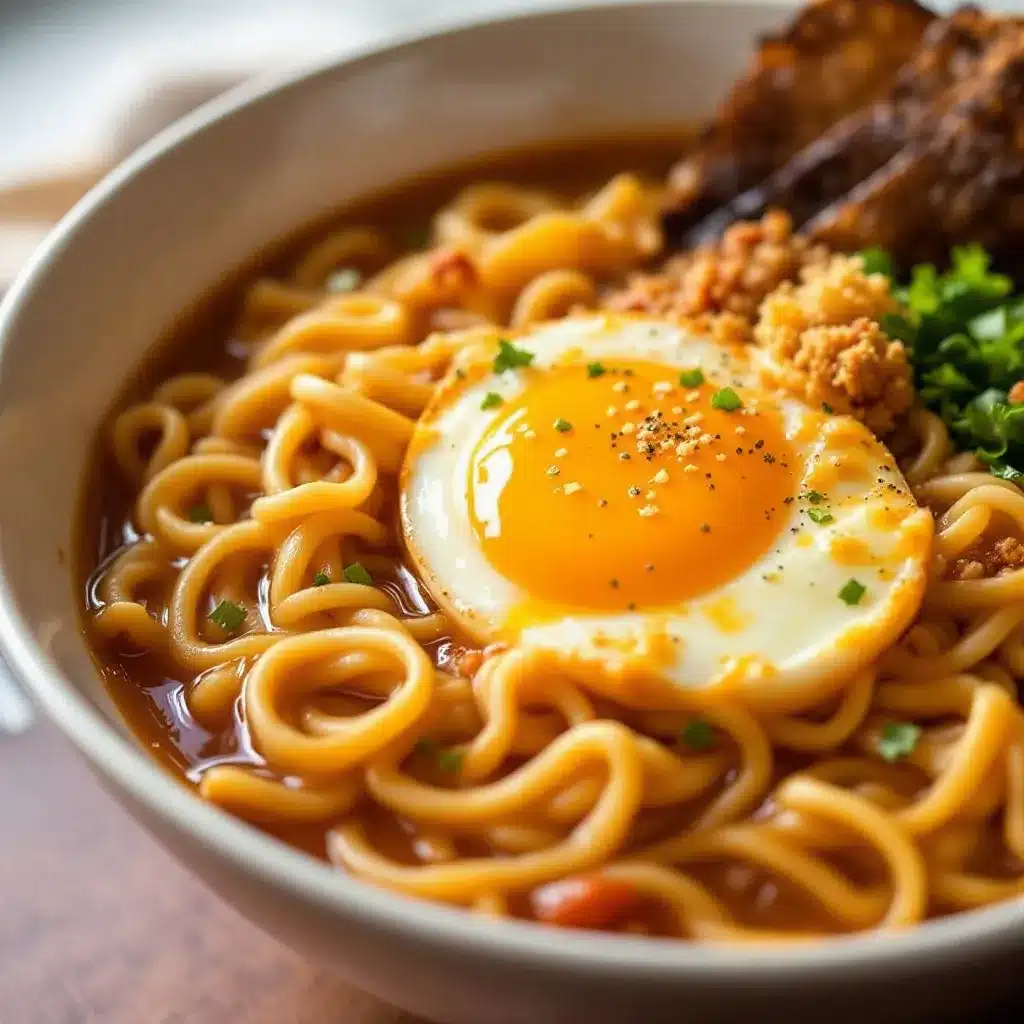
Let’s get cooking. This whole process takes about 20 minutes, and I promise it’s easier than it sounds.
- Start the broth base. Place your pot over medium heat and add the sesame oil. Once it’s shimmering, add the minced garlic and grated ginger. Cook for about 1 minute, stirring constantly, until it’s fragrant. Don’t let it burn—garlic turns bitter fast. You want it golden, not brown.
- Add the liquids. Pour in the chicken broth, soy sauce, mirin, and chili garlic sauce (if using). Add the 1 cup of water. Stir everything together and bring it to a gentle boil. This should take about 3 to 4 minutes.
- Simmer the broth. Once it’s boiling, reduce the heat to low and let it simmer for 5 minutes. This is where the magic happens—the flavors meld together and deepen. Your kitchen will smell incredible at this point.
- Cook the noodles. Add the ramen noodles to the simmering broth. Use a fork to gently separate them as they soften. Cook according to package directions—usually about 3 to 4 minutes. Stir occasionally so they don’t stick together.
- Make the soft-boiled egg. While the noodles are cooking, prepare your egg. Bring a small saucepan of water to a rolling boil. Gently lower the egg into the water using a slotted spoon. Boil for exactly 6 minutes and 30 seconds for a perfect jammy yolk. While it cooks, prepare a small bowl of ice water.
- Shock the egg. After 6 minutes and 30 seconds, transfer the egg to the ice water bath. Let it sit for 2 minutes. This stops the cooking process and makes it easier to peel.
- Peel and slice. Gently tap the egg on a hard surface to crack the shell, then peel under running water. Slice the egg in half lengthwise—carefully, so the yolk stays intact.
- Assemble the bowls. Divide the ramen and broth between two bowls. Place half a soft-boiled egg on each bowl. Top with sliced green onions, torn nori, sesame seeds, and a drizzle of chili oil if you like heat.
Pro tip: The broth will look a little thin at first, but as the noodles cook, they release starch, which thickens it slightly. If you prefer a thicker broth, let it simmer uncovered for an extra 2 minutes before adding the noodles.
Cooking Tips & Techniques
I’ve made this recipe at least 20 times, and I’ve learned a few things the hard way. Here are my best tips:
- Don’t skip the aromatics. Garlic and ginger are non-negotiable here. They build the entire flavor foundation. If you’re out of fresh ginger, use 1/2 teaspoon of ground ginger—but fresh really is better.
- Watch your heat. Medium heat is your friend. Too high, and you’ll burn the garlic. Too low, and the broth won’t develop that deep flavor. I keep it at a steady simmer, not a full boil.
- Timing the egg is everything. I once left an egg in for 8 minutes by accident. It was still good, but the yolk was fully set—not jammy. Set a timer. Seriously. 6 minutes and 30 seconds is the sweet spot for a creamy, dippy yolk.
- Use low-sodium broth. Regular broth can make the final dish way too salty, especially since the soy sauce adds more sodium. You can always add salt at the end, but you can’t take it out.
- Multitask smartly. While the broth simmers, prep your toppings. Slice the green onions, toast the sesame seeds, tear the nori. This way, everything is ready when the noodles are done.
I once forgot to add the soy sauce until after the noodles were cooked. I stirred it in, and honestly, it was still delicious. So don’t stress if you mess up a step—ramen is forgiving.
Variations & Adaptations
This recipe is a great base, but feel free to make it your own. Here are some variations I’ve tried and loved:
- Vegetarian Version: Use vegetable broth instead of chicken. Add sliced shiitake mushrooms for umami. Skip the egg or replace it with a soft-boiled tofu square.
- Spicy Miso Ramen: Add 1 tablespoon of white miso paste to the broth along with an extra teaspoon of chili garlic sauce. The miso adds a creamy, savory depth that’s incredible.
- Protein-Packed: Add shredded rotisserie chicken, thinly sliced pork, or even leftover steak in the last 2 minutes of cooking. I’ve done this with leftover carnitas, and it was next-level good.
- Gluten-Free: Use gluten-free ramen noodles or rice noodles. Tamari instead of soy sauce. Check your broth label—some brands contain gluten.
- Extra Veggie: Throw in a handful of spinach, bok choy, or frozen corn during the last minute of cooking. It adds color, nutrition, and texture.
My personal favorite variation? Adding a spoonful of peanut butter to the broth. I know it sounds weird, but it makes the broth creamy and adds a subtle nuttiness. Try it once—you might be surprised.
Serving & Storage Suggestions
Serve this ramen immediately while it’s hot. The noodles will continue to absorb broth as they sit, so don’t let it hang out too long. I like to serve it in deep bowls with the toppings arranged neatly on top—it looks impressive with minimal effort.
For sides, a simple cucumber salad or steamed edamame pairs beautifully. If you’re feeling fancy, serve it with a side of gyoza or spring rolls. For drinks, a cold beer or a cup of green tea complements the savory broth perfectly.
Leftovers are tricky with ramen because the noodles get soft. If you have leftover broth and noodles, store them separately in airtight containers in the refrigerator. The broth will keep for up to 3 days. When reheating, bring the broth to a boil, then add the noodles for just 30 seconds to warm through. The soft-boiled egg should be eaten fresh—it doesn’t reheat well. But you can always make a new egg in 6 minutes.
Pro tip: The broth actually tastes better the next day. The flavors continue to meld and deepen overnight. So if you’re meal-prepping, make the broth ahead and cook the noodles fresh when you’re ready to eat.
Nutritional Information & Benefits
Here’s an approximate nutritional breakdown per serving (one bowl with egg and toppings):
- Calories: 420
- Protein: 18g
- Fat: 16g
- Carbohydrates: 52g
- Fiber: 3g
- Sodium: 980mg (varies based on broth and soy sauce)
This meal offers a good balance of carbs for energy, protein for satiety, and healthy fats from the sesame oil and egg yolk. The ginger and garlic provide anti-inflammatory benefits, while the broth is hydrating and soothing. If you’re watching your sodium, use low-sodium broth and reduce the soy sauce to 1 tablespoon.
For a lower-carb option, use shirataki noodles or zucchini noodles instead of ramen. Just add them at the very end to avoid overcooking. This recipe is naturally dairy-free and can be made gluten-free with simple swaps. The egg adds high-quality protein and essential vitamins like B12 and D.
I personally love that this meal feels indulgent but isn’t actually that heavy. It’s the kind of dinner that fills you up without weighing you down—perfect for a weeknight when you want something satisfying but not overly rich.
Conclusion
This Easy One-Pot Ramen with Soft-Boiled Egg is proof that you don’t need a dozen ingredients or hours in the kitchen to make something truly delicious. It’s simple, it’s fast, and it tastes like a warm hug in a bowl. I’ve made it on lazy Sundays, rushed weeknights, and even for friends who thought homemade ramen was “too hard.” Every single time, it delivers.
I encourage you to make this recipe your own. Add your favorite toppings, tweak the spice level, or throw in whatever vegetables you have in the fridge. That’s the beauty of ramen—it’s endlessly adaptable. And honestly, the best versions are the ones you make with what you have.
I love this recipe because it reminds me that comfort food doesn’t have to be complicated. Sometimes the simplest things are the most satisfying. So grab your pot, boil that egg, and treat yourself to a bowl of something really good.
If you make this recipe, I’d love to hear about it. Leave a comment below and let me know how it turned out, or share your own twist on it. And don’t forget to pin this for later—you’re going to want to make it again and again!
Frequently Asked Questions
Can I use instant ramen seasoning packets instead of making broth?
You can, but the broth won’t be as rich or flavorful. The seasoning packets are designed for plain water, not a full broth base. If you’re in a pinch, use half a packet along with the soy sauce and aromatics for a hybrid version.
How do I get the perfect soft-boiled egg every time?
The key is timing and temperature. Use room-temperature eggs, boil them for exactly 6 minutes and 30 seconds, then immediately transfer them to an ice water bath. This stops the cooking process and gives you a jammy, golden yolk.
Can I make this recipe vegan?
Absolutely. Use vegetable broth, skip the egg, and add protein like tofu or edamame. You can also add a spoonful of miso paste for extra umami. The rest of the recipe is naturally plant-based.
Why is my broth too salty?
This usually happens if you use regular (not low-sodium) broth or add too much soy sauce. Start with low-sodium broth and add soy sauce gradually, tasting as you go. You can always add more salt, but you can’t take it out.
Can I meal prep this ramen for the week?
Yes, but store the broth and noodles separately. The broth can be refrigerated for up to 3 days, and the noodles should be cooked fresh or stored separately to avoid sogginess. Make the soft-boiled egg fresh each time for the best texture.
Pin This Recipe!
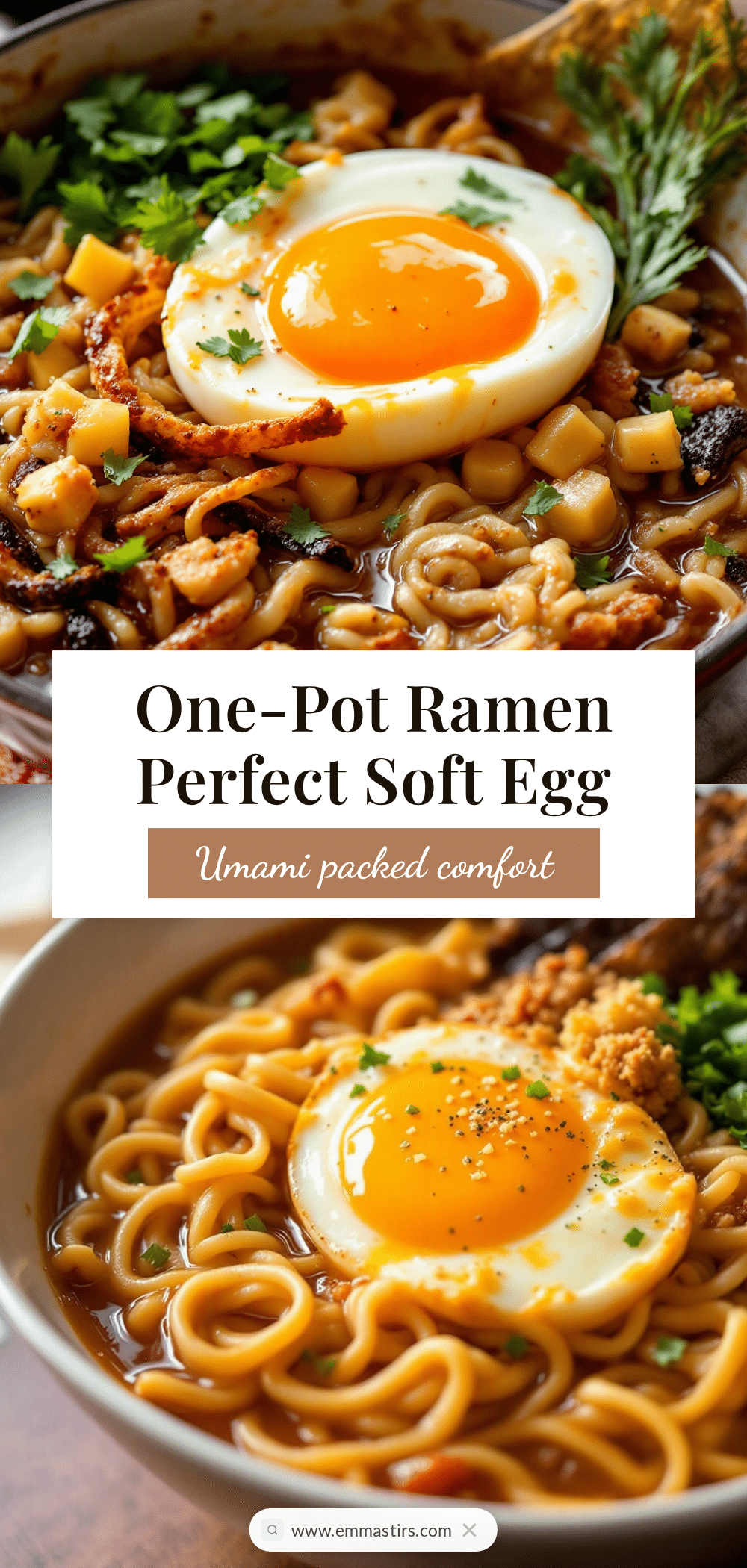
Easy One Pot Ramen with Perfect Soft Boiled Egg

A quick and easy one-pot ramen recipe with a rich, savory broth and a perfectly jammy soft-boiled egg. Made with simple pantry ingredients, this comforting bowl comes together in under 20 minutes and requires minimal cleanup.
- Prep Time: 5 minutes
- Cook Time: 15 minutes
- Total Time: 20 minutes
- Yield: 2 servings 1x
- Category: Main Course
- Cuisine: Japanese
Ingredients
- 1 tablespoon sesame oil
- 3 cloves garlic, minced
- 1 teaspoon fresh ginger, grated
- 4 cups low-sodium chicken or vegetable broth
- 2 tablespoons soy sauce (or tamari for gluten-free)
- 1 tablespoon mirin (or 1 teaspoon sugar + 1 tablespoon water)
- 1 teaspoon chili garlic sauce (optional)
- 2 packs instant ramen noodles (seasoning packets discarded)
- 1 cup water
- 2 large eggs, at room temperature
- 2 green onions, thinly sliced
- 1 sheet nori (seaweed), torn into pieces
- 1 teaspoon sesame seeds, toasted
- Chili oil for drizzling (optional)
Instructions
- Place a medium pot over medium heat and add sesame oil. Once shimmering, add minced garlic and grated ginger. Cook for about 1 minute, stirring constantly, until fragrant.
- Pour in chicken broth, soy sauce, mirin, chili garlic sauce (if using), and 1 cup of water. Stir and bring to a gentle boil, about 3-4 minutes.
- Reduce heat to low and let the broth simmer for 5 minutes to deepen flavors.
- Add ramen noodles to the simmering broth. Use a fork to separate them as they soften. Cook according to package directions (usually 3-4 minutes), stirring occasionally.
- While noodles cook, bring a small saucepan of water to a rolling boil. Gently lower the egg into the water using a slotted spoon. Boil for exactly 6 minutes and 30 seconds for a jammy yolk.
- Transfer the egg to a bowl of ice water and let sit for 2 minutes to stop cooking.
- Gently crack and peel the egg under running water, then slice in half lengthwise.
- Divide the ramen and broth between two bowls. Top each with half a soft-boiled egg, sliced green onions, torn nori, sesame seeds, and a drizzle of chili oil if desired.
Notes
For a thicker broth, let it simmer uncovered for an extra 2 minutes before adding noodles. Use low-sodium broth to control saltiness. The broth can be made ahead and refrigerated for up to 3 days; cook noodles fresh when serving. The soft-boiled egg is best made fresh.
Nutrition
- Serving Size: 1 bowl
- Calories: 420
- Sugar: 4
- Sodium: 980
- Fat: 16
- Saturated Fat: 3
- Carbohydrates: 52
- Fiber: 3
- Protein: 18
Keywords: ramen, one pot, soft boiled egg, easy ramen, quick dinner, comfort food, weeknight dinner