Classic Pan de Muerto with Easy Orange Blossom Glaze
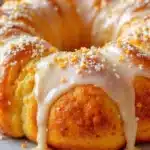
This classic pan de muerto with orange blossom glaze is a forgiving, foolproof recipe that yields a golden, citrus-kissed bread perfect for Día de Muertos or any fall gathering. The dough is enriched with butter and eggs, and the floral glaze adds an authentic, aromatic finish.
- Prep Time: 30 minutes
- Cook Time: 25 minutes
- Total Time: 3 hours 25 minutes (including rising time)
- Yield: 8 servings 1x
- Category: Bread
- Cuisine: Mexican
Ingredients
- 4 cups all-purpose flour (500g)
- 2 ¼ teaspoons active dry yeast (one packet)
- ½ cup warm milk (120ml, about 110°F)
- ½ cup granulated sugar (100g)
- ½ cup unsalted butter, softened (113g)
- 3 large eggs, room temperature
- Zest of 2 oranges
- 2 tablespoons orange blossom water
- 1 teaspoon fine sea salt
- 1 teaspoon pure vanilla extract
- 1 ½ cups powdered sugar (180g), sifted
- 2 tablespoons orange blossom water (for glaze)
- 2–3 tablespoons milk (for glaze)
- Zest of 1 orange (for garnish)
- ¼ cup granulated sugar (for dusting, optional)
Instructions
- Proof the yeast: In a small bowl, combine warm milk (110°F), 1 tablespoon of sugar, and yeast. Stir gently and let sit for 5-10 minutes until frothy. If it doesn’t bubble, start over with fresh yeast.
- Mix dry ingredients: In the bowl of a stand mixer, whisk together flour, remaining sugar, orange zest, and salt. Make a well in the center.
- Add wet ingredients: Pour in proofed yeast mixture, beaten eggs, softened butter, orange blossom water, and vanilla extract. Mix on low speed with dough hook until a shaggy dough forms, about 2 minutes.
- Knead dough: Increase speed to medium-low and knead for 8-10 minutes until dough is smooth, elastic, and pulls away from the sides. It should be slightly sticky. Add flour 1 tablespoon at a time if too wet, or milk 1 teaspoon at a time if too dry.
- First rise: Shape dough into a ball and place in a lightly greased bowl. Cover tightly with plastic wrap and let rise in a warm, draft-free spot for 1½ to 2 hours until doubled in size.
- Punch down and divide: Gently deflate dough. Divide into two equal pieces for two loaves, or keep whole for one large loaf. Reserve about ¼ of the dough for bone-shaped decorations.
- Shape base: Form main dough into a smooth ball. Place on a parchment-lined baking sheet and gently flatten slightly into a domed bun about 6 inches wide.
- Make decorations: Roll reserved dough into ropes about ½ inch thick. Cut into 4-inch lengths. For each ‘bone,’ roll a rope, pinch ends, and press flat. Cross two pieces on top of loaf to form an X. Roll a small ball and place in the center where bones cross.
- Second rise: Cover shaped loaves loosely with plastic wrap and let rise for 45 minutes to 1 hour until puffy and almost doubled.
- Preheat and bake: Preheat oven to 350°F (175°C). Bake loaves for 20-25 minutes, rotating pan halfway through. Bread should be golden brown and sound hollow when tapped. Internal temperature should reach 190°F.
- Cool completely: Transfer loaves to a cooling rack and let cool for at least 30 minutes before glazing.
- Make glaze: In a small bowl, whisk together powdered sugar, orange blossom water, and milk until smooth. It should be thick but pourable. Add more milk if needed, 1 teaspoon at a time.
- Glaze and garnish: Brush glaze generously over cooled loaves. Sprinkle with orange zest and granulated sugar immediately while glaze is wet. Let set for 15-20 minutes before serving.
Notes
Temperature matters: all ingredients should be at room temperature. Don’t over-flour your work surface; lightly oil hands instead. The bone decorations help support the domed top during baking. Watch bake time closely; tent with foil if browning too fast. Glaze only when bread is completely cool to avoid sogginess. The dough is forgiving—if it tears while shaping, just patch it.
Nutrition
- Serving Size: 1/8 of a loaf
- Calories: 320
- Sugar: 22
- Sodium: 200
- Fat: 8
- Saturated Fat: 4
- Carbohydrates: 55
- Fiber: 2
- Protein: 7
Keywords: pan de muerto, day of the dead bread, orange blossom bread, Mexican sweet bread, holiday bread, fall baking, citrus bread